



Why a Strategic Approach to the College Football TV Schedule Matters
Planning how to show college football games on TV and online has become a very big puzzle in 2026.
It’s not just about picking a game and putting it on a channel anymore. Large sports companies and broadcasters face many challenges. Think about all the teams, like figuring out the ole miss football schedule or the [texas tech football schedule], and making sure their fans can watch every game. Then there are huge matchups, like when [usc vs illinois] play, that need to reach millions of viewers around the world.
The main problem is that there are so many games, so many different channels and streaming services, and special agreements about who can show what game. These agreements, called media rights, are worth billions of dollars. In 2026, the combined annual rights fees for college football total around $3.9 billion, showing just how big the stakes are for broadcasters Consolidated College Football Media Rights Analysis 3 6 2026. It’s a huge task to juggle all these moving parts to create a smooth college football TV schedule. Keeping track of kickoff times, network slots, and different ways viewers want to watch can be really hard.
This article is here to help big broadcast teams and companies handle this complex task. We’ll share smart ways to make decisions about the college football TV schedule. Our goal is to help you make sure your broadcasts look great, reach many fans, and don’t cost too much money. You can learn more about how experts help with these kinds of big broadcast challenges by exploring Learn More About TPT Global. We will show you how to truly master your optimizing the college football tv schedule for global broadcasters.
It’s clear that putting together the college football TV schedule is a huge job for broadcast companies. But for fans and the people who make these decisions, knowing how to read and understand the schedule is just as important. Let’s break down what you’ll find when you look at the 2026 college football TV schedule.
Kickoff Times and TV Windows
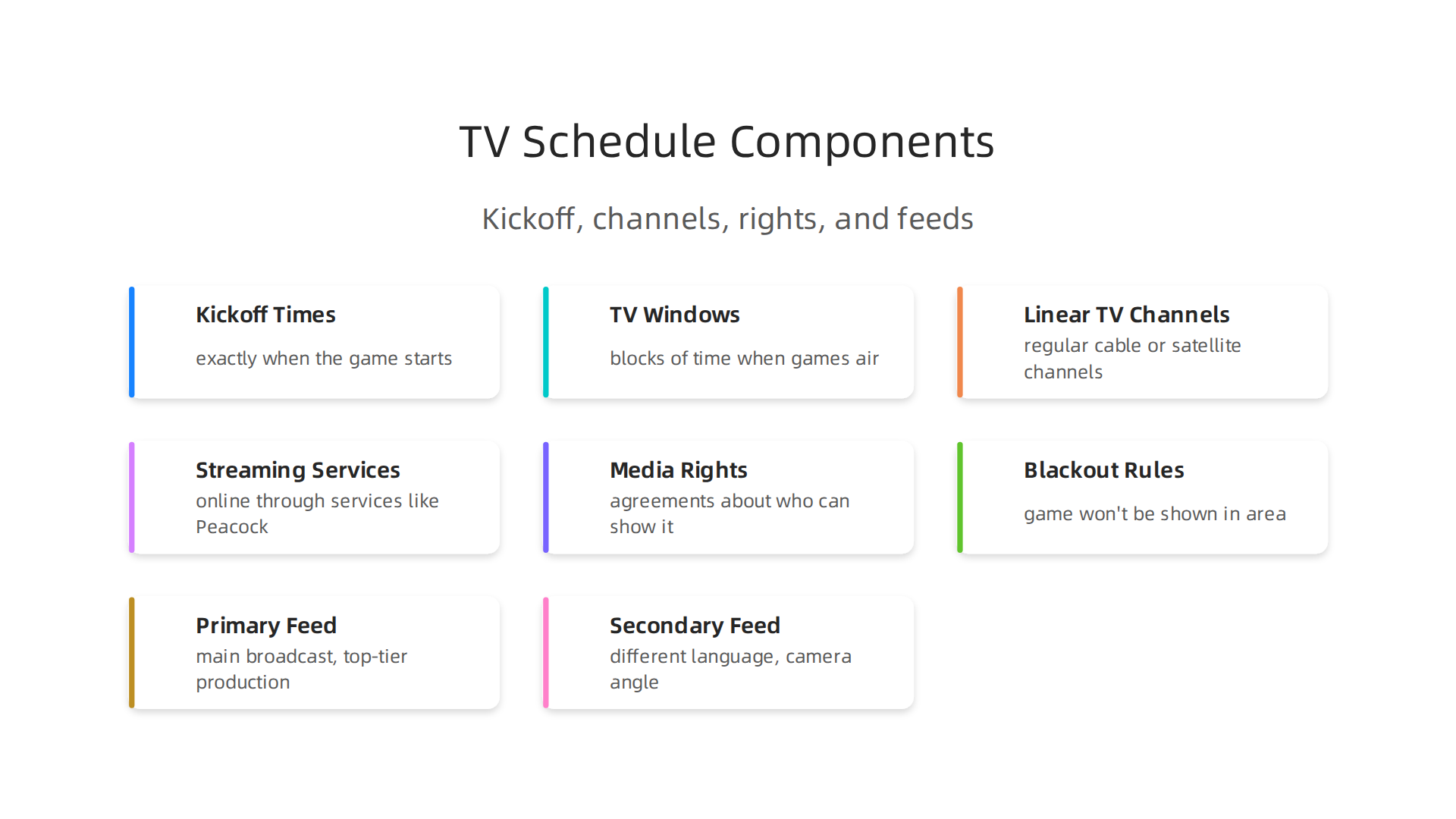
When you check the college football schedule, the first things you’ll see are the game times and what channel they’re on. Kickoff times tell you exactly when the game starts, usually shown in Eastern Time (ET) in the US. For example, some games like San Jose State at USC in Week Zero of 2026 might start at 2:30 p.m. ET.
TV windows are blocks of time when games are set to air. Major networks like FOX often have set windows, such as an early afternoon slot. Other conferences, like the SEC, might announce general windows (early, afternoon, night) before giving exact times for some games later in the season. These windows help spread out the games so not too many big matchups are happening at the very same moment.
Where to Watch: Channels and Streaming
In 2026, you’ll find college football games on many different places.
- Linear TV: These are your regular cable or satellite channels. Networks like ABC, ESPN, FOX, CBS, and others carry many games. For instance, the SEC games are mostly on the Disney family of networks, like ABC and ESPN. FOX Sports also carries many Big Ten games across FOX, FS1, and BTN Networks Unveil 2026 College Football Broadcast Schedules. You can often find a full 2026 College Football Schedule: Printable PDF, TV & Key Dates to keep track.
- Streaming Services: Many games are also shown online through streaming services like Peacock or ESPN+. Sometimes a game will be on both a regular TV channel and a streaming service. Other times, it might only be available to stream. This is why you might see a game like the [ole miss football schedule] game listed for ABC, while a different game is only on ESPN+.
Understanding Media Rights and Blackouts
Each game has special agreements about who can show it. These are called media rights. For example, a game involving the [texas tech football schedule] might be set to air only on a certain network because that network paid a lot of money for the right to show those games.
Sometimes, you’ll hear about "blackout rules." This means a game won’t be shown on TV in a certain area, usually close to where the game is being played. This is often done to encourage people to buy tickets and go to the game in person.
Primary vs. Secondary Feeds and International Access
For big games, especially ones like when [usc vs illinois] play, there might be different "feeds" available.
- Primary Feed: This is the main broadcast, often with the most well-known announcers and top-tier production. It’s what most people in the home country will see.
- Secondary Feed: Sometimes there are special feeds. These could be for a different language, a different camera angle, or a more focused view on one team. For broadcasters, managing all these different feeds is key to reaching everyone. To learn more about handling complex broadcasts, check out Mastering Global Live Sports Broadcasts.
For international viewers, the schedule might include specific "international windows" or platforms where games are shown outside the main broadcast regions. This allows fans around the world to tune in and support their favorite teams.
Understanding these parts of the college football TV schedule helps everyone, from the fans to the broadcast teams, enjoy the games more. If you’re looking for help with top-notch broadcast quality and smooth delivery, you might want to Explore Our Broadcast Services. They offer end-to-end solutions for live sports.
Global Broadcast Rights & Timezone Considerations
College football is loved by many people, not just in the United States, but all around the world. But getting the games to everyone means handling some special rules about where and when they can be shown.

This is where global broadcast rights and time zones come in.
Understanding Rights Segmentation
When a TV network or streaming service buys the "rights" to show a college football game, they don’t always buy them for the whole world. Instead, these rights are often split up. This splitting is called "rights segmentation." It means one company might have the right to show a game in North America, while another company has the right to show the same game in Europe or Asia.
These agreements include "rights windows." A rights window is a specific time frame or area where a broadcaster is allowed to show a game. For example, a network might have rights to show a game live as it happens in one country, but only be able to show it later, on a delay, in another country How to Deliver Flawless Global Live Sports Broadcasting in 2026. This helps make sure everyone gets to see the game, even if it’s at a different time. This also means that what appears on your local college football tv schedule might look very different from a fan’s schedule across the globe.
Sometimes, a big network might buy the rights for a whole region and then let smaller local networks or streaming platforms show the games there. This is known as sublicensing and helps spread the games even further Optimizing the College Football TV Schedule for Global Broadcasters.
Making Sense of Time Zones
One of the biggest puzzles for global fans is figuring out kickoff times. A game that starts at 3:30 p.m. Eastern Time in the US is happening at a very different time in London, Tokyo, or Sydney. For example, a game starting at 7 p.m. Pacific Time in the US would be 10 p.m. in New York, but much later or earlier for international viewers Global UNLV Football Broadcasting Strategy for 2026 Success.
Good college football TV schedules need to help fans deal with these time differences. Many online tools and official schedule pages now offer ways to convert the listed time to your local time zone automatically How to Read Sports Schedules: Kickoff Times, Time Zones …. This means that when you look at the schedule, it should ideally show you the time in your part of the world, not just where the game is being played. It’s best practice to always show times in a way that viewers can easily understand, ideally in their local time Scheduling Across Time Zones: Running a Global Coaching Calendar Without the Headache.
For broadcasters, handling all these time zone changes is a big task. They need to make sure the broadcast is ready for different "prime streaming windows" around the world Esports League Scheduling: Time Zones, Streaming Windows …. This is part of how companies help deliver world-class live broadcasts How to Deliver World-Class Global Live Broadcasts in 2026.
If you’re a big sports organization looking to manage complex global broadcasts, finding a partner who understands these challenges is key.
By carefully mapping rights windows to international feeds and making sure local time conversions are easy, broadcasters can reach a massive global audience. It’s all about making sure every fan, no matter where they are, can enjoy the excitement of the college football season. If your organization needs help with this kind of global reach, you might want to learn more about optimizing college football streams for global audiences in 2026.
Weekly TV Schedule: What Decision-Makers Need to Know
After understanding how global broadcast rights and time zones work, the next step for sports leaders is to build a smart weekly college football tv schedule.

This is not just about listing games. It involves tricky choices and careful planning to make sure every game gets to its fans.
Prioritizing Match Packages
First, decision-makers have to pick which games get special attention.
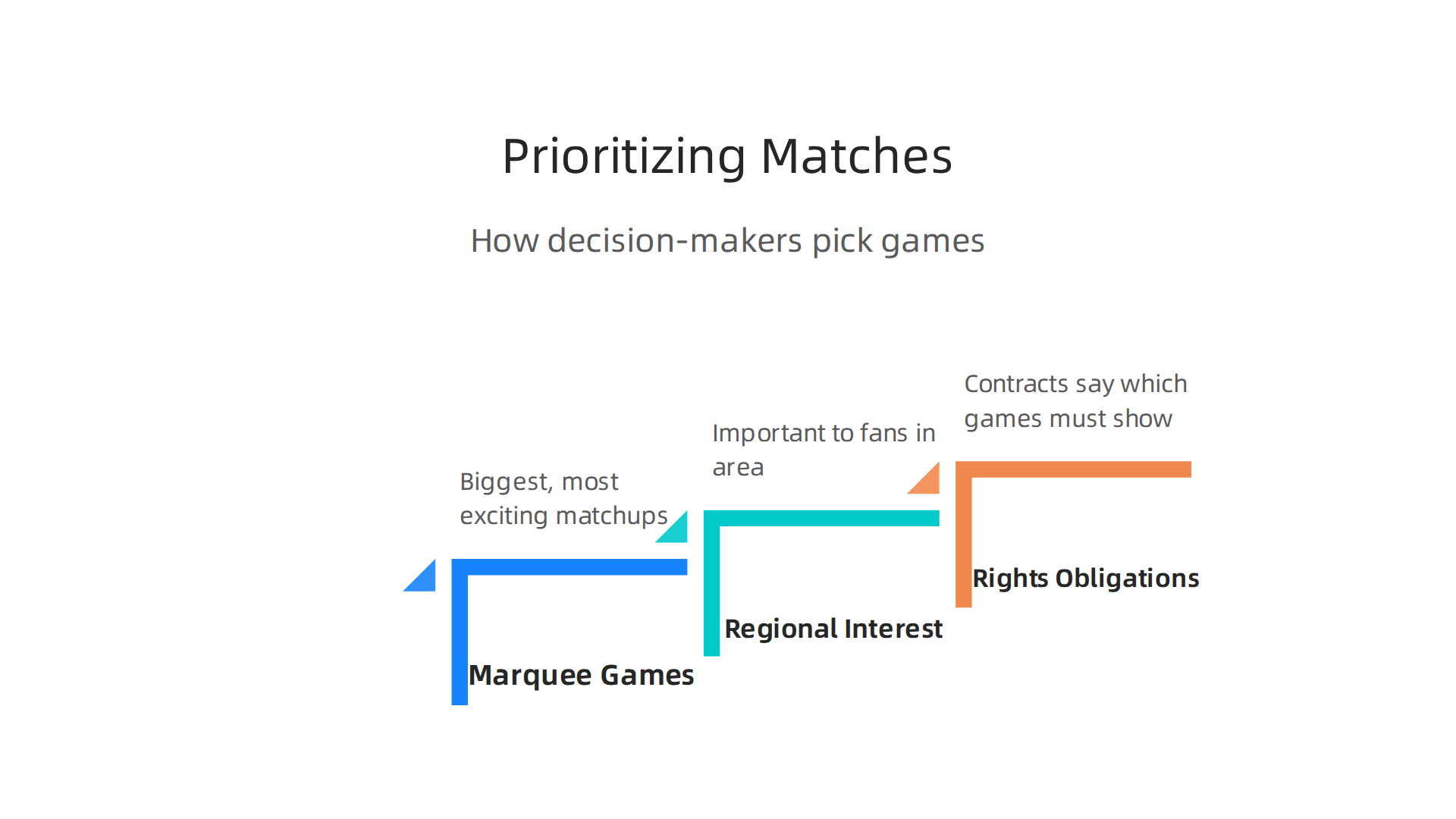
This means looking at a few things:
- Marquee Games: These are the biggest, most exciting matchups that many fans want to see. Think of a big game like USC vs Illinois, or a crucial game on the ole miss football schedule. These games bring in the most viewers and money, so they are often given prime spots on major networks like ABC, ESPN, and FOX Networks Unveil 2026 College Football Broadcast Schedules.
- Regional Interest: Sometimes, a game might not be a national blockbuster, but it’s very important to fans in a specific area. For example, a Texas Tech football schedule game might have huge importance for viewers in Texas, even if it’s not a top-tier national broadcast. Networks try to show these games where their local fans can watch them easily.
- Rights-Holder Obligations: Broadcasters have contracts with the college football conferences or teams. These contracts say which games they must show. They need to make sure they stick to these agreements. For instance, the SEC is mostly exclusive to the Disney family of networks in 2026, meaning many of their games will be on ABC or ESPN 2026 College Football Schedule: Printable PDF, TV & Key Dates.
Scheduling Conflicts: Keeping Things Smooth
Even with careful planning, putting together a full college football tv schedule can run into problems.
- Double-Headers and Overlapping Windows: On a busy Saturday, there might be many important games happening at the same time. Broadcasters have to decide which games go on which channel or streaming service. They also need to manage "broadcast windows" where games are allowed to air, trying to spread out the big games so fans can watch more of them.
- Contingency Planning: Sometimes, unexpected things happen, like bad weather delaying a game. Broadcasters need backup plans to switch games or change their schedule quickly. This means having other options ready to go. You can often find a complete list of games and times on sites like ESPN’s 2026 College Football Schedule.
For sports organizations, getting the weekly schedule right is a big job that affects how many people watch and how happy fans are. It’s about more than just showing games; it’s about telling a story each week and making sure every fan feels connected to the action.
To truly master these schedules and reach a wide audience, big sports organizations often look for top-notch broadcasting solutions. If you’re a broadcast director or head of media rights looking to improve your college football schedule and reach, you can learn more about how to master college football broadcast schedules for global reach.
If your organization needs advanced support to handle the many details of global sports broadcasts, from creating the best content to managing complex schedules and getting it all out to fans, we are here to help.
Request a Broadcast Consultation
After figuring out how to set up the best weekly college football tv schedule, sports leaders must also think about how those games are actually made and sent out. This means making sure a game, whether it’s a big USC vs Illinois matchup or a key game on the ole miss football schedule, looks great and runs smoothly on regular TV and on streaming apps too.
Making Games for Every Screen
Producing a live game for both traditional TV (linear) and online streaming (OTT) at the same time is a big job. There are two main ways to set up the technical side:
- Traditional On-Site Production: This is like bringing a whole TV studio to the game. Big trucks full of equipment and lots of people are at the stadium. This method ensures top quality but can be very costly and less flexible for covering many games at once.
- Remote Production (REMI): A newer way is to keep most of the technical crew and heavy gear in a central office far from the game. Only a few cameras and basic equipment are at the stadium. This method, often called the remote integration model, helps save a lot of money and makes it easier to cover more games on a tight college football tv schedule, like every game on the texas tech football schedule. It can cut costs and allow broadcasters to cover many events without losing quality Remote Production Workflows for Live Sports Broadcasting.
How Video Gets Ready for Fans
Once the game is captured, the video needs to be processed quickly and correctly for all the different ways people watch:
- Encoding: This is like translating the raw video into different digital languages. For linear TV, it’s one format. For online streaming, you need many formats so the video can play on phones, tablets, smart TVs, and computers. Newer video types like HEVC (H.265) help send high-quality video using less internet data Optimal Video Pipeline: Encoding, Packaging & Delivery in 2026.
- Monitoring: It’s super important to watch the video feeds constantly. This means checking that the picture is clear, the sound is good, and there are no delays or errors. Good monitoring makes sure fans don’t miss a single play, especially in fast-paced college football. It checks the video after it’s been processed, not just if the connection is working BBright White Paper: SRT vs. RIST for Professional Video.
- Feed Routing: This is about sending the right video streams to the right places. One stream goes to TV channels, and many other streams go to different online platforms. For streaming, it’s key to have "low latency," which means the live action gets to your screen almost instantly. For live sports, people expect very low delays, sometimes just 2-5 seconds, using methods like LL-HLS and LL-DASH Low-Latency Live Streaming for Sports in 2026: LL-HLS vs LL.
Getting these technical parts right means fans can enjoy their favorite teams, no matter how or where they choose to watch. To learn more about handling these complex broadcast needs, especially for a demanding college football tv schedule, you can find out how to optimize college football streams for global audiences in 2026.
If you are looking for advanced broadcast solutions to handle all these technical details and make sure your games reach fans everywhere, check out our offerings.
Explore Our Broadcast Services
Making sure college football games look great is just one part of the challenge. Another big piece of the puzzle is how much it costs to create and send out these live broadcasts. The way a game is produced, whether it’s a huge USC vs Illinois rivalry or a regular season game on the ole miss football schedule, can have very different price tags.
Reducing Costs: Centralized vs. Localized Production Models
The costs of putting a live sports game on TV or online can be quite high. Daily expenses for a college football game might range from $75,000 to over $175,000, depending on things like how many cameras are used, the replay equipment, and how many people are working on the production. For some linear broadcasts, the cost per game can even be between $40,000 and $150,000 Reshaping sports production for the modern era of OTT. The main things that drive these costs are:
- Staffing: Paying for all the camera operators, directors, sound engineers, and other crew members.
- Transmission: The expense of sending the video signals from the stadium to the broadcast center.
- Travel: Getting all the crew and equipment to different stadiums for each game.
- Facilities: Renting big production trucks and setting up control rooms at the event.
Traditional production, where a large crew and all the gear are on-site, leads to these higher costs. Each game means sending out a lot of people and equipment. This makes it hard to grow and cover more games because costs just keep going up with each new event With Ligr Vs Without Ligr….
The Shift to Centralized Production
To lower these costs and make it easier to cover many games, like every game on the texas tech football schedule, more broadcasters are using a centralized approach. This means keeping most of the production team and heavy equipment in one main location, often called a hub. Only a few cameras and basic tools go to the game site. This method is often called remote production or at-home production.
Moving to this kind of centralized setup, or even using cloud-based production, can really help save money CLOUD-BASED TV SPORTS PRODUCTION AND DISTRIBUTION …. Some companies have found ways to cut production costs by as much as 70 percent, making it possible to produce events for as little as $500 each Lightweight Sports Production | Cloud Production by LiveU. This is great for covering a wide college football tv schedule without losing quality.
Weighing the Choices
- Traditional (Localized): High quality, but very expensive and not easy to scale up for many events. Good for major, big-budget matchups.
- Centralized (Remote/Cloud): Much more cost-effective and flexible. It allows broadcasters to cover more games, expanding their reach and making better use of their money. This model helps reduce the number of staff who need to travel and limits the amount of gear sent to each location UNLOCKING THE SMARTER REMOTE PRODUCTION ….
The key is finding the right balance. Broadcasters want to cut costs but still deliver a top-notch experience for fans. Centralized production helps with this by streamlining how games are made, allowing for consistent quality across many events. To understand how enterprises handle these kinds of complex broadcasts, you might want to learn more about how enterprise broadcasters master the most watched sports worldwide.
When planning for a demanding broadcast schedule, it’s wise to consider solutions that offer flexibility and efficiency without sacrificing quality. Choosing the right production partner makes a big difference in managing these costs effectively.
Ready to explore cutting-edge solutions for your sports broadcasting needs? Why Choose TPT Global to streamline your operations and deliver world-class content to global audiences.
When you move to a centralized way of making TV shows or live streams, like for a busy college football tv schedule, keeping the quality just as good as if everyone was on-site is very important. Even if the crew is far away, fans watching a big usc vs illinois game still expect perfect picture and sound.
Ensuring Consistent Quality Across Geographies
To make sure live sports broadcasts look and sound great, no matter where the crew is, special steps are taken. This is all about using smart technical tools and clear work plans.
Technical Steps for Top Quality
Broadcasters use a few key technical tricks to keep things running smoothly:
- Watching Everything Closely: Even if the main control room is far from the stadium, a team constantly watches the video and audio signals. They check that the picture is clear, the colors are right, and the sound is perfect. This "monitoring" helps catch any small problem right away before viewers notice. It is important to watch the video and sound after it has been put back together, not just that the connection is working BBright White Paper: SRT vs. RIST for Professional Video Contribution and Distribution.
- Having Backups Ready: Imagine a soccer game being streamed from a faraway stadium. What if the main internet connection suddenly stops working? That’s why broadcasters have backup connections and extra equipment. This is called redundancy. If one path fails, another can take over right away, so the game keeps going without a hiccup.
- Smart Video Tools (Codecs): To send high-quality video over long distances without using too much internet bandwidth, special tools called codecs are used. In 2026, common ones like H.264 and HEVC (H.265) help make video files smaller but still look amazing. Newer ones like AV1 are also becoming popular. These codecs help make sure that even a game from an ole miss football schedule looks great to fans worldwide. Choosing the right encoding and delivery steps is key to having an Optimal Video Pipeline: Encoding, Packaging & Delivery in 2026.
- Fast Connections (Protocols): For live sports, you don’t want delays. New ways to send video, like SRT (Secure Reliable Transport) and RIST (Reliable Internet Stream Transport), help cut down the time it takes for the video to go from the stadium to your screen. They make sure the picture gets to you almost instantly.
How Teams Work Together
Even with all the tech, people are still key.
- Fixing Problems from Afar: If something goes wrong at the game site, the crew in the main hub can help fix it without being there. They can look at information from the equipment and guide the small crew at the stadium. This makes sure issues are solved fast.
- Clear Rules with Partners: Broadcasters often work with many companies to put on a show. They have clear agreements called SLAs (Service Level Agreements). These are like promises about how good the service will be. This means everyone knows what to expect, and if there’s a problem, everyone knows how to fix it quickly. This helps when broadcasting a full texas tech football schedule across different regions.
By using these smart technical and teamwork methods, broadcasters can promise that every game, whether it’s a small regional match or a huge national championship, will have consistent, high-quality picture and sound for all fans, no matter where they are.
Curious to see what top-tier broadcasting looks like in action? Watch Our Latest Broadcast Work to see how TPT Global ensures superior quality across all their productions.
Making sure the broadcast quality is perfect is just one part of the puzzle. The next big step is getting as many people as possible to watch.

This means thinking carefully about when games are shown and where people can watch them.
Audience Engagement: Scheduling and Platform Strategies
For broadcasters, picking the right kickoff times and platforms is super important. It changes how many people watch, how much they talk about the game online, and how much money can be made from ads. For example, a big college football tv schedule needs to think about fans all over the world, not just in one place.
How Timing and Platforms Change Viewership
Imagine a game with a famous team like usc vs illinois. If it starts at 7 PM in one country, it might be the middle of the night in another. This time difference greatly affects how many people can watch live. Broadcasters must find a balance that helps most fans tune in.
Choosing where to show the game also matters a lot. In 2026, more people are choosing to watch sports through streaming services instead of regular TV. For instance, streaming now makes up a bigger share of how Americans watch content compared to traditional TV channels. This is a big shift, with streaming preferred by 47% of viewers against 42.7% for broadcast and cable combined as of early 2026, showing that streaming platforms are key to reaching a wider audience Consolidated College Football Media Rights Analysis 3 6 2026. When more people watch, there’s more social media buzz and more value for advertisers. You can learn more about picking the best ways to show sports globally by reading about choosing live TV channels and streaming platforms for global sports broadcasting.
Smart Ways to Schedule Games for Everyone
To get around time zone problems and reach more fans, broadcasters use clever scheduling tricks:
- Staggered Windows: Instead of showing all games at once, they might spread them out. This means a fan in Europe could watch an ole miss football schedule game in their afternoon, while a fan in Asia catches a different game in their evening. This way, many more people get to watch live.
- Regional Promotions: Broadcasters can promote specific games in certain areas. For example, a big game for the texas tech football schedule might be heavily advertised in regions where Texas Tech has a large fan base, even if it’s far away. This helps connect with local fans globally.
- Catch-Up Options (OTT): Even if fans can’t watch live, broadcasters offer ways for them to catch up. Over-the-top (OTT) platforms let people watch games whenever they want, after they’ve already happened. This is super helpful for those who miss the live broadcast because of time zones or other plans. It also helps boost overall viewership numbers, which are still strong for college football in 2026 2026 College Football TV Ratings.
By thinking about these things, broadcasters can make sure that a large audience tunes in, stays engaged, and helps bring in more ad money. It’s all about making the viewing experience easy and exciting for every fan around the world.
Are you a sports organization looking to refine your broadcast strategy and connect with a wider audience? Let’s discuss how to optimize your approach. Request a Broadcast Consultation today.
Creating a clear plan for every game is super important. It helps everyone involved know what to do and when. A good broadcast schedule works like a map for showing games. It makes sure that popular matchups like the ole miss football schedule or the texas tech football schedule are seen by as many fans as possible.
Sample Broadcast Schedule Table (Template)
A detailed college football tv schedule helps broadcasters keep track of everything. This table template shows how planners can organize important details for each game.
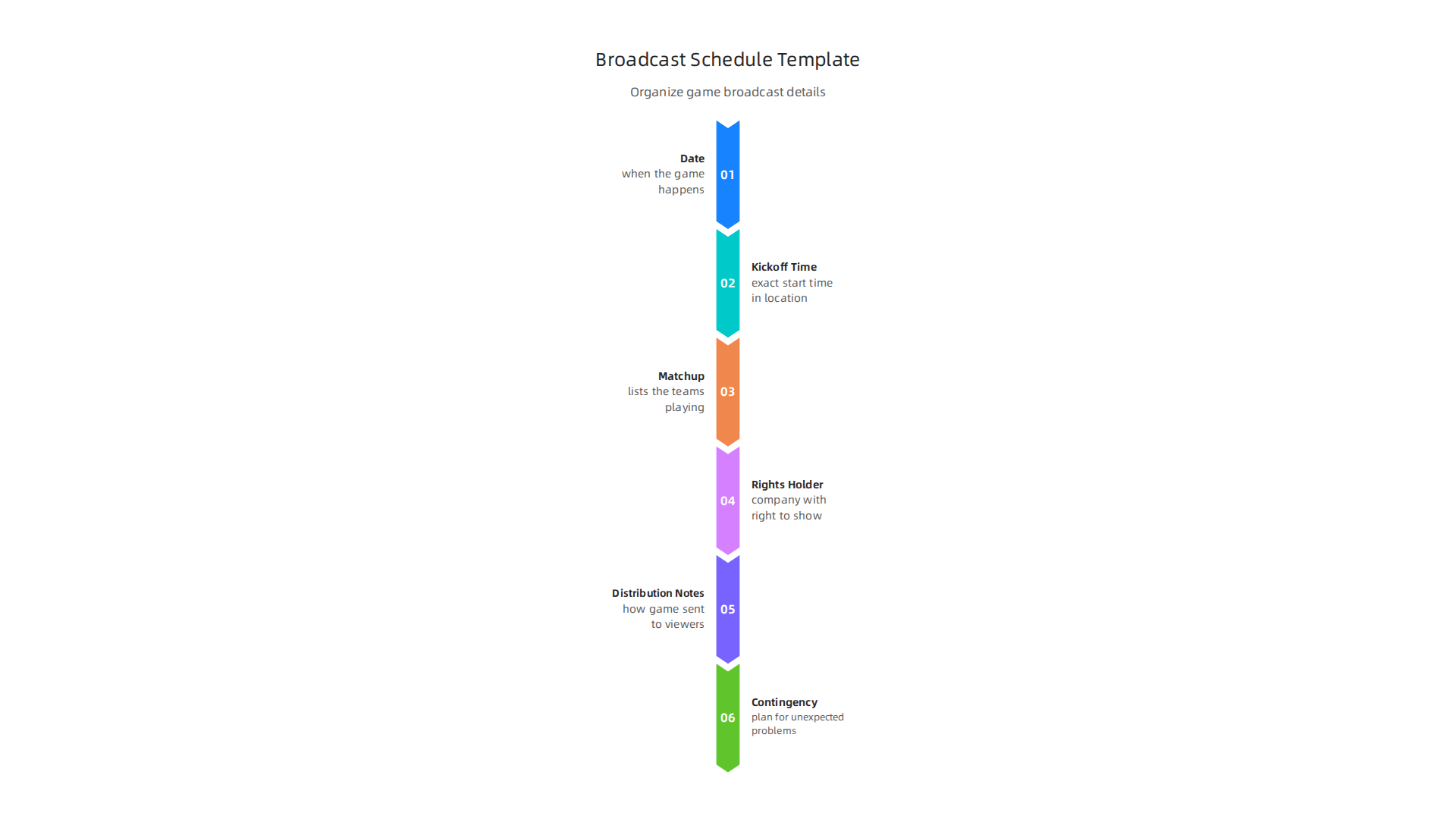
Using a table like this makes it easy to see all the moving parts at a glance.
| Date | Kickoff Time (Local) | Matchup | Rights Holder/Platform | Distribution Notes | Contingency |
|---|---|---|---|---|---|
| Sep 6, 2026 | 12:00 PM EST | Team A vs. Team B | ABC / ESPN+ | US: ABC, Global: ESPN+ | Backup feed, Rain delay plan |
| Sep 6, 2026 | 3:30 PM CST | USC vs. Illinois | FOX | US: FOX, LATAM: Regional Partners | Weather advisory, Overtime window |
| Sep 7, 2026 | 7:00 PM PST | Team C vs. Team D | Peacock | US: Peacock, Europe: Local Channels | Technical issue protocol |
Understanding the Table Cells:
- Date: This is when the game happens. It helps organize the whole calendar.
- Kickoff Time (Local): This shows the exact start time in the location where the game is played. Broadcasters must then figure out what that means for different time zones around the world.
- Matchup: This lists the teams playing. For example, a big game like USC vs. Illinois draws lots of interest.
- Rights Holder/Platform: This tells you which company has the right to show the game and where it will be shown (like ABC, FOX, or a streaming service like Peacock). You can often find official broadcast plans through various sources Networks Unveil 2026 College Football Broadcast Schedules.
- Distribution Notes: This section explains how the game will be sent out to different viewers. It might say "US: Broadcast TV, Global: Streaming" to make it clear.
- Contingency: This is a plan for unexpected problems. What if there’s bad weather? What if there’s a technical glitch? Having a backup plan is key for flawless delivery.
This kind of detailed schedule helps a lot with planning and making sure every game reaches its audience smoothly. It’s a way to master college football broadcast schedules for global reach and keep fans happy.
To truly make your broadcast strategy shine and captivate audiences worldwide, you need more than just a schedule. You need top-notch production. Explore Our Broadcast Services to see how we can elevate your sports content.
Technical Checklist for Matchday Broadcasts
Having a great college football tv schedule is only half the battle. To make sure all those exciting games, from an ole miss football schedule matchup to a huge texas tech football schedule game, look and sound perfect, you need a careful technical plan. This plan is like a checklist that helps everyone on the broadcast team make sure everything works just right before, during, and after the game.
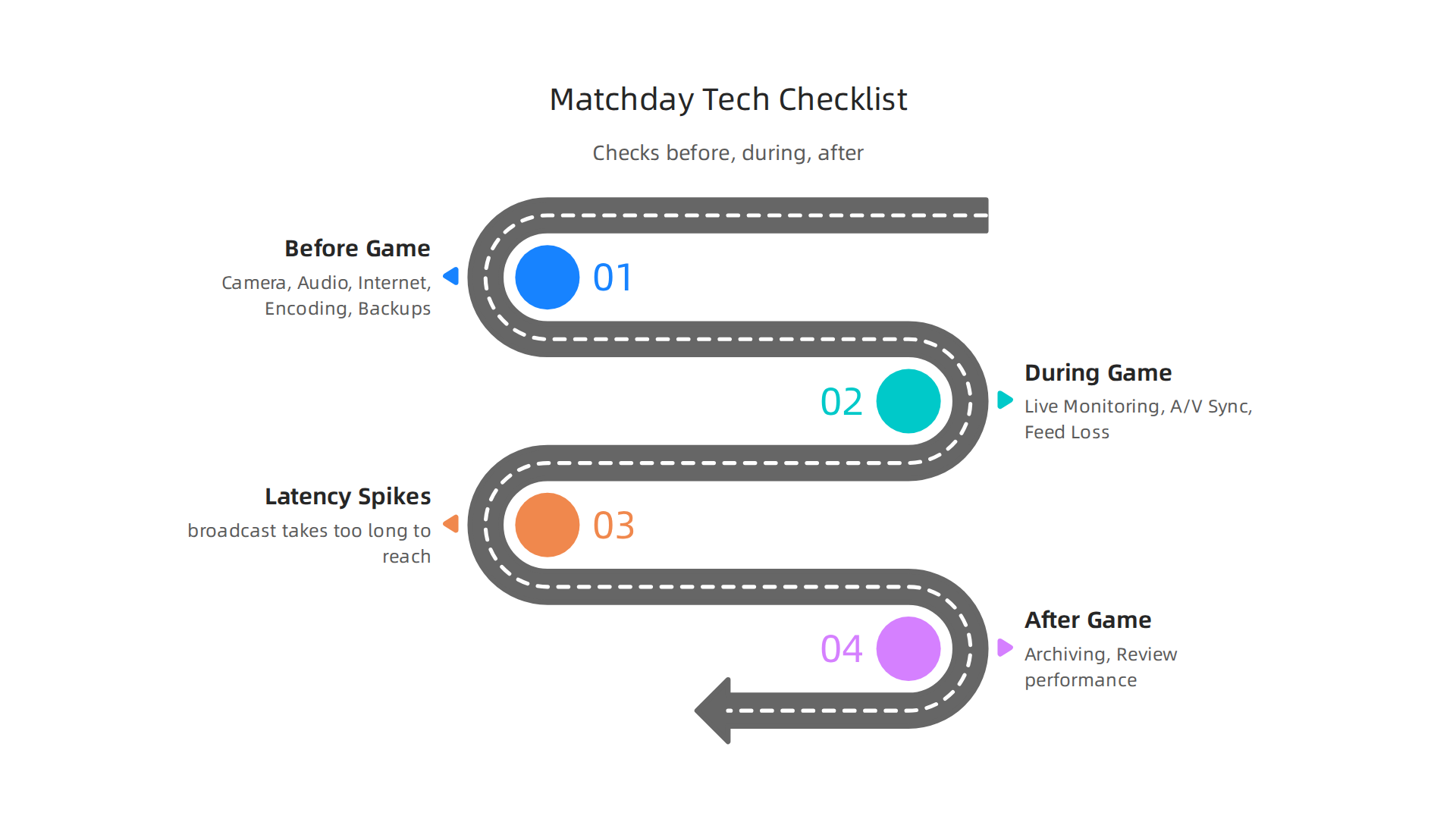
Here’s a simple look at what a technical team checks:
-
Before the Game (Pre-Match):
- Camera Setup: Are all cameras working and showing a clear picture? Are they in the right spots?
- Audio Check: Can we hear everything? The announcers, the crowd, the on-field sounds? Is the sound clear and balanced?
- Internet Connection: Is the network strong and fast enough to send the video? This is super important for smooth streaming.
- Encoding Gear: Are the devices that turn video into a digital stream working?
- Backup Plans: What if something fails? Are backup cameras, microphones, or internet connections ready to go?
-
During the Game (Kickoff to Final Whistle):
- Live Monitoring: Teams watch the broadcast constantly. They check for issues like video freezing, blurry pictures, or sound problems. Monitoring recovered and decoded media is key, not just if the connection is active BBright White Paper: SRT vs. RIST for Professional Video….
- Audio/Video Sync: Does the sound match the picture? If not, it can be very distracting for viewers.
- Feed Loss: What if the video signal stops? Fast action is needed to switch to a backup or fix the problem.
- Latency Spikes: This is when the broadcast takes too long to reach viewers. Modern systems use things like Low-Latency HLS (LL-HLS) to keep delays very short, often 2-5 seconds, or even less than one second with protocols like WebRTC Live Sports OTT Streaming: Technical Playbook 2026. If latency gets too high, teams need to know why and fix it quickly to keep the live feel.
-
After the Game (Post-Match):
- Archiving: All the video and audio gets saved. This is important for replays, highlights, and future use.
- Review: The team looks back at the broadcast to see what went well and what could be better for next time.
When issues come up, there’s an "escalation path." This means there are clear steps for who to tell and what to do, from the first person who spots a problem to the senior engineers who can fix big technical faults. This way, whether it’s a regular season game or a huge rivalry like USC vs. Illinois, fans get the best viewing experience possible.
To make sure your live sports broadcasts are always top-notch, you need experienced professionals and the right tools.
Get in touch to learn how our team can help with your next production.
When putting together a live broadcast for a big game on the college football tv schedule, it’s not just your own team working. Many outside helpers, called vendors, are also involved. They handle key parts like getting the video signal from the stadium, sending commentary feeds, or providing local camera crews. Managing these vendors well is super important for a smooth show, whether it’s an exciting ole miss football schedule game or a crucial texas tech football schedule event.
Key Agreements and Timing
Think of vendors as specialized partners. You need to choose them carefully and work with them closely. A helpful step is to have very clear agreements with each vendor. These are often called Service Level Agreements, or SLAs. They explain exactly what you expect from them, like how quickly they must fix an issue or the quality of their service. These agreements ensure everyone knows their job and what needs to be done.
Planning for vendors should start many weeks before a big event. For international games, you might begin thinking about broadcast needs 12 to 16 weeks ahead of time. This gives you enough time to pick the best partners and get all agreements in place Sports Broadcast Management Guide. It’s also smart to keep all partner details, like contacts and service times, tied to the game plan Vendor Management for Sports Events. This helps make sure that even with many different groups helping, the whole process feels seamless, almost like working with one big team Mastering Global Sports Broadcasting for World-Class Live Events.
Roles and What to Do When Problems Happen
During a live broadcast, everyone needs to know their role. This helps to make sure that if a problem comes up, the right person knows what to do. For example, some people are Responsible for doing a task, while others are Accountable for making sure it gets done right. Some might need to be Consulted for advice, and others just Informed about what happened. This clear plan is vital for fast action, especially during a high-stakes game like USC vs. Illinois.
When something goes wrong, there must be a clear path for fixing it. This is called an "escalation path." It means there are steps to follow for telling the right people and getting help quickly. This helps reduce delays and ensures viewers get a smooth experience.
Working with many vendors can be tricky, but choosing a full-stack partner who handles many parts of the broadcast can simplify things.
For a comprehensive approach to managing your broadcast needs, consider exploring the expertise of a full-stack agency. Learn more about their integrated solutions at Trans Group.
When you simplify your live sports production, you can focus more on creating an amazing show for fans. This means less worry about technical details and more time to make the broadcast truly special. To learn more about seamless solutions for your next big game, you can always Request a Broadcast Consultation.
Summary
This article explains why building a strategic college football TV schedule is a complex but critical task for broadcasters and rights holders in 2026. It walks through kickoff times and TV windows, where games appear (linear channels versus streaming), and how media-rights deals and blackout rules determine availability. The piece covers global challenges — rights segmentation, time-zone conversions and international feeds — plus how decision-makers prioritize marquee games, manage schedule conflicts and plan contingencies. It also compares production models (traditional on-site vs remote/REMI), outlines the technical video pipeline (encoding, monitoring, low-latency delivery) and highlights cost drivers and savings from centralized/cloud approaches. Practical checklists for matchday operations, vendor SLAs and escalation paths show how to protect quality and uptime. After reading, broadcast directors and sports enterprise leaders will understand the key trade-offs and steps to plan schedules that maximize reach, control costs and deliver a consistent fan experience worldwide.