





Why world-class live broadcasts matter for enterprises and global sports
Imagine watching a popular show like jimmy kimmel live on ABC TV. It looks easy, right? But making sure millions of people across the world can see that same live broadcast at the exact same time, without hiccups or delays, is a huge challenge.
This isn’t just true for entertainment; it’s even more critical for big sports events, from global tournaments to college football games.
For businesses and sports organizations, getting a live event to a worldwide audience means dealing with some big problems. First, it costs a lot of money to produce and deliver high-quality live content. Second, the technology behind it is very complex. You need special equipment and expert teams to make sure everything runs smoothly. Most importantly, these broadcasts must be super reliable, meaning they can’t go down, and they need to be shown with very little delay. For example, experts define "low latency" live streaming as getting the video from the camera to your screen in under five seconds, with anything under one second considered "real time" Low Latency Live Streaming: The 2026 Edge Playbook. Whether it’s british tv viewers watching a match or fans of WEC TV tuning in from another continent, everyone expects a perfect picture with no lag.
These challenges mean that enterprises and global sports groups often struggle to broadcast yourself to everyone they want to reach. They face problems like keeping the picture quality high across different regions, reaching fans on many different screens, and handling constant changes in technology. Many try to solve this by using several different companies or outdated systems, which can lead to even more problems like inconsistent quality and higher costs. To truly succeed, these organizations need a smart plan for live sports broadcasting. For more detailed insights, explore Expert Strategies for Global Sports Broadcasting in 2026.
This article will help you understand how to deliver world-class live broadcasts. We will give you simple, actionable advice on how to build the right system (architecture), manage the show (production models), handle permissions (rights), check if it’s working well (measurement), and pick the best partners (vendor selection) for huge global audiences. If you’re looking to overcome these complex broadcasting hurdles, you might be interested to Learn More About TPT Global and see how expert solutions can help.
To make sure a live show, whether it’s jimmy kimmel live on ABC TV or a big WEC TV sports match, reaches everyone smoothly around the world, you need a strong plan for how the video gets from the camera to people’s screens. This plan is called the "architecture."

It’s all about making sure the broadcast can handle many viewers and stay reliable.
Smart Ways to Send Video Everywhere
Imagine you’re trying to broadcast yourself to a huge audience across different countries. How do you get the video there fast and clearly?
-
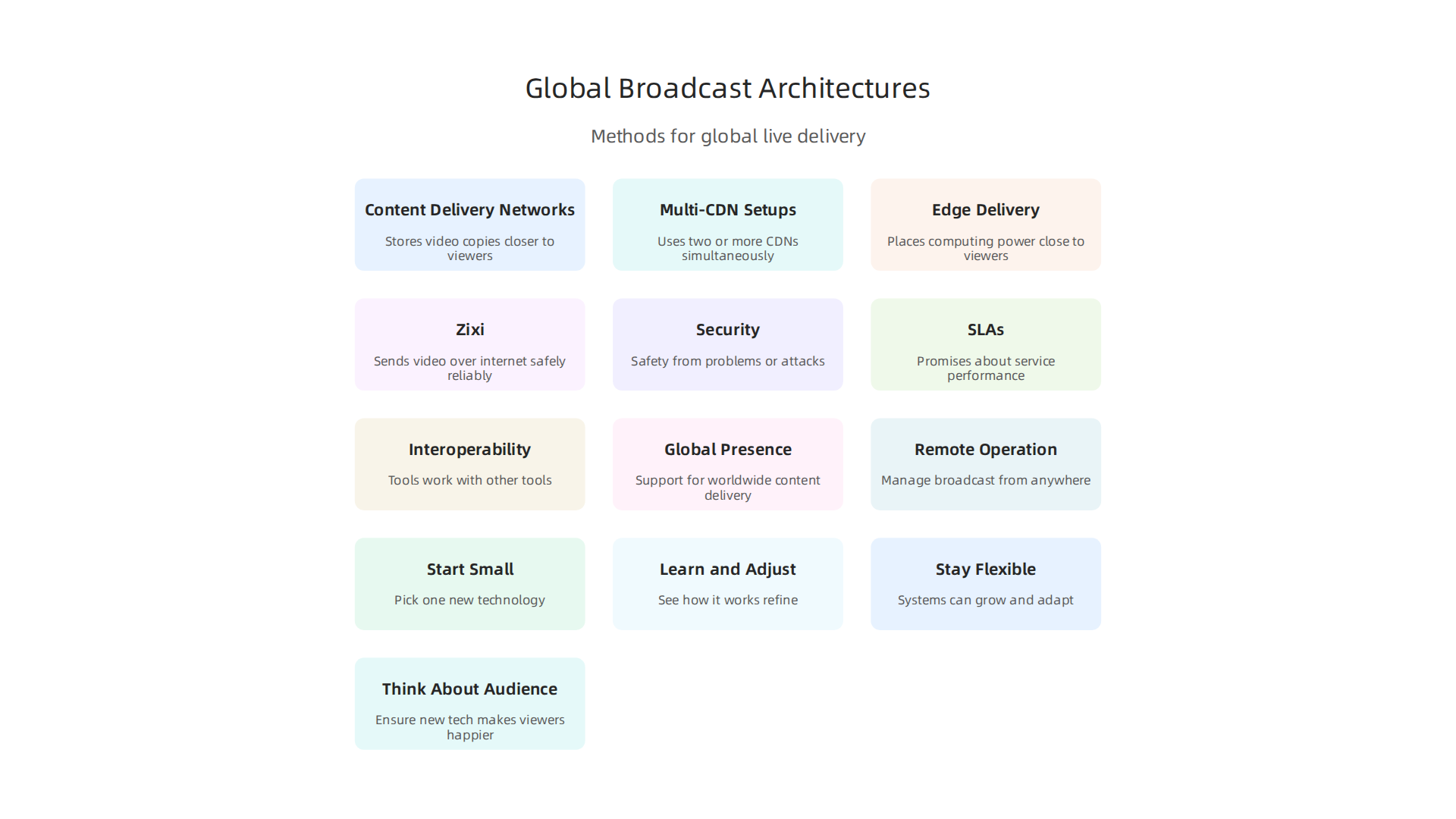
Content Delivery Networks (CDNs): Think of a CDN as a huge network of computers all over the world. When you send your live video to a CDN, it stores copies of that video closer to your viewers. So, if someone in Europe wants to watch
british tvlive, they get the video from a server nearby, not one all the way in America. This makes the video load faster and reduces delays. In 2026, many CDN providers are compared on how quickly they deliver content in different regions CDN Providers Compared in 2026. Optimized CDN setups can cut down live stream delays from 20-30 seconds to just 6-12 seconds Content Delivery Networks and Live Streaming. -
Multi-CDN Setups: What if one CDN has a problem? Or what if one CDN is faster in some areas and another is better in others? That’s where a multi-CDN setup comes in handy. You use two or more CDNs at the same time. This way, if one goes down, the others can pick up the slack. It also lets you choose the best performing CDN for each viewer, making sure everyone gets the best quality and lowest delay. A good multi-CDN plan includes ways to switch between providers if one fails CloudCDN – Security-first Global Edge Network. This strategy helps you reach and engage more fans globally. To learn more about getting your content out there, explore our insights on maximize global reach for UAB football broadcasting.
-
Edge Delivery: This is an even faster way to get video to people. "Edge" means placing small computing power very, very close to where viewers are. This reduces the time it takes for the video to travel, aiming for delays of less than one second. This kind of speed is great for interactive events or when every millisecond counts, like for live sports scores. For 2026, experts are looking to get live streaming latency under two seconds Reduce Live Streaming Latency in 2026.
Keeping Your Broadcasts Running: Reliability and Backups
For any major live broadcast, like a global sports event, it’s super important that the stream never stops. Here’s how to build a system that won’t let you down:
- Failover: This is like having a backup generator for your house. If the main power goes out, the generator kicks in automatically. In broadcasting, if one part of your system breaks down, a failover system instantly switches to a backup, so viewers don’t even notice a problem. Good designs plan for many different kinds of failures Datastore Resilience for Cloudflare and AWS Outages.
- Georedundant Origination: This means having copies of your main video source in different places around the world. So, if your main broadcast center in one country has an issue, another center in a different country can take over the broadcast without missing a beat.
- Regional Encoding: Not all internet connections are the same, and people watch on many different devices. Regional encoding means making different versions of your video file. Some are high quality for fast internet, others are lower quality for slower connections. This way, everyone gets a video that works well for them, no matter their internet speed or device.
By using these advanced methods, you can ensure your live broadcasts, from major global events to college football games, are delivered with the best quality and reliability. If you’re looking for solutions that cover all these bases, you might want to Explore Our Broadcast Services and see how we help global organizations. We specialize in making complex live production simple and seamless for our clients. You can also Watch Our Latest Broadcast Work to see how we deliver world-class quality.
Building on top of strong reliability and backup plans, the real magic of broadcasting in 2026 comes from smart technical choices and how you run your production. This is all about getting your video from the camera lens to screens everywhere, making sure it looks great and arrives fast.
Technical Stack & Production Workflows: From Capture to Delivery
Today, many big shows, even ones like jimmy kimmel live on ABC TV, use a mix of old and new ways to make their programs. This is called a hybrid production model. It means some parts of the show are still made in a traditional studio (on-site), while other parts are done by people working from different places or even using computers in the cloud. This mix helps teams work together better and saves money, too. Experts say that hybrid cloud is now the normal way to do things in broadcasting, with on-site work for live switching and cloud for editing and sending content out Cloud-Based Broadcast Workflows.
Smart Ways to Send Video Over the Internet
When you broadcast yourself from far away, you need special tools to send the video over the internet reliably. These are called contribution paths:
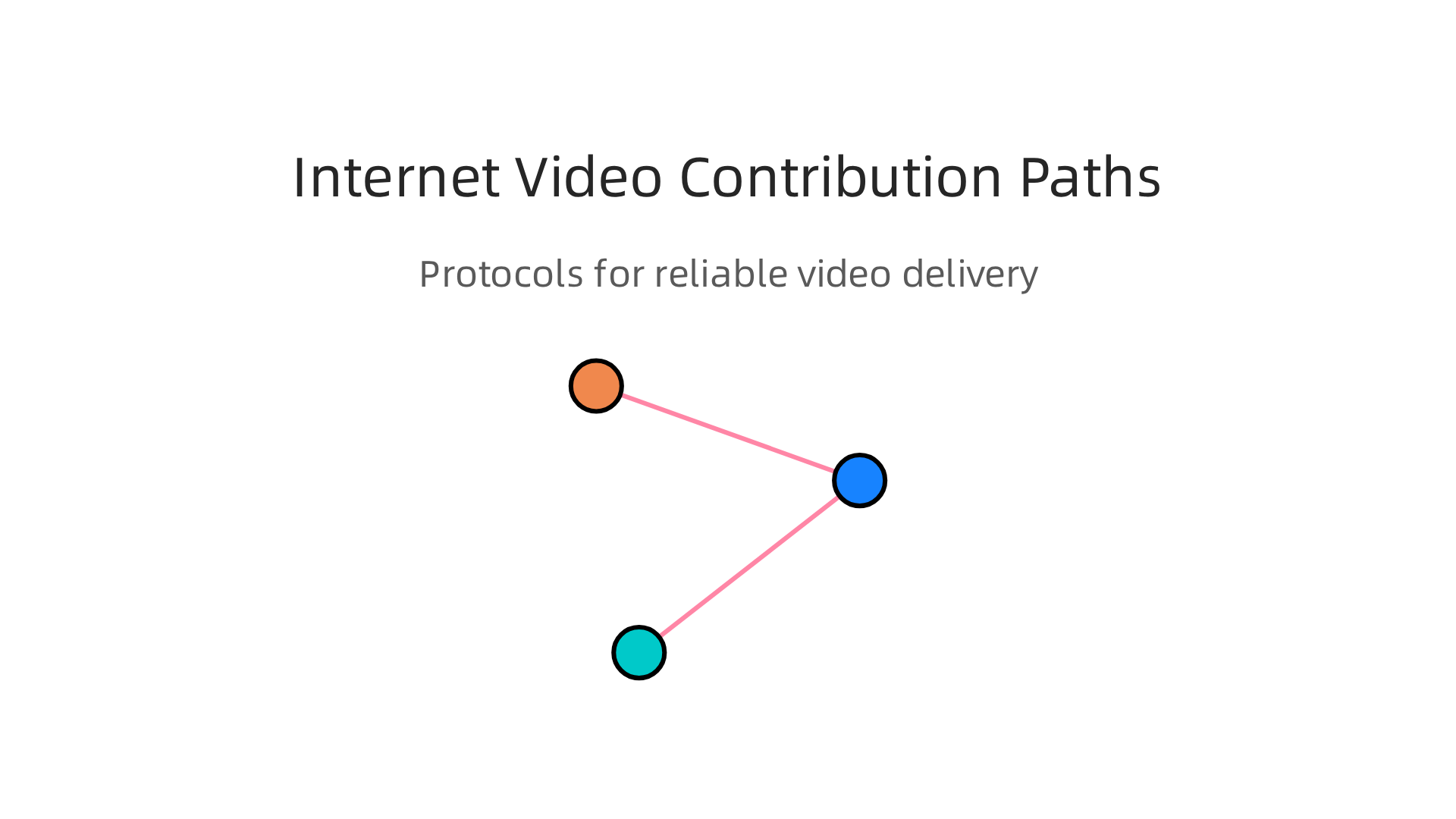
- SRT (Secure Reliable Transport): Think of SRT as a super strong mail delivery service for your video. It makes sure your video gets from one place to another over the internet without missing any parts, even if the internet connection isn’t perfect. It’s often the easiest way to send a live feed SRT vs RIST for professional video contribution.
- RIST (Reliable Internet Stream Transport): RIST is similar to SRT, but it’s built to work well with many different kinds of equipment. It also has special ways to stop video errors, making sure your
british tvshow looks clear. RIST is often a better choice when you need to make sure different systems can talk to each other easily Rise of Internet-Based Backhaul. - Zixi: This is another way to send video over the internet very safely and reliably. Zixi helps big companies keep track of their video streams from anywhere in the world. They offer tools to manage content over any internet connection Zixi Best Practices for Remote Monitoring.
Using these tools lets you send video from a camera at a WEC TV sports match directly to your production hub, whether that’s a studio or a cloud service.
Cloud Power for Your Broadcast
More and more, parts of making a show happen in the cloud. Imagine mixing all the video feeds or adding fancy graphics for a soccer game without needing huge machines in a physical studio. Cloud-based switching and graphics let you do this. This means people can work from anywhere, mixing live video and adding cool effects using powerful computers on the internet. This helps to streamline global live sports production for major rights holders, making it easier to manage complex shows.
Codecs, Transcoders, and Packagers: Making Video Just Right
To get your video looking its best and playing smoothly for everyone, even on different devices and internet speeds, you need to use special tools:
- Codecs: These are like special compressors for your video. They make video files smaller without losing too much quality. Good codecs, like JPEG XS or HEVC, are key for sending video quickly without it looking fuzzy Low Latency, High Flexibility: Remote Production.
- Transcoders: Imagine you have a video file, but some people want to watch it on a phone, and others on a big TV. A transcoder makes different versions of your video so it fits each device perfectly.
- Packagers: Once the video is transcoded, a packager gets it ready to be sent out to viewers. It puts the video into different formats that streaming services understand, ensuring it can reach all kinds of screens.
By carefully choosing these tools, you can control how quickly your live video reaches viewers (called latency) and how good it looks (quality). These technical decisions are super important for anyone looking to reach a global audience with their live content.
Ready to dive deeper into how these technical parts can boost your broadcast?
Request a Broadcast Consultation today to talk about your specific needs.
The previous section talked about getting video from the camera lens to screens everywhere. But making sure your show, like a popular program such as jimmy kimmel live on ABC TV, looks great and arrives fast is only half the battle. Once your content is ready, you also need to understand who can watch it and where. This is where rights, licensing, and sharing your content across different countries become very important.
Global media rights are a huge business today. In 2026, for example, the money spent on global sports rights is expected to go over $67 billion Global sports rights climb to over $67 billion in 2026. This large amount shows how much value there is in letting people watch big events, like a WEC TV race, or popular entertainment shows. But managing these rights carefully is key.
What are Media Rights and Why Do They Matter Globally?
When a TV channel or a streaming service buys the rights to show a sport or a program, they usually buy it for specific places.

Imagine one company getting the rights to show a soccer match in the UK, while another gets the rights for the US. This means if you are trying to broadcast yourself to fans all over the world, you can’t just send your signal everywhere without checking the rules. Streamers, in particular, are putting more money into sports rights, with investments projected to reach $14.2 billion in 2026 The year in sport: six key trends for 2026.
Dealing with Global Challenges: Blackouts and Geo-blocking
A big challenge for global broadcasters is something called "blackout territories." These are places where a broadcast is blocked on purpose. This happens when a different company has already bought the exclusive rights to show that content in that specific area. So, even if someone in a "blackout" country wants to watch a game, they can’t get it from your stream. This is a common part of how media rights work, especially for major sports Beyond Media Rights: A Whole New Ballgame for Sports.
To handle these rules, broadcasters use a technical trick called geo-blocking. This system uses special tools to figure out where a viewer is located based on their internet address. If a viewer is in a blackout area, the system simply won’t let them watch. For example, a british tv show might only be available in the UK, and geo-blocking makes sure of that.
Organizing for Global Content Delivery
Managing all these moving parts is important for reaching fans globally without breaking any rules. It helps you maximize sports leagues and team broadcast coverage for global reach and revenue. To do this well, you need:
- Clear Contracts: Make sure all agreements clearly state where and when your content can be shown. This includes whether it’s for TV, online streaming, or both.
- Centralized Records: Keep a good record of all your rights for every show and every region. Knowing which areas are blacked out for each piece of content is crucial.
- Right Technology: Have the correct technical tools, like geo-blocking, to control who sees what based on their location.
Having a clear strategy for your rights is just as important as the cameras and streaming technology. It ensures your content gets to its intended audience, no matter where they are, and helps you achieve your 2026 live sports broadcasting strategies for global reach and quality.
For a complete solution to managing your sports and media broadcasting, including rights management and distribution, a full-service agency can be very helpful. Trans Group offers a single-window solution for every aspect of the game.
When considering a partner for these complex global broadcasts, it’s wise to look for those who deeply understand these challenges. To learn more about how a company like TPT Global tackles these issues and delivers top-tier results, consider exploring Why Choose TPT Global.
After making sure your content can be seen in the right places around the world, the next big step is to understand who is watching and how you can make money from your shows. This is where audience measurement, making money, and working with sponsors come into play. It’s not enough to just broadcast yourself; you need to know if people are tuning in.
Knowing Who’s Watching: Audience Measurement
To succeed, you need to understand your viewers. Audience measurement means collecting information about who watches your content, how many people watch, and for how long.

This is like counting how many people watch a show like jimmy kimmel live on ABC TV or a WEC TV race, whether it’s on regular TV or online streaming.
Key things to look at include:
- Total Viewers: The total number of people who watched.
- Viewing Time: How long people stay tuned in.
- Engagement: If people are talking about your show online or interacting with it.
Knowing these numbers helps you understand what your audience likes and how to reach even more people. For instance, reports like the State of Audience in Media Report 2026 help media companies keep up with viewer habits in 2026. This data is also important for live events, where quick information about viewership can help with decisions in real time. For more tips on connecting with viewers, check out how to maximize fan engagement with flawless real-time sports scores.
Making Money: Monetization Tactics
Once you know your audience, you can think about how to make money. There are a few main ways broadcasters do this:
- Advertising: This is the most common way. Ads are shown during breaks in a program. For live events, technology allows ads to be changed quickly, so different ads can be shown to different viewers based on where they are or what they like. This is called "ad insertion" and it’s a big part of Live Sports Monetization Strategies for Streaming Platforms in 2026. The cost of these ads can be quite high, especially for big events, as shown in The 2026 Ad Buyer’s Guide to Sports on TV & Streaming.
- Subscription Tiers: Many streaming services offer different plans. You might pay a basic fee to watch some content, or a higher fee for special shows or live events.
- Sponsorships: Companies pay to have their name or products linked with a show or event. For example, a car company might sponsor a
WEC TVrace. This isn’t just about showing an ad; it’s about being a part of the event itself. The Sports Sponsorship Market Report 2026 shows how valuable these partnerships are, with the Europe sports sponsorship market alone expected to reach $29.77 billion in 2026. Understanding how to create these partnerships is key for driving revenue, and you can learn more about how global sports brands can boost revenue by unifying broadcast retail and fan engagement.
Partnering with Sponsors
Sponsorships are very important, especially in sports. Brands want to be seen where their target audience is. This often means working closely with broadcasters to make sure their message is shown during a game or event. This can include putting their logo on screens, mentioning their name, or even creating special content together. A minute of airtime exposure on free European TV can be worth a lot to sponsors, around €220,000 in commercial value, according to research on Sports on European TV: Maximising Commercial Value. The PwC Sports sponsorship playbook offers insights into how these partnerships work best.
Getting these elements right is crucial for any show, from jimmy kimmel live to a big sporting event. It ensures your content not only reaches viewers but also helps you grow and make money.
Are you looking for expert help to measure your audience and boost your revenue through smart monetization and sponsorship?
Request a Broadcast Consultation
The previous section discussed making money from your shows by understanding your audience and using ads or sponsorships. Now, let’s talk about the important choices you need to make behind the scenes to actually get your shows, like jimmy kimmel live or a WEC TV race, out to viewers. This means picking the right companies and tools to help you.
Vendor Selection, Integration & Single-Window Delivery Models
When you want to send your content out to the world, you have to decide who will help you. Think of it like building a house: you can hire one company to do everything, or you can pick different experts for different parts, like one for the roof and another for the plumbing. In broadcasting, these choices are about picking vendors.
There are two main ways to pick your broadcast helpers:
-
Single-Supplier (Full-Stack) Model:
- What it is: You choose one company to handle most or all of your broadcast needs. This could be everything from cameras to sending the show out to viewers.
- Good points: It’s often simpler. You have one main contact, and all the parts are designed to work together easily. It might feel like less of a headache.
- Things to watch out for: That one company might not be the best at every single thing. You might miss out on newer, better tools from other companies. Also, it can be hard to switch later if you’re unhappy, like being stuck with a specific service.
-
Best-of-Breed Model:
- What it is: You pick the very best company for each specific job. Maybe one company is great at video quality, another is best for sending the signal over the internet, and a third handles how your show looks on screen.
- Good points: You get top-notch tools for every part of your broadcast. This can lead to better quality and more unique features. It also gives you more freedom to change one part without changing everything.
- Things to watch out for: This way can be more complex. You have to make sure all these different tools and companies can talk to each other and work together smoothly. It takes more effort to manage many different partners.
In 2026, many broadcasters use a mix of both, often relying on "hybrid cloud" systems. This means they use their own equipment for things like live switching, and then use cloud services for editing or sending content out. This approach helps manage costs and makes things flexible, as explained in articles about Cloud-Based Broadcast Workflows: Remote Production and….
What to Look For in a Vendor: Your Checklist
No matter which way you go, here’s a checklist to help you choose the right partners:
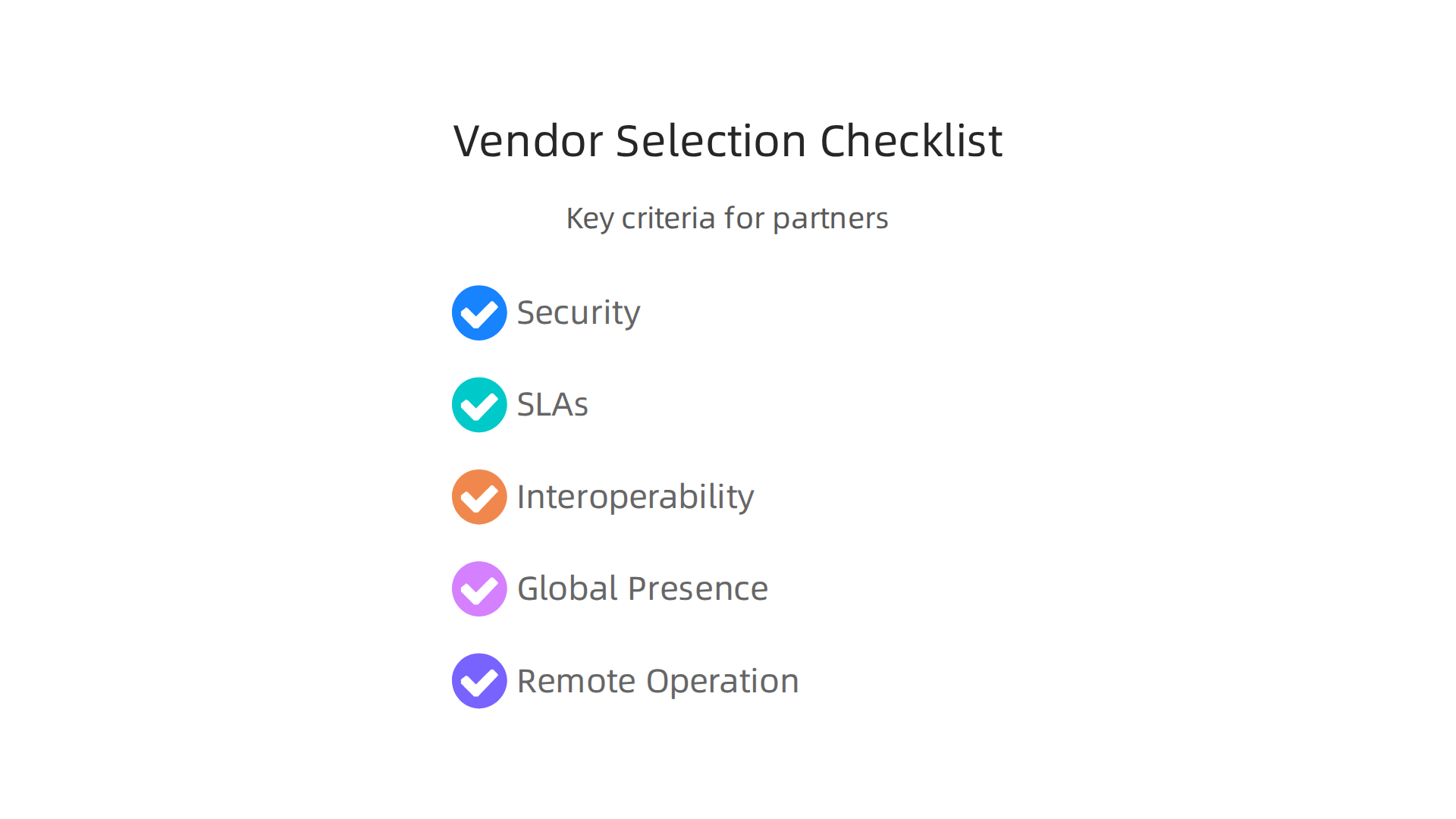
- Security: How safe is their system from problems or attacks? This is super important for any broadcast, from a small event to a big
ABC TVshow. - Service Level Agreements (SLAs): This is a fancy way of saying, "What promises do they make about how well their service will work, and what happens if it doesn’t?" You need clear promises, especially for live content.
- Interoperability: Can their tools easily work with other tools you might want to use? This is key for things like sending video over the internet. Protocols like SRT (Secure Reliable Transport) and RIST (Reliable Internet Stream Transport) are very important here because they help different systems talk to each other reliably. Experts say SRT is often easier for quick setup, while RIST is better when you need very formal testing and long-term control over your systems, according to a White Paper on SRT vs RIST for professional video contribution. Many modern systems use these to make remote production smoother, as discussed in Low Latency, High Flexibility: How Remote Production is Powering….
- Global Presence and Support: If you want your content to reach viewers all over the world, can your vendors support that? Do they have help available when you need it, no matter the time zone?
- Remote Operation Capabilities: Can you manage your broadcast from anywhere? Many broadcasts today, including parts of what makes up a
jimmy kimmel liveshow, are put together from different locations. Tools that let you monitor and manage content from anywhere are very helpful, as highlighted by Zixi: Best Practices for remote monitoring and operations.
Choosing the right vendors is a big decision that impacts how smoothly your content runs and how widely it can be shared. Whether you aim to broadcast yourself on a small scale or deliver a major british tv event, these choices set the stage for success. For more insights on how to make these choices for widespread delivery, check out expert strategies for global sports broadcasting.
If you’re finding these vendor choices a bit overwhelming, we can help simplify the process for you.
Get in touch
Or, for a quicker answer to your questions, you can always Chat now on WhatsApp.
Future-proofing broadcasts: Emerging tech and roadmap for 2026+
Choosing the right partners is just the start. To truly get ahead in broadcasting, you also need to look at what’s coming next. This means thinking about new technologies that can make your shows better and reach more people. It’s like planning for the future of your favorite ABC TV series or a big WEC TV race. You want to be ready for changes, not caught off guard. In 2026, there are some exciting new tools helping broadcasters.
New Technologies Changing the Game
Here are some of the cool new things that are helping broadcasts be better:
- Edge Compute: Imagine tiny data centers closer to where the action happens. Instead of sending all video data far away to a big cloud, some processing can happen right at the event. This makes things faster and smoother, especially for live shows. It helps cut down on delays, which is super important for live sports or news.
- AI-driven Production: Artificial Intelligence, or AI, is helping in many ways. It can make cameras smarter, helping them follow players in a game or zoom in on the most interesting parts automatically. AI can also help with editing or creating special graphics. This means less work for people and faster delivery of content. It can even help analyze audience data to make your shows, like
jimmy kimmel live, more appealing. This kind of innovation helps how fans connect with sports, as noted in the Beyond Media Rights: A Whole New Ballgame for Sports report. - Immersive Formats (VR/AR): Think about watching a
british tvshow where you feel like you’re actually inside the scene. Virtual Reality (VR) and Augmented Reality (AR) are making this possible. Fans can get closer to the action, whether it’s on the field or in the studio. This offers new ways to make watching shows more exciting and personal. - Improved Codec Efficiency: Codecs are like special programs that make video files smaller without losing quality. Newer codecs mean you can send high-quality video using less internet data. This helps deliver sharp, clear pictures to viewers, even if they have slower internet speeds, and it saves costs for broadcasters. The whole sports industry is looking at these trends for 2026 and beyond, according to the 2026 Global Sports Industry Outlook.
Your Plan for Using New Tech
Bringing these new technologies into your broadcast can feel like a big step. But you don’t have to do everything at once. Here’s a simple roadmap to help:
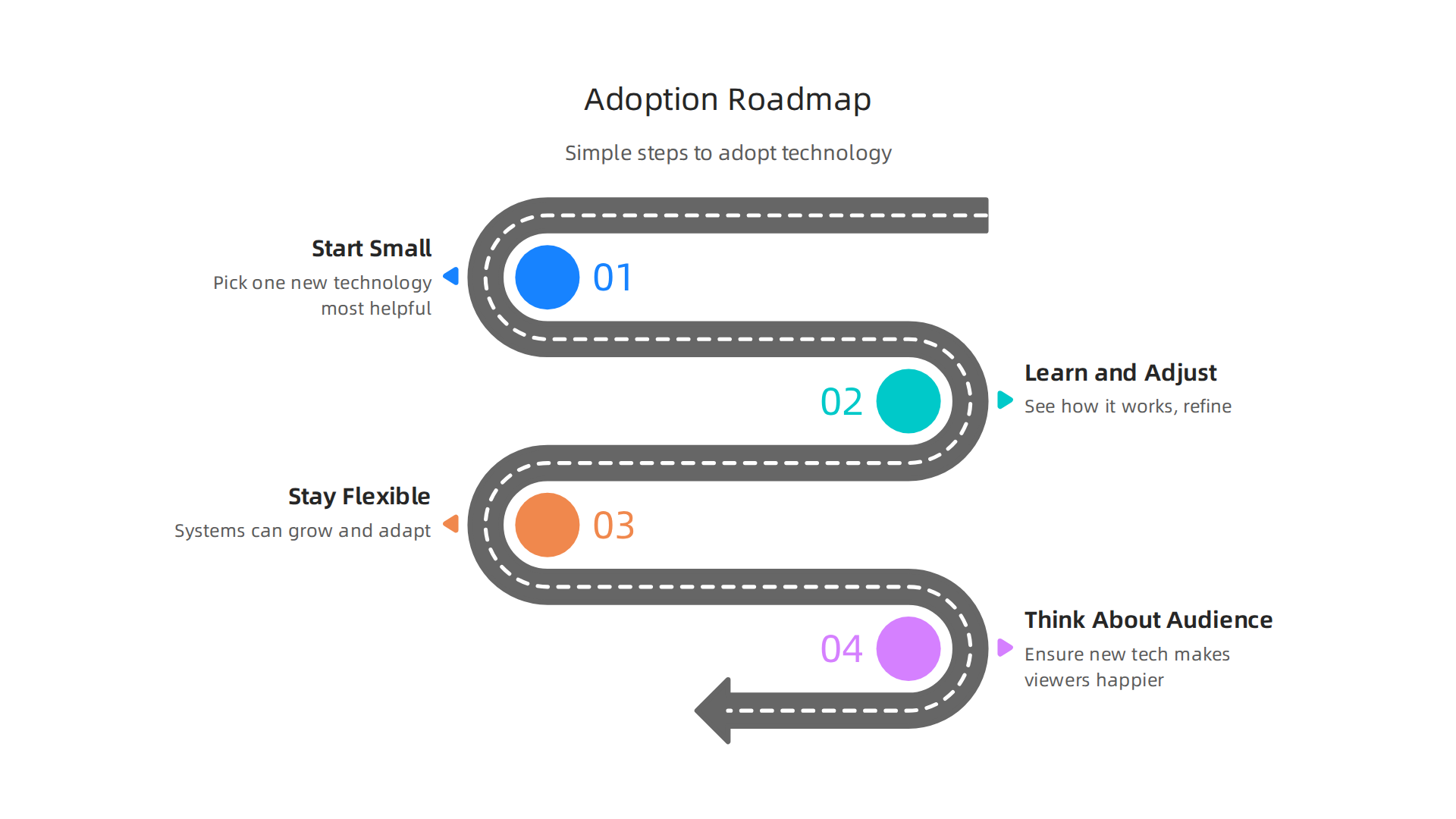
- Start Small: Pick one new technology that seems most helpful for your shows. Maybe try AI for a small part of your editing, or use edge computing for a single remote event.
- Learn and Adjust: See how it works. What went well? What could be better? Don’t be afraid to change things. The goal is to make your broadcast smoother and better for your audience.
- Stay Flexible: The world of technology changes fast. Make sure your systems can grow and adapt. Choose tools that can work with other new tools in the future. This helps you avoid getting stuck.
- Think About Your Audience: Always ask how new tech will make your viewers happier. Will it give them better quality, more exciting views, or faster access to content? This is key whether you
broadcast yourselffrom a small studio or manage a major global event.
By thinking ahead and slowly adding these new tools, you can future-proof your broadcasts and keep your viewers engaged. These strategies help you stay competitive and deliver top-notch content. For more detailed plans on how to keep your broadcasts current and reach a global audience with excellent quality, you can learn about 2026 live sports broadcasting strategies for global reach and quality.
Understanding these changes and having a clear plan for them can make all the difference in a fast-moving broadcast world.
Ready to see how these cutting-edge solutions can elevate your productions? Explore Our Broadcast Services and discover the future of global broadcasting.
Summary
This article explains how enterprises and global sports organizations can deliver world-class live broadcasts that scale, stay reliable, and reach fans in the right markets. It walks through the end-to-end architecture—from multi‑CDN and edge delivery for low latency to redundant origination and regional encoding for reliability—then covers production workflows (hybrid on-site/cloud), contribution protocols like SRT/RIST/Zixi, and the role of codecs, transcoders and packagers. You’ll also learn how to manage media rights and geo-blocking, measure audiences, monetize through ads/subscriptions and sponsorships, and choose vendors using a clear checklist. The piece finishes by outlining a practical roadmap to adopt emerging tech (edge compute, AI, VR/AR) so your broadcasts stay future-ready. After reading, you’ll understand the key technical, commercial, and operational decisions needed to plan, run, and scale a global live broadcast successfully.