




Why modern sports rights holders must rethink live TV platforms
Broadcasting live sports in 2026 is much more complicated than it used to be. It’s no longer just about sending a signal to traditional TV channels like an ABC live stream or local stations like WMUR TV. Today, sports rights holders face many big challenges. They need to find ways to make sure their live sports broadcasts reach fans all over the world, without costing too much money or being too hard to set up.
One of the biggest problems is the high cost involved in putting on a live sports show.
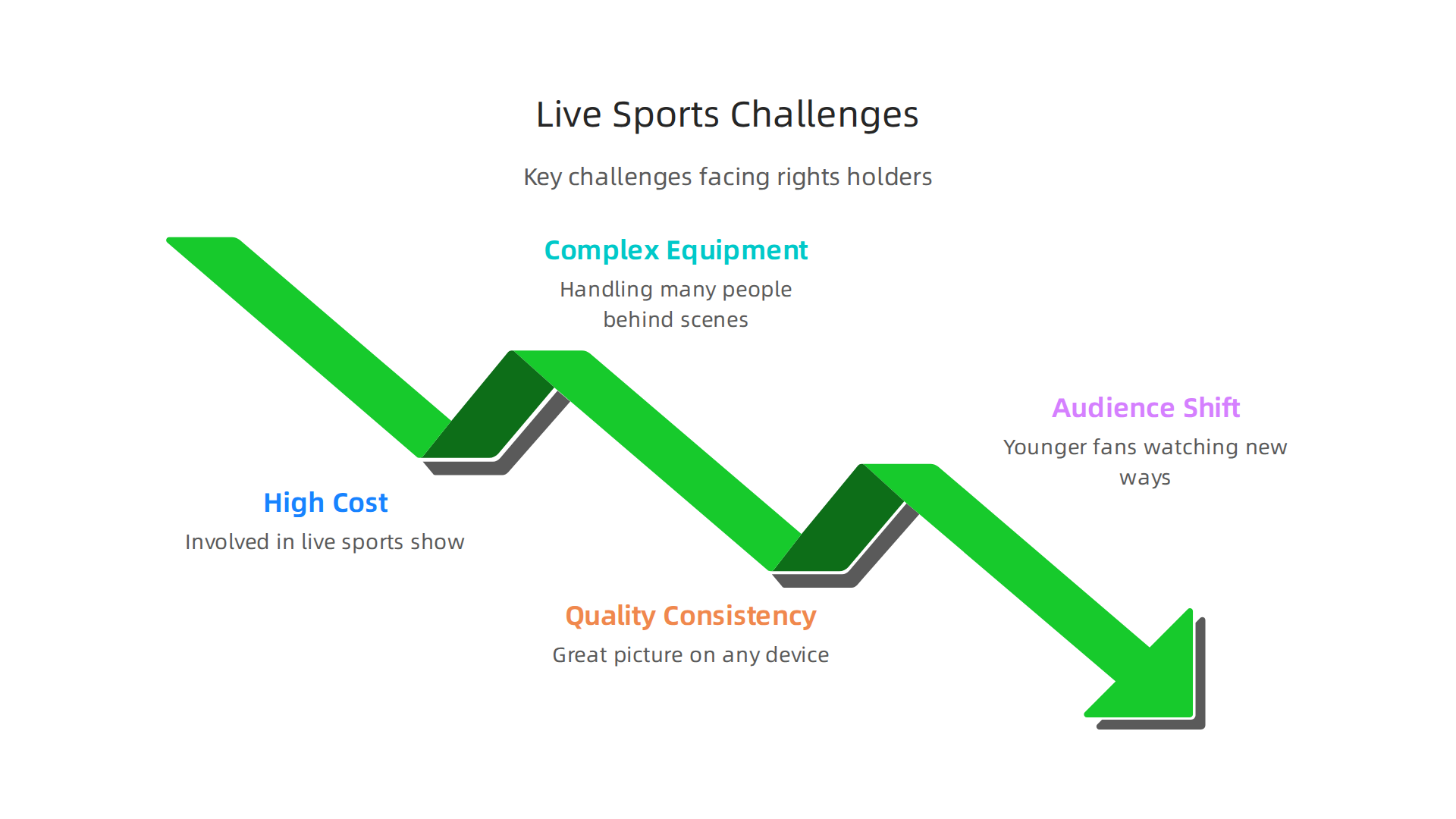
Then there’s the huge task of handling all the complex equipment and many people needed behind the scenes. It’s also tough to make sure the picture quality is always great, no matter if someone is watching on a big TV or a small phone, anywhere on Earth. For example, keeping a high-quality global TV signal consistent across different regions is a huge undertaking. The global sports rights market is massive, growing to over $67 billion in 2026, which means many companies are competing to get sports content to viewers in new ways, like through streaming services and direct-to-consumer models The year in sport: six key trends for 2026.
Fans, especially younger ones, are watching sports in new ways, moving beyond the traditional FX TV schedule and looking for streams online or on social media Ahead of the Game: Sports Horizon Scanning 2026. This shift means that sports groups must sell their broadcast rights to more places to make the same amount of money Beyond Media Rights: A Whole New Ballgame for Sports. Even a tbn live broadcast needs to consider all these new platforms to reach every possible viewer. This guide will help you understand all the parts of this puzzle. We will cover everything from the basic tools you need (infrastructure) to how you create the actual show (production workflows), how you send it out to people (streaming delivery), the different ways you can share it (distribution models), and how to pick the best partners to work with (vendor selection). It’s about delivering world-class live sports broadcasts to fans everywhere.
We believe that by understanding these areas, you can overcome the challenges and make your live sports broadcasts shine. To see examples of how expert teams handle these challenges, you can Watch Our Latest Broadcast Work.
If you want to dive deeper into how a dedicated team can help manage these complex broadcasts from start to finish, you might want to Learn More About TPT Global.
Core infrastructure: IP, cloud, CDN and edge considerations
To put on a live sports show today, you need the right tools behind the scenes. Think of it like building a house; you need a strong foundation and good pipes to carry water. For live broadcasts, this means choosing between old ways of sending video or new, internet-based methods. This is called your core infrastructure.
In the past, TV signals moved through special cables called SDI. Many older studios still use this. But now, more and more, live sports broadcasts use internet rules, called IP, to move video. A key standard for this is ST 2110. This IP method makes it easier to send video over long distances and to many places at once. Sometimes, places use a mix of both SDI and IP, which is a hybrid system. Looking ahead, many are moving towards "cloud-native" ways. This means using online computer services, or the "cloud," for almost everything. It makes it very flexible, so you can quickly grow or shrink how much you use depending on the event. This helps channels like a tbn live stream reach its audience without needing lots of heavy equipment on site.
Once your live show is ready, it needs to get to viewers quickly. This is where Content Delivery Networks, or CDNs, come in. Imagine a CDN as a huge network of mini-warehouses all over the world, each holding a copy of your broadcast. When someone watches your event, the CDN sends the video from the closest warehouse to them, making it faster and smoother. To make things even better, many big broadcasters use a "multi-CDN strategy." This means they use more than one CDN at a time. If one CDN has a problem or gets too busy, the others can step in, ensuring the show keeps going without a hitch. This is key for delivering unrivaled quality and global reach.
For truly fast delivery, especially for live sports where every second counts, "edge computing" is important. Edge computing places small servers even closer to where people are watching. This helps cut down on lag, or the delay between what happens live and when you see it on your screen. In 2026, many experts say that very fast streaming, like what you get with WebRTC, can have delays of less than one second, while other common methods like LL-HLS typically have delays of two to five seconds Low-Latency Streaming Protocols: WebRTC vs LL-HLS vs CMAF …. Low latency is very important for a global TV audience, ensuring fans don’t miss a beat. For example, a sports broadcast needs to be quick so that viewers don’t see a score update on social media before they see the play on screen. Moving to these advanced setups is crucial for major sports organizations to streamline global live sports production effectively.
Managing all this complex technology can be a big job. From choosing the right IP setup to setting up CDNs and edge computing, each step needs careful planning to make sure your audience gets the best experience.
If you are looking for help with these complex broadcast needs, we invite you to Explore Our Broadcast Services to see how we can assist you.
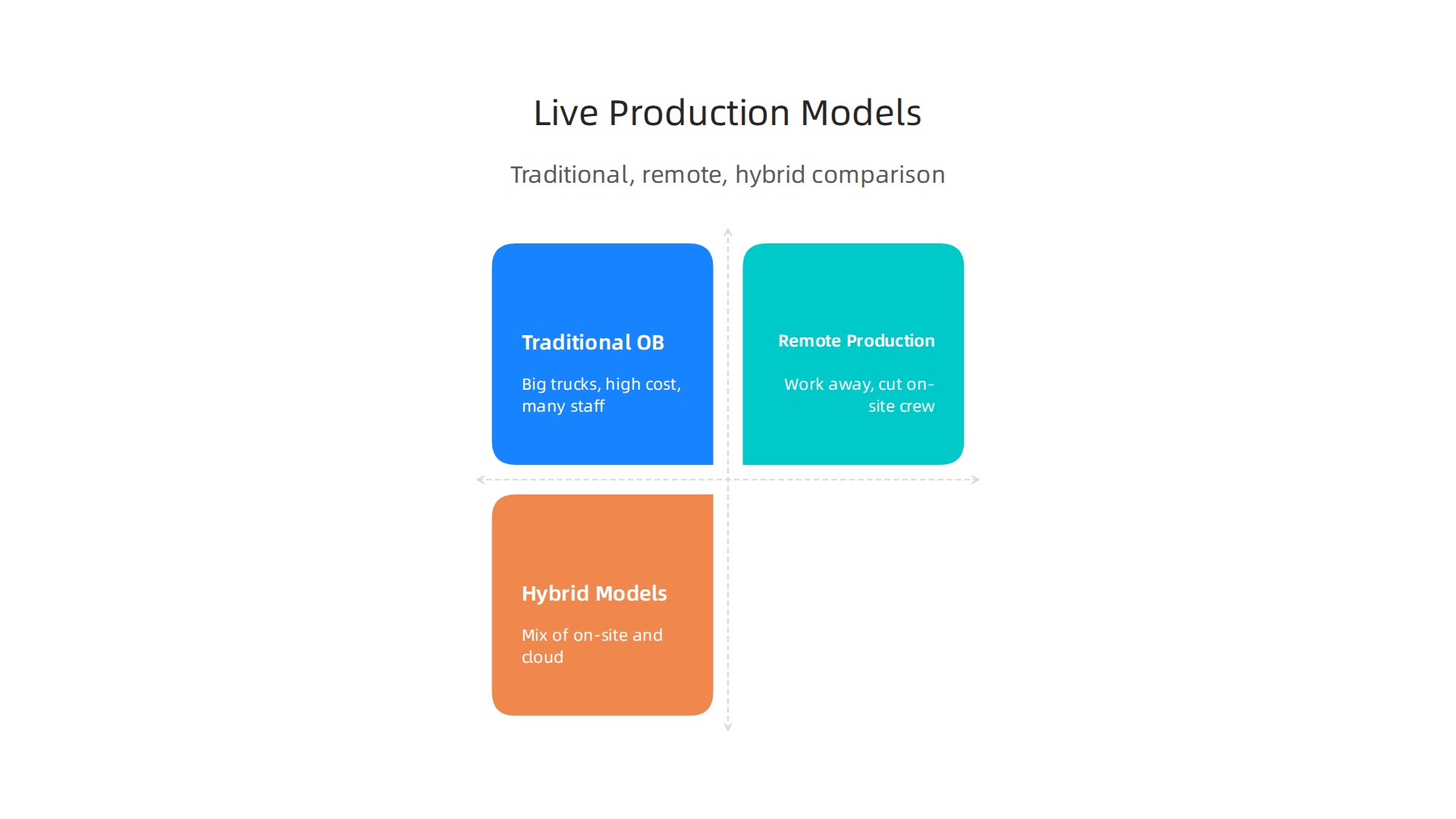
To make sure your audience gets the best experience, you need to pick the right way to produce your live show. There are a few main ways to do this: traditional outside broadcast, remote production, or a mix of both.
Traditional Outside Broadcast (OB) Trucks
For many years, live sports shows used big trucks full of equipment right at the event location. These are called Outside Broadcast (OB) trucks. Think of them as a TV studio on wheels. They have everything needed to capture, mix, and send out the live pictures and sounds. A single OB van can cost a lot of money, sometimes between $500,000 and $2 million, and needs a large team of 15 to 30 people on site Cloud Director vs Traditional OB Van: Why Sports Broadcasters Are …. While they offer great control right there, they are expensive, need many staff to travel, and can only be in one place at a time. This method can be especially costly for a global TV audience, impacting how channels like an abc live stream or fx tv schedule manage their budget for multiple events.
Remote and Virtualized Production
Today, more and more broadcasters are moving to "remote production." This means most of the work, like mixing video and sound, happens far away in a central office or even in the cloud. Only a small team and cameras are needed at the event itself. This change saves a lot of money. Broadcasters can cut on-site crew needs by 50% or more, which greatly reduces costs for travel, places to stay, and equipment Industry Insights: Remote production technologies reshape …. Some have even seen savings of up to 70% by not needing expensive OB trucks at all REMI Production- 70% Savings. This way, one central hub can handle many different events at once, making it easier for a wmur tv station to manage several local sports games.
Remote production also helps with staffing. You can have expert teams working from anywhere, which makes it easier to find the best talent. However, you still need to think about "latency," which is the small delay between what happens live and when the remote team sees it. Very low latency is key for smooth production decisions.
Hybrid Models: The Best of Both Worlds
Many broadcasters use a "hybrid" approach. This mixes the best parts of traditional on-site production with the benefits of remote and cloud-based systems. For example, some crucial live tasks like switching between cameras might still happen at the event or in a local hub. But tasks like editing, storing video, and sending it out to viewers (like for a tbn live broadcast) can be done using cloud services Cloud-Based Broadcast Workflows: Remote Production and …. This offers a lot of flexibility and can help lower risks.
No matter the setup, planning for global events needs careful thought about:
- Staffing: Making sure you have the right people, whether they are on-site or working remotely.
- Latency: Keeping delays as short as possible so everyone sees the action almost instantly.
- ISO Recording: This means recording each camera feed separately. It’s important for replays and making highlights later, giving more choices to the production team.
- Redundancy: Having backup plans for everything. If one system fails, another can take over right away to prevent any interruptions to your
global tvbroadcast. This is a critical part of mastering global sports broadcasting challenges.
Thinking through these production workflows helps major sports organizations and broadcasters deliver world-class live events. If you’re curious to see how these methods look in action, you can Watch Our Latest Broadcast Work.
After setting up the best way to produce your live show, the next big step is getting that show to viewers everywhere. This means thinking about how the video actually travels over the internet. You want it to be fast, clear, and protected. For global tv broadcasts, especially live sports, speed is super important. Nobody wants to see a goal minutes after it happened.
Streaming Delivery: Low-Latency Protocols, Packaging, and DRM
To make sure viewers see the action almost as it happens, broadcasters use special ways to send video. These are called low-latency protocols. "Latency" is just a fancy word for delay. A good setup can make sure that your tbn live broadcast reaches screens with very little delay, just like a local wmur tv show.
Here are some key ways to deliver live streams with low delay in 2026:
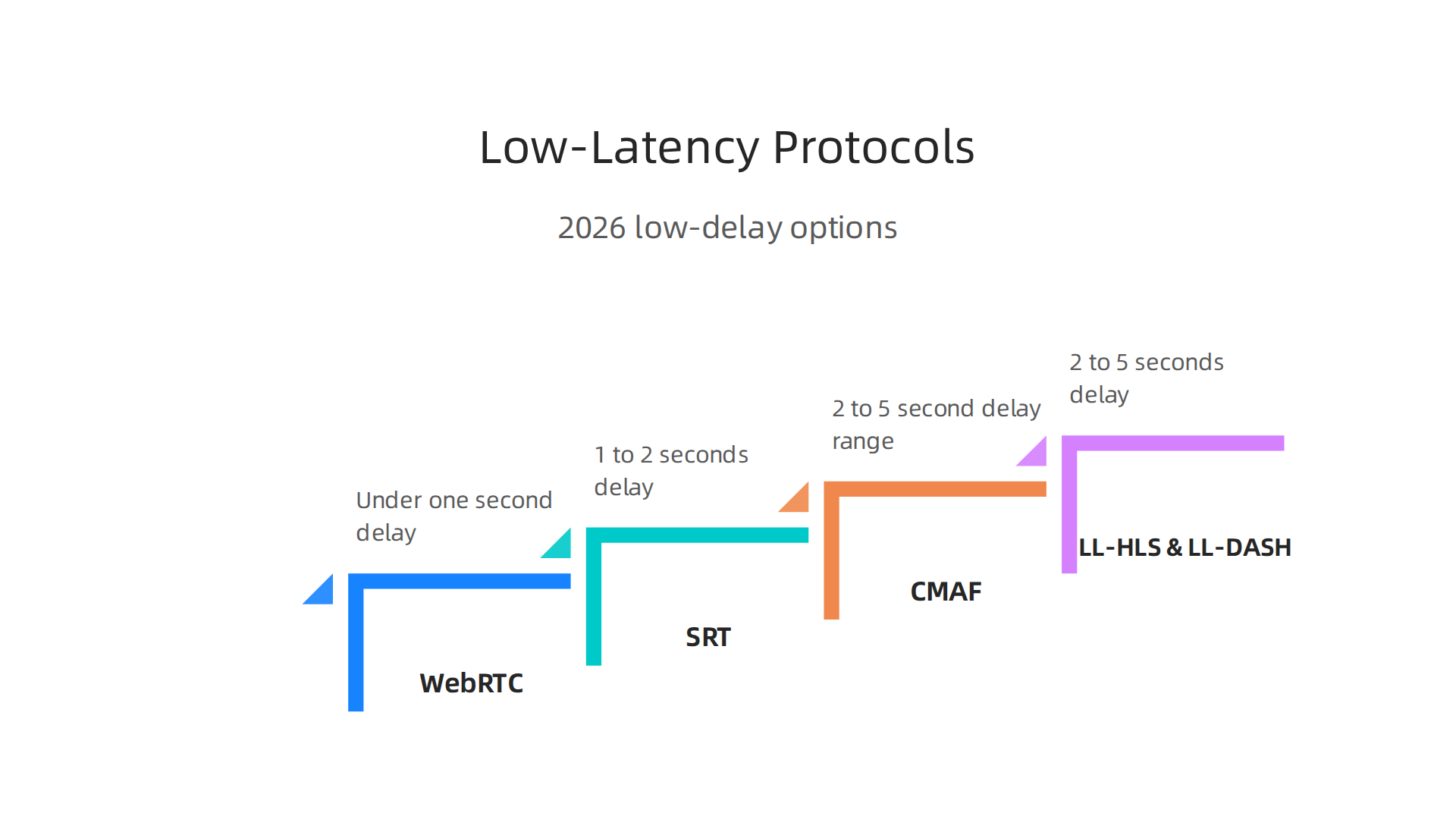
- LL-HLS (Low-Latency HLS) and LL-DASH (Low-Latency DASH): These are popular choices for sending video to many people at once. They work with most devices and web browsers, delivering streams with a delay of about 2 to 5 seconds. This is great for big events and can be scaled up to millions of viewers using powerful networks Low-Latency Live Streaming for Sports in 2026.
- CMAF (Common Media Application Format): This is like a special box for your video files that works well with both LL-HLS and LL-DASH. It helps deliver content even faster, also usually in the 2 to 5 second delay range Low Latency Streaming: LL-HLS vs WebRTC and CMAF’s Role.
- WebRTC (Web Real-Time Communication): If you need super-fast, almost no-delay streaming for things like interactive chats or online gaming, WebRTC is the way to go. It can get the delay down to under one second, sometimes even as low as 200 milliseconds. But it can be harder to send to a huge audience at once Which Streaming Protocol Has the Lowest Latency?.
- SRT (Secure Reliable Transport): This is often used to send video safely and reliably from one point to another, like from a camera at the event to a cloud production center. It helps keep the video stable even on shaky internet connections and typically has a delay of 1 to 2 seconds Streaming Protocols in 2026.
Making Sure Everyone Gets a Good Picture
Once you pick how to send the video, you also need to make sure it looks good for everyone. This is where a few other things come in:
- Adaptive Bitrate (ABR): Imagine your internet speed changes. ABR means the video stream can change its quality to match your internet. If your internet is fast, you get clear HD video. If it’s slow, you get a lower quality video that still plays smoothly without stopping. This is key for a good experience whether you are watching an
abc live streamor checking anfx tv schedule. - Content Delivery Network (CDN) Orchestration: For
global tvevents, you need to send video to people all over the world. CDNs are networks of computers that store copies of your video closer to viewers. "Orchestration" means making sure these CDNs work together perfectly to deliver the video quickly and reliably, even if one part of the network has problems. - DRM (Digital Rights Management): This is like a lock on your video content. DRM helps prevent people from copying or sharing your live stream without permission. It protects the valuable content, especially for major sports events.
Choosing the right mix of these technologies ensures that viewers get a high-quality, low-delay experience, no matter where they are. If you’re looking for help with these complex streaming needs, we can provide world-class solutions. Explore Our Broadcast Services to see how we manage these parts of live sports broadcasting.
Ensuring your live stream looks good for everyone is only half the battle. The other half is making sure the right people get to see it in the right places, especially when dealing with global tv broadcasts. This involves understanding media rights and how video content is shared around the world. It is like having a special ticket that says where and when a show, like a tbn live event, can be watched.
Distribution Topologies and Media Rights
When you broadcast a live event globally, there are a few main ways to send it out:
- Central Playout: Imagine a single control room sending out one main video feed to the whole world. This is simpler to manage because everything comes from one place. However, it means less ability to change things for different regions.
- Regional Delivery: This is where you send different versions of the video feed to different parts of the world. For example, some countries might get local commentary, or different commercials. This is more complex but helps meet local needs and rules. Current trends show a shift towards more diverse distribution strategies, including direct-to-consumer apps and partnerships with social media for broader reach Ahead of the Game: Sports Horizon Scanning 2026.
Media rights are like legal agreements that say who can show what content and where. These rights are super important for global tv events, especially sports. In 2026, the global spend on sports rights is expected to climb to over $67 billion, showing just how valuable these agreements are Global sports rights climb to over $67 billion in 2026.
Rights holders, who own the content, might sell "sub-licenses" to other broadcasters or streaming platforms. This means a main rights holder in one country might sell the right to show certain games to a local wmur tv station or an abc live stream provider in another country. These deals often come with strict rules about which "territories" can see the content.
Managing Access: Geo-fencing, Blackouts, and Partner Monitoring
Because of these media rights agreements, broadcasters need smart ways to control who can watch a live stream.
- Geo-fencing: This is like drawing an invisible fence around a geographical area. If you are inside the fence, you can watch. If you are outside, you cannot. This helps ensure that a specific
tbn livebroadcast is only shown in the regions where the broadcaster has paid for the rights. - Blackout Management: This is a specific type of geo-fencing often used in sports. It means certain games are "blacked out" or blocked in specific areas. For example, a local game might be blacked out from a national
abc live streamif a localwmur tvchannel has exclusive rights to show it in that area. However, there are shifts happening, like the 2026 MLB season seeing many teams offer blackout-free streaming in their local markets Background Info. Managing these blackout rules is a complex task that needs special software to make sure the right people see the right content at the right time Hire Media Rights Software Developers: 2026 Guide. - Partner Monitoring: When you sell sub-licenses, you need to make sure all your partners are following the rules. This means keeping an eye on where and how they are showing the content. This kind of careful oversight ensures that the value of the media rights is protected for everyone involved.
Mastering these distribution models and managing rights is key for any major sports organization hoping to succeed in global tv in 2026. If you want to streamline your live sports production for major rights holders, you need a powerful strategy. Discover more about streamline global live sports production for major rights holders.
Dealing with all these rules and technical details can be a lot. It often needs a team that understands every part of the game, from legal agreements to sending the video.
TransGroup is the definitive ‘Full-Stack’ agency for sports and media, providing a single-window solution for every aspect of the game. Building on a 40-year legacy, we have evolved from leaders in media rights and in-stadia advertising into a powerhouse of live broadcast production and high-end event management. We seamlessly combine commercial strategy with immersive production capabilities to deliver global sponsorships and world-class sporting experiences under one roof. Learn more about Trans Group.
Dealing with all these rules and technical details can be a lot. It often needs a team that understands every part of the game, from legal agreements to sending the video. Beyond just understanding the rules, we also need to look at how much everything costs and the best ways to get all the services needed for a successful global tv broadcast.
Cost drivers, procurement and vendor sourcing strategies
When putting on a big tbn live show or any global tv event, there are many costs involved. Knowing what these main costs are helps broadcasters spend their money wisely.
Major Cost Buckets
Let’s break down where the money goes:
- Media Rights Acquisition: We talked about media rights before, and they are a huge cost. Simply put, you have to pay to show the content. For big sports events, these rights can be very expensive, often costing billions of dollars worldwide.
- Production Crews: Getting the event ready for broadcast needs many people. Think about camera operators, directors, sound engineers, and more. Traditionally, these crews would travel with big "Outside Broadcast" (OB) vans. These vans are like mobile TV studios and can cost a lot, often between $500,000 and $2 million each. They also need a crew of 15-30 people Cloud Director vs Traditional OB Van. But in 2026, many broadcasters are moving to "remote production" or "cloud production." This means a smaller crew on-site, with most of the work done from a central office or even through cloud tools. This can cut on-site crew needs by half or more, saving a lot of money on travel and lodging Industry Insights: Remote production technologies reshape. Some companies have seen savings of up to 70% by using cloud-based platforms instead of expensive OB trucks REMI Production- 70% Savings.
- Connectivity: Getting the video signal from the event location to homes around the world needs super-fast and reliable internet connections. This often involves special high-speed lines and using Content Delivery Networks (CDNs), which are networks of servers that help deliver video quickly to viewers no matter where they are.
- Post-Event Processing: After a
tbn livebroadcast is over, there’s still work to do. This includes editing highlights, creating replays for shows like anabc live stream, archiving the content, and sometimes preparing it for different platforms or devices.
Sourcing Strategies
When you need to get all these things done, you have a couple of main choices for who you hire:
- Single-Vendor "Full-Stack" Solution: This is like hiring one big company that can do everything for you. They handle media rights, provide crews, manage technology, and get the broadcast out. The previous section mentioned a company like TransGroup which works this way. This approach can make things simpler because you only deal with one group. It can also help save money and make sure everything works well together. For multinational events, choosing a centralized supplier can lead to 12% to 22% savings compared to hiring many different companies Centralized Supplier Management for Multinational Events. This also makes it easier to keep track of quality and avoid problems.
- Specialist Vendor Mix: This means hiring different companies for different jobs. You might hire one company for camera crews, another for internet connectivity, and another for post-production editing. The good thing about this is you can pick the very best experts for each specific task. However, it can be harder to manage because you have to coordinate many different groups. If one part of the chain breaks down, it can affect the whole broadcast. This approach can also sometimes lead to higher overall costs and more work for your own team.
Choosing the right strategy means balancing quality, coordination, and cost. It is about finding the best way to deliver a world-class global tv experience without breaking the bank. For any enterprise looking to master these choices, you might want to look into how to simplify your entire production process.
If you are looking for ways to handle the complex parts of global tv broadcasting, especially with these cost drivers and vendor choices, getting expert advice can be very helpful.
Request a Broadcast Consultation
Moving from understanding costs and choosing vendors, it is super helpful to look at real examples of how broadcasting success happens. We can learn a lot from looking at how other big global tv events have gone. What does success really look like for a tbn live broadcast or similar major event? It often means a huge audience, a clear picture, and almost no delays.
What Makes a Broadcast Successful?
Successful global tv projects, like a big sports event or a major news stream, often follow a clear path. They start with strong goals, use smart technology, and then show great results.
- Clear Goals: Every successful broadcast begins with knowing what you want to achieve. This means setting goals for how many people you want to reach, how good the picture and sound need to be, and how reliable the broadcast must be. For example, a major sports league might want to reach millions of fans worldwide with a flawless
abc live stream. - Smart Technical Choices: The technology used behind the scenes is key. In 2026, many broadcasters use special streaming methods to make sure the video gets to you quickly and clearly. For huge events where viewers don’t need to talk back (like watching a game), methods like Low-Latency HLS (LL-HLS) and Low-Latency DASH (LL-DASH) are common. These can deliver video with only about 2 to 5 seconds of delay from what is actually happening live Low-Latency Live Streaming for Sports in 2026. If the broadcast needs people to talk or interact in real-time, like during an online auction or a live call-in show, then a different method called WebRTC is often used, which can get the delay down to less than one second, sometimes as low as 200-500 milliseconds WebRTC vs HLS in 2026: Latency, Cost & Scale Compared. Choosing the right protocol helps keep viewers engaged, whether it is for a
wmur tvnews report or a specialfx tv scheduleshow. - Great Outcomes: Success is measured by how well these goals are met. This includes reaching a massive audience, having very few technical problems, and providing a smooth, high-quality viewing experience. When everything works, viewers get to enjoy the event without frustration.
Lessons Learned for Flawless Events
Even with the best plans, live events can have surprises. That’s why learning from past experiences is so important.
- Teamwork and Coordination: Everyone involved, from camera crews to the people managing the internet connections, needs to work together perfectly. Good communication makes sure that if a problem pops up, it can be fixed fast.
- Testing, Testing, Testing: Before any
tbn liveevent goes on air, everything must be tested thoroughly. This means checking cameras, sound, internet speeds, and all the streaming tools. Imagine trying to air an important game without knowing if the signal will reach every country. You want to make sure the stream doesn’t break. - Keeping Everyone Happy: Managing all the people who have a stake in the broadcast, like the event organizers, sponsors, and even the networks, is important. Clear updates and quick problem-solving help keep everyone on the same page and satisfied with the broadcast.
In the end, putting on a successful global tv broadcast means careful planning, using the right technology, and having a strong team that can handle any challenge.
To see how these ideas come to life, you might be interested in our work.
Watch Our Latest Broadcast Work
If you want to dive deeper into how companies deliver great live sports broadcasts, check out how to deliver flawless global live sports broadcasting in 2026.
Moving from understanding costs and choosing vendors, it is super helpful to look at real examples of how broadcasting success happens. We can learn a lot from looking at how other big global TV events have gone. What does success really look like for a TBN live broadcast or similar major event? It often means a huge audience, a clear picture, and almost no delays.
Vendor selection checklist: technical, commercial and operational criteria
To ensure your global TV project, like an ABC live stream or a WMUR TV news report, runs smoothly, choosing the right partners is a big deal. You need a clear way to pick vendors. This involves looking closely at what they can do, how they work, and what their contracts offer.
Here’s a checklist to help you choose the best broadcast vendor in 2026:
1. Technical Capabilities: Making Sure the Picture is Perfect
- Low Latency Testing: For live sports or important news, delays can spoil the fun. You need to make sure the vendor can deliver video with very little lag. This is often checked through "non-functional requirements" in your request for proposal (RFP), which lists all the technical things the system must do, like specific speed goals or reliability standards Non-Functional Requirements Examples: 14 Categories (2026).
- Failover and Backup Plans: What happens if a camera stops working or the internet connection drops? A good vendor will have strong backup systems ready to go. They should show you how their system can quickly switch to a different source or path to keep your TBN live broadcast going without a hitch.
- Quality and Resolution: Can they deliver in high definition or even 4K? The picture needs to be sharp and clear, no matter where your audience is watching. Look for vendors with experience in how to deliver world-class global live broadcasts in 2026.
- Content Management and Delivery: For major sports, they should be able to handle different camera angles, commentary in many languages, and manage blackout rules for different regions. This helps you reach fans everywhere with relevant content Streaming Rights Market Size, Share & 2031 Growth Trends Report.
2. Commercial Criteria: Understanding the Deal
- Service Level Agreements (SLAs): This is like a promise from the vendor about how well their service will perform. It should include details on uptime (how often the service is working) and how quickly they will fix problems. Make sure these are written clearly in the contract MSSP Evaluation and Selection Guide 2026: RFP and Contract Terms.
- Pricing Models: How will you pay? Is it a fixed fee, based on how many people watch, or a mix? Understand all the costs, including setup and any extra features, to avoid surprises OTT Platform RFP Checklist: Evaluation Guide 2026.
- Alignment with Rights Schedules: For big events, media rights are complex. The vendor needs to understand and support your rights agreements for different regions and viewing platforms, whether it’s for an FX TV schedule show or a massive global sports event Sports rights deals are being won with data and distribution.
3. Operational Standards: How They Work with You
- Global Field Support: If you’re broadcasting worldwide, you need a vendor who can provide help no matter the time zone. Do they have teams ready to assist quickly in different parts of the world?
- Communication and Coordination: How well do they work with your team and other partners? Good communication is vital for fixing problems fast and ensuring everyone is on the same page.
- Experience and Reputation: Look at their past projects. Have they worked on similar global TV events? Ask for examples and talk to their other clients.
Testing and Phrasing Your Request
To truly see what a vendor can do, you should ask for demos and sandbox environments where your technical team can test their systems How To Create A Sportsbook RFP That Attracts The Right Vendors. You might even run a small "pilot" project before committing to a big event. When writing your Request for Proposal (RFP), be very clear about your needs and expectations, including all technical details and expected outcomes Mastering the RFP process: Your complete guide and checklist. This helps bring any potential problems or risks to light early on.
Selecting a vendor with careful thought will save you headaches and help you deliver a truly world-class broadcast.
If you’re looking for a partner that understands these complex requirements and can deliver on them, learn more about Why Choose TPT Global.
Summary
This article explains why modern sports rights holders need to re-evaluate how they deliver live TV in 2026, covering the technical, commercial and operational challenges of global sports broadcasts. It walks through core infrastructure choices—SDI vs IP, cloud-native workflows, CDN and edge strategies—and compares production models from traditional OB trucks to remote and hybrid setups. The guide outlines low-latency streaming options (LL‑HLS, CMAF, WebRTC, SRT), adaptive bitrate delivery and DRM, plus how to manage distribution topologies, media-rights constraints like geo‑fencing and blackouts. It also breaks down major cost drivers, procurement approaches (full‑stack vs specialist vendors) and a practical vendor checklist for SLAs, failover, latency and global support. Readers will finish able to evaluate architectures, choose production and delivery strategies, and select partners that reduce risk while delivering world‑class global live sports broadcasts.