




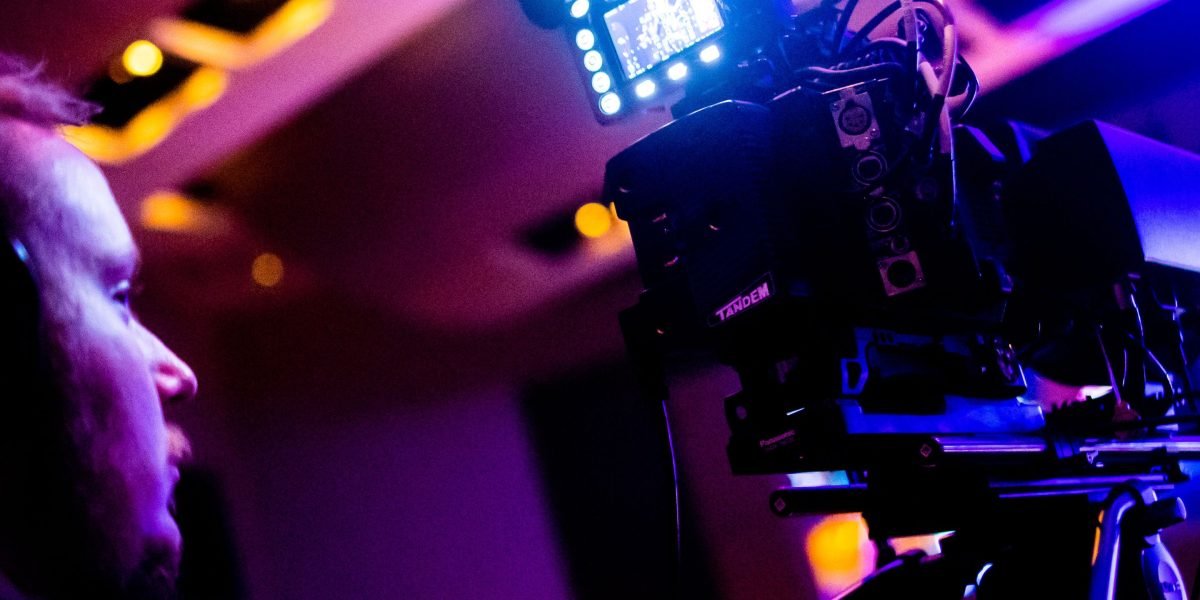
Bringing the excitement of a live sports event to fans all around the world is a huge job.

Imagine trying to show a big game, like the World Cup or the Olympics, to millions of people in many different countries at the exact same time. It’s a truly tough task for the big sports companies that own the rights to these events.
These companies face many challenges when putting on a global show in 2026. They need to make sure the picture looks clear and the sound is perfect for everyone, no matter where they are watching. This means delivering consistent quality across many different viewing experiences, including mobile phones and big screen TVs [Source: Live Sports Streaming Quality of Service 2026]. Another big problem is making sure the broadcast isn’t too delayed. Fans don’t want to see a goal on social media platforms before it appears on their screen. Long delays can spoil the fun and make fans unhappy, as seen with some streams lagging many seconds behind during major events like the Super Bowl [Source: Why a Few Seconds Can Make or Break the Live …]. In fact, keeping delays very low is now the biggest challenge for video teams, according to a recent survey [Source: Survey: Low Latency for Live Streaming Is Industry’s Top Challenge].
Also, there’s the big worry of people watching the games illegally, known as piracy, which costs sports companies a lot of money and can be a huge operational challenge [Source: Analysis of Recommendation KPIs Monitoring exercise.docx]. It’s not just about getting the main "broadcast 1" out; it’s about managing huge costs, dealing with complex technical setups, and getting the content to many different places at once, including traditional TV and various social media platforms.
This article will help you understand how modern broadcast production and smart workflows can make things much easier. You’ll learn how using advanced "cue broadcast" systems, making sure your plans are strong and reliable, and picking the right partners can help reduce costs, simplify all the moving parts, and lower the risks that come with putting on huge global sports events. We will look at how to deliver world-class live sports broadcasts, from big international cricket tournaments that need specific ICC Cricket — Broadcast Standards & Tournaments to regional games reaching a global audience.
Ready to explore how these challenges are met head-on? You can find out more about how expert teams handle these complex tasks.
To put on these big live sports shows, you need the right tools and systems. Think of it like a builder needing different machines for different parts of a house. For broadcasting, these machines are different parts of a "production stack." This stack is a set of technologies that work together. It helps make sure the games look good and get to viewers quickly and reliably, even when things get tough.
Let’s look at the main parts of this modern broadcast setup:
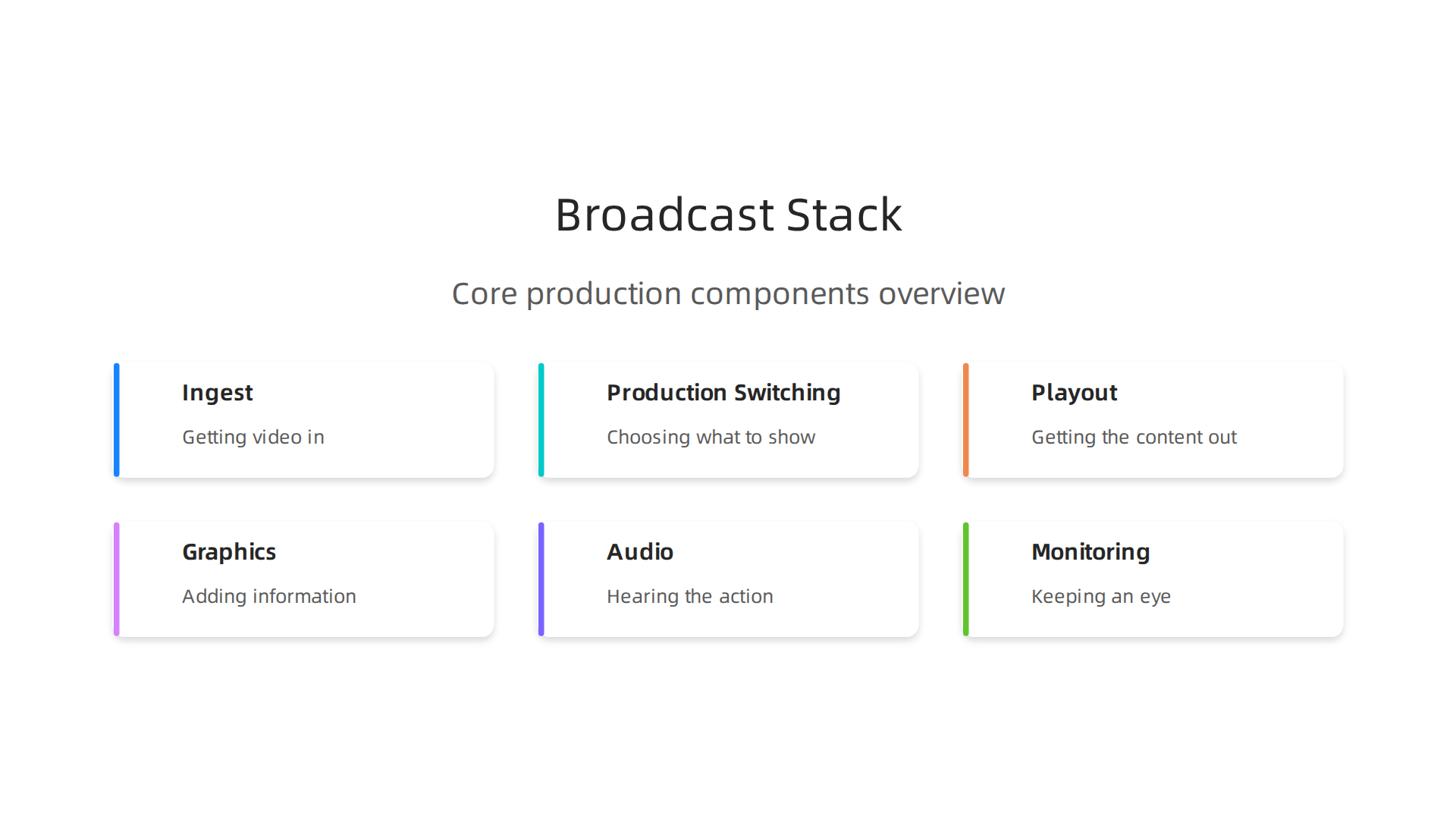
Ingest: Getting the Video In
"Ingest" is the first step. It’s how video and audio from the game venue get into the broadcast system. Imagine cameras at a stadium sending their signals back to a control room. This is where those signals arrive. It’s super important to get a clear, strong signal right from the start. If the video comes in fuzzy or broken here, it will look bad for everyone watching. Good ingest systems help keep the video quality high and reduce early delays in the "broadcast 1" feed.
Production Switching: Choosing What to Show
Once the video is "ingested," it goes to production switching. This is where a director decides which camera angle to show, or when to switch to a replay. Think of it as a control panel where someone picks what you see on your screen. Fast and smooth switching helps keep the broadcast exciting and prevents those awkward pauses. This part of the system needs to be very quick so there’s no added delay for viewers.
Playout: Getting the Content Out
"Playout" is about preparing the finished program for delivery. This means making sure all the different video pieces, like commercials, replays, and live action, play at the right time. Modern systems use automation to "cue broadcast" elements, meaning they line up and start each part of the show automatically. This is where clever software often takes over. For example, an automation tool can queue up a video clip and start it at the same time it tells the vision mixer to switch cameras. This helps keep things running perfectly and lowers the chances of human mistakes Production Automation for Broadcasting: The Ultimate Guide (2026). Using such tools makes the entire process faster and more dependable, which is key for reducing latency. Systems that tie together ingest, scheduling, playout, and monitoring into one system also make workflows simpler and more reliable Understanding Media Orchestration for TV Playout.
Graphics: Adding Information
Graphics are all the extra things you see on the screen, like the score, player names, or cool statistics. They make the game easier to understand and more fun to watch. These systems need to be able to add new information very quickly, like when a team scores. Good graphics integration adds to the professional feel of the broadcast without causing delays.
Audio: Hearing the Action
Just like video, sound is very important. Clear crowd noise, commentator voices, and on-field sounds make you feel like you’re really there. Audio systems manage all these different sounds, making sure they are balanced and clear for everyone. Poor audio can ruin the viewing experience, even if the video is perfect.
Monitoring: Keeping an Eye on Everything
Monitoring is like having many eyes watching every part of the broadcast. It checks the video quality, sound levels, and network connections in real-time. If something starts to go wrong, the monitoring system alerts the team so they can fix it right away. This is super important for making sure the broadcast is always reliable and that fans don’t see glitches or long buffering. Checking things like startup time and buffer ratio helps make sure viewers have the best experience Best Best Sports Streaming in 2026: Tested & Reviewed. Having good monitoring means you can catch issues before they become big problems, saving money and keeping viewers happy.
All these parts work together to create a smooth, high-quality live sports broadcast. They help cut down on delays, make the show more stable, and lower the overall cost of putting on a huge global event. By using a strong set of tools and thoughtful planning, broadcast companies can deliver amazing experiences to fans all over the world.
To learn more about how expert teams manage these complex technical setups and deliver top-notch live sports, you can Explore Our Broadcast Services. If you are looking for ways to streamline your global live sports production, you can also explore how to Simplify Your Live Sports Production.
Putting on a global live sports show means more than just having good equipment. It also means making sure the show can be seen in many different places around the world. This needs special plans and setups that are strong and reliable. These plans are called "resilient live workflows." They help make sure the broadcast keeps going, even if something unexpected happens, and that fans everywhere get to see the action.
Making Workflows Strong for Global Audiences
To reach a global audience, broadcast teams need systems that can deliver video to many regions at the same time.
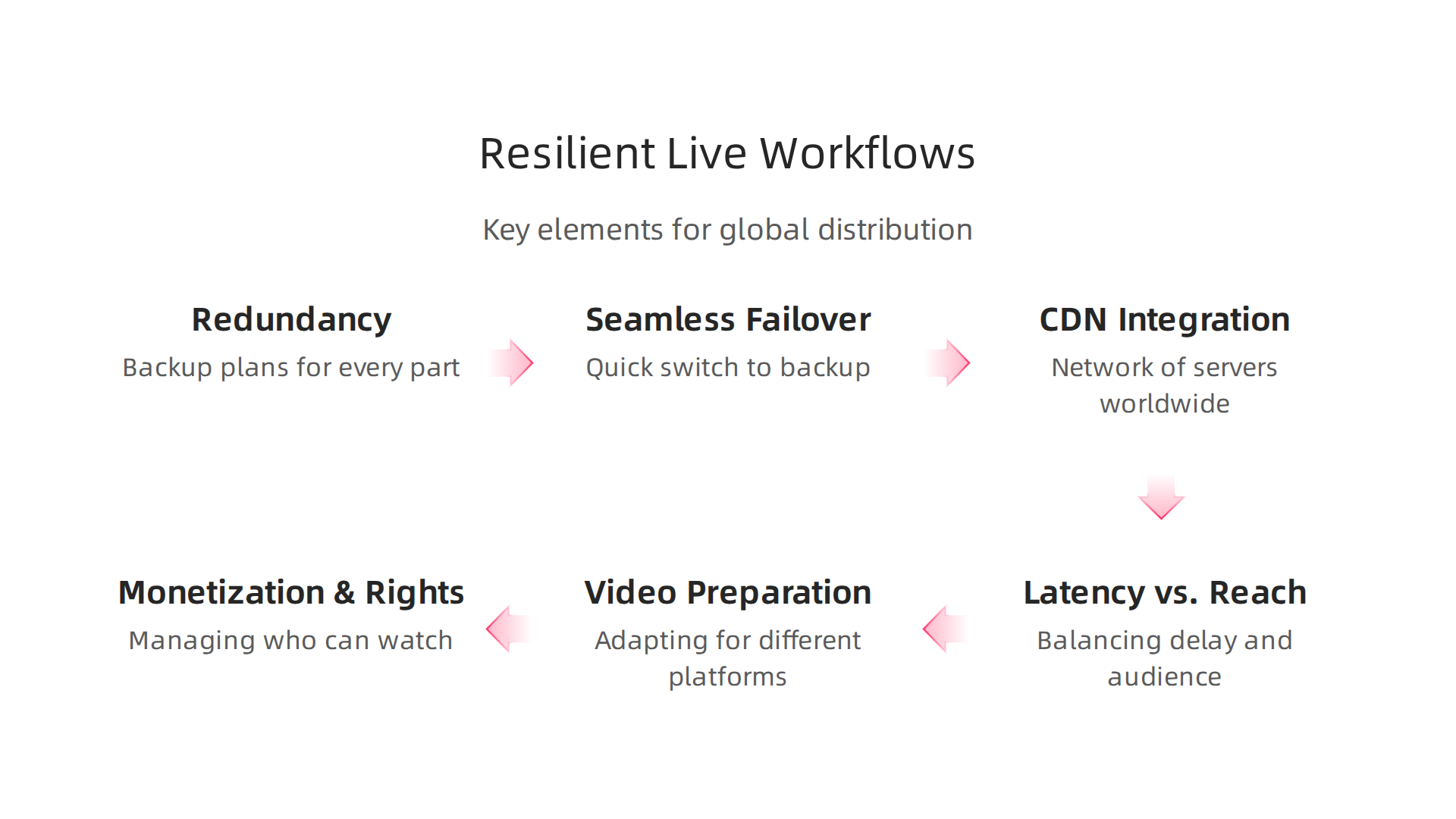
This means building workflows that are ready for anything.
- Redundancy: Think of this as having backup plans for every part of the broadcast. If one piece of equipment fails, another takes over instantly. This stops the show from cutting out. Modern setups often use cloud computing, where parts of the production happen online. This makes it easier to have backups and spread out the work, so no single problem can ruin the show. Some companies like LiveU set performance records during the 2026 World Football Championship by using cloud-based remote production to handle many broadcasts without issues LiveU Delivers Record-Breaking LIQ and Cloud Service Deployment for World Football Championship 2026.
- Seamless Failover: This is the quick switch to a backup system when a problem happens. It needs to be so fast that viewers don’t even notice. A good system will automatically
cue broadcastelements from a backup source if the main one has trouble. This is key for a smooth viewing experience.
Getting Content to Fans Everywhere with CDNs
One of the biggest helpers for global distribution is the Content Delivery Network, or CDN. A CDN is a network of servers located all over the world. When you watch a live game, the video comes from a server that is close to you, not from the original studio thousands of miles away. This makes the video load faster and play smoother.
- CDN Integration: For live sports, a strong CDN is a must. It helps distribute the main
broadcast 1feed efficiently. Using a top-tier CDN is important because they can handle many viewers at once and have lots of locations in different countries, including China and the Asia-Pacific region Best CDN for Live Sports Streaming 2026: Ultra-Low Latency …. Some experts recommend using a Tier 1 CDN like Akamai or CloudFront for global events, and even suggest having multiple CDNs as a backup plan Live Sports OTT Streaming: Technical Playbook 2026. - Latency vs. Reach: This is a balancing act. Latency is the delay between the live action and when you see it on your screen. For sports, lower latency is always better. In 2026, many broadcasters aim for a delay of less than 3 seconds from the camera to your screen 11 Best Video Streaming CDNs for OTT & Live Delivery in 2026. However, sometimes reaching a very wide audience means you might have a tiny bit more delay. Good CDNs help keep latency low while still reaching millions of fans across different time zones and countries. Technologies like Low-Latency HLS (LL-HLS) help achieve very low delays, sometimes under one second for in-play betting feeds Achieving Sub-Second Latency for Sports Streams – CDN Blog.
Adapting Content for Different Platforms
To truly engage fans globally, content often needs to be ready for different viewing habits and platforms.

This might involve preparing different versions of the video.
- Video Preparation: Tools like a
video convertercan change video formats so they play well on all devices, from big TVs to small phones. Avideo croppercan adjust the picture size for different screens or for sharing onsocial media platforms. This ensures the content looks great everywhere it’s shown. - Monetization and Rights: For global sports, managing who can watch what and where is very important. This is called rights management. Different regions might have different broadcast deals. Systems need to make sure the right content is shown in the right place, like using geo-fencing to limit where a stream can be viewed OTT Vendor Checklist for Sports Rights Holders. This ensures that all the efforts to distribute the broadcast also lead to revenue for the event organizers.
Designing these kinds of global workflows helps sports organizations deliver amazing content while keeping costs down and maintaining high quality. It’s about smart planning and using the best tools available in 2026 to bring the game to every fan, no matter where they are.
For a deeper dive into delivering world-class live broadcasts globally, explore how to mastering global sports broadcasting challenges.
If your organization needs help setting up these complex global systems, it might be time to get some expert advice.
Request a Broadcast Consultation
To make sure a live sports show is seen around the world, broadcast teams rely on very clever systems. These systems help put the show on air smoothly and correctly. This is where "cue broadcast" comes in. It is like a master conductor for an orchestra, making sure every part of the show, from the main game video to replays, graphics, and commercials, starts and stops perfectly.
Cue Broadcast Systems: Signaling, Playout, and Automation
At its heart, cueing means sending special signals.
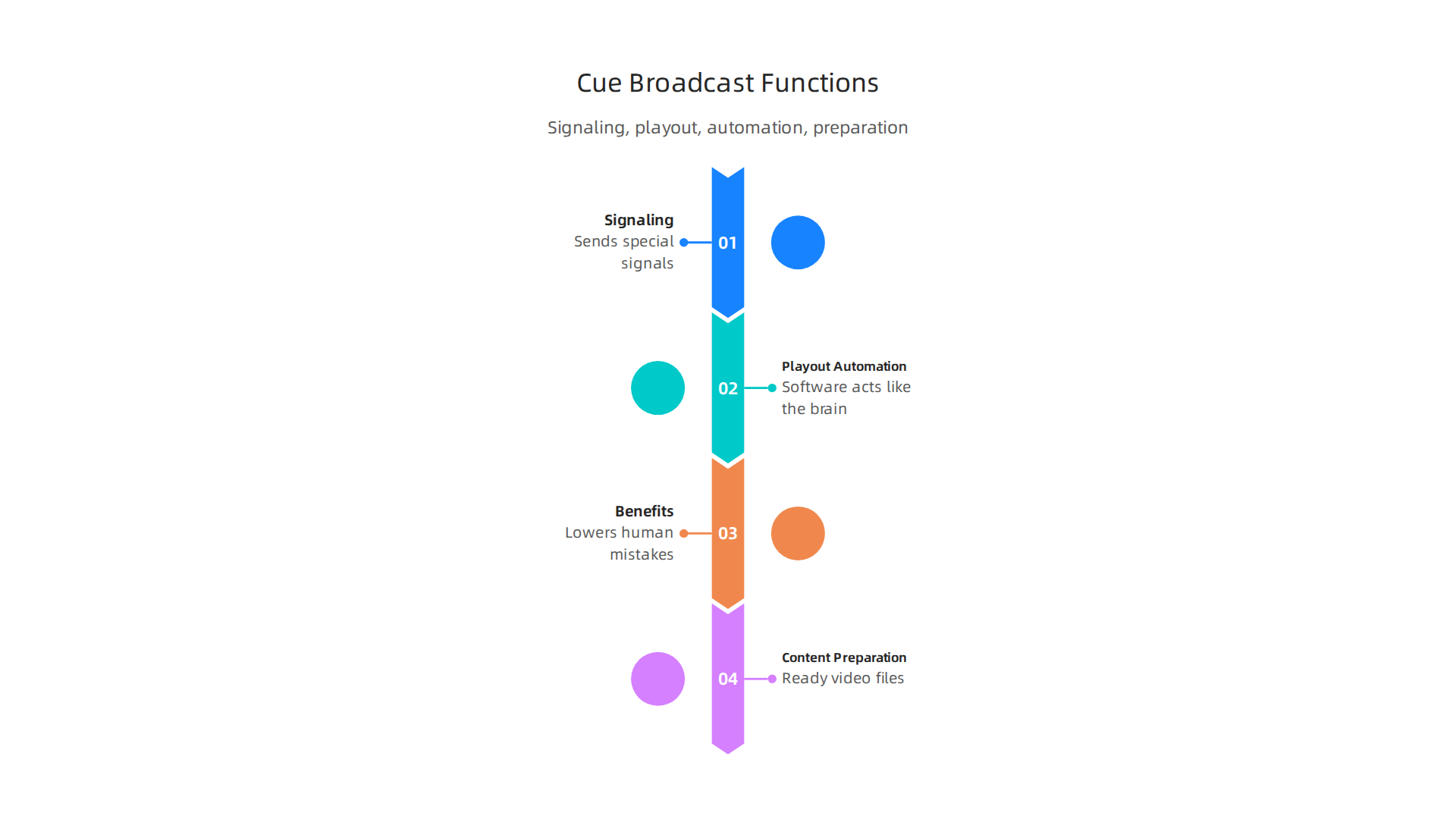
These signals tell different parts of the broadcast system exactly what to do and when. For example, a signal might tell the system to show a commercial break, and then bring back the main broadcast 1 feed right after. These signals are planned ahead of time, but the system also needs to be able to react super fast if something unexpected happens during a live game.
In 2026, most big sports broadcasts use smart computer programs to handle this. This is known as playout automation or media orchestration. This software acts like the brain, connecting all the different pieces of the broadcast. It manages everything from getting the video ready to putting it on air, making sure the show plays out smoothly Understanding Media Orchestration for TV Playout. This type of control layer helps manage all the moving parts of a broadcast, keeping everything connected and working together NAB Show 2026: Broadcast Orchestration in IP Workflows.
Using automation has many benefits. It greatly lowers the chance of human mistakes. Imagine trying to manually switch between dozens of cameras, graphics, and replays during a fast-paced game! Automation makes these changes very fast and smooth, which is key for a good viewing experience Production Automation for Broadcasting: The Ultimate Guide (2026). This also helps make sure that the show looks the same and stays consistent across all the different platforms, whether it is on traditional TV or streaming online.
Before a live event, all the content needs to be ready. This means using special tools like a video converter to change video files into the right formats for broadcasting. Sometimes, a video cropper is needed to make sure the picture fits perfectly on different screens or for short clips shared on social media platforms. All these prepared elements are then loaded into the automated system, ready to be cued at just the right moment. This careful planning and automation help streamline global live sports production for major rights holders.
Broadcast TV software brings everything together. It coordinates all steps, from the moment video enters the system, through all the preparations, to the final broadcast on air. This reduces manual work and ensures that broadcasts follow a set plan every time [Best Broadcast Tv Software | 20 Tools Compared (2026) – WifiTalents]. This automation also makes content delivery much faster, which is very important for live sports where every second counts Automation enhances efficiency: Media orchestration automates tasks….
A smart cue broadcast system is truly the backbone of delivering high-quality, exciting live sports. It helps broadcasters focus on the story of the game, knowing the technical side is handled perfectly. This is how organizations how to deliver world class global live broadcasts in 2026.
If you want to see how this all comes together in real projects, you can Watch Our Latest Broadcast Work. Or, to learn more about our complete solutions, Explore Our Broadcast Services.
Remote production, contribution feeds, and latency management
Making a live sports show happen today often means that the people creating the show are not actually at the game. This is called remote production, or sometimes "cloud production." Instead of big trucks and many people at the stadium, the video feeds from cameras and microphones are sent over the internet to a central studio or a cloud platform. From there, experts put the show together. This way of working saves a lot of money and makes it easier to cover many games at once, especially for big global events. For example, the NHL has even done fully cloud-based live broadcasts, showing how well this approach works NHL breaks the ice with cutting-edge live cloud production … – AWS.
The main difference between remote and in-venue production is where the magic happens. In-venue means everything is done on-site. Remote means the raw video feeds, called "contribution feeds," travel from the game location to a distant control room. This lets a team handle a broadcast 1 signal for a huge audience from almost anywhere. It helps broadcasters scale their efforts, meaning they can cover more events without needing huge setups at every single location 2026 and Beyond: Scaling Live Sports with REMI, IP & Cloud ….
Sending these contribution feeds reliably is a big challenge. Imagine trying to send high-quality video across oceans with shaky internet! Broadcast teams use special ways to send video that can fix errors along the way, like using Secure Reliable Transport (SRT). This helps video travel safely and quickly over regular internet connections, reducing the need for expensive satellite trucks Live Sports Streaming Infrastructure: Technical Guide. Experts are always working to make these feeds faster and more reliable, aiming for "almost no latency" Esports Broadcast Production Optimization. Sometimes, a video converter is needed to make sure all the different cameras and sources speak the same language, or a video cropper might be used to get the perfect shot for different screens, including those on social media platforms.
One of the biggest concerns in live sports broadcasting is "latency." This is just a fancy word for delay. If you’re watching a game at home and it’s even a few seconds behind what’s actually happening, you might see a spoiler on your phone from a friend or a score app. In 2026, many viewers find this delay very frustrating. Some streams have lagged by as much as 62 seconds behind the live action, which can ruin the fun Why a Few Seconds Can Make or Break the Live ….
Lowering this delay is super important for broadcast companies.

In fact, a recent survey found that low latency is the top challenge for video teams in 2026 Survey: Low Latency for Live Streaming Is Industry’s Top Challenge. To fight latency, teams use advanced tools and methods. One key is using special video networks called Content Delivery Networks (CDNs) that are built for very fast streaming. These CDNs have servers all over the world, so the video doesn’t have to travel far to reach viewers, speeding things up. Some CDNs can help achieve a delay of just 2-4 seconds or even less from the camera to your screen Best CDN for Live Sports Streaming 2026: Ultra-Low Latency …. They also use smart video formats like Low-Latency HLS (LL-HLS) which sends tiny bits of video constantly, rather than waiting for big chunks Low Latency Streaming (2026): Best Solutions.
Even with remote production and all these technologies, a cue broadcast system is still essential. It ensures that all the elements from different remote locations and cloud services come together at the exact right time on air. Managing the complex dance of feeds from across the globe requires mastering global sports broadcasting challenges.
For complex setups involving remote production, contribution feeds, and managing latency for a global audience, specialized expertise is often needed. We help clients deliver flawless global live sports broadcasts for maximum fan engagement.
If you are looking to improve your broadcast operations and overcome these technical challenges, we can help. Request a Broadcast Consultation to discuss your specific needs.
Even after putting all that effort into remote production and fighting latency, the job isn’t done. For a truly great live sports show, we need to make sure everything stays perfect from start to finish. This is where quality assurance comes in. It’s about carefully watching, checking, and following rules to deliver a smooth show to every fan.
Keeping a close eye on everything
Monitoring is like having many sets of eyes watching every part of the broadcast. We need to check many things at once.
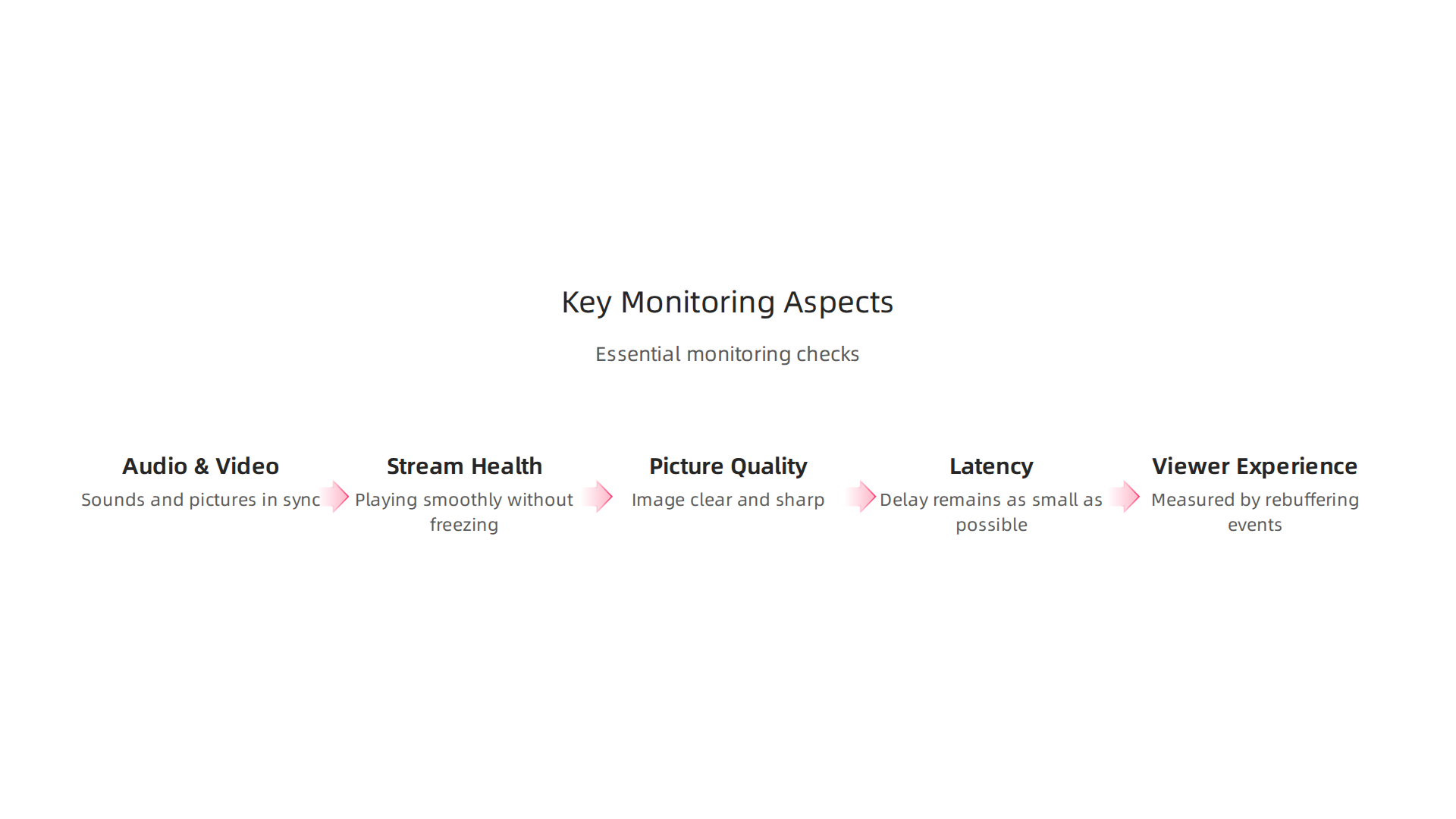
- Audio and video match: Are the sounds and pictures perfectly in sync? If a player scores, you want to hear the cheer exactly when you see the ball go in. This is called audio/video synchronization.
- Stream health: Is the video playing smoothly without freezing or blurry moments? We track things like "buffer ratio" and "average start-up time" to make sure the stream starts fast and keeps going without interruptions. Experts aim for buffer ratios less than 0.5% of total playback time for the Best Sports Streaming in 2026.
- Picture quality: Is the image clear and sharp? This also includes checking resolution and if the video switches quality often. These are important for "video QoS metrics" in An Empirical Measurement Study.
- Latency: Even with efforts to reduce it, ongoing monitoring ensures the delay remains as small as possible. This involves constant checks from the camera to the viewer’s screen.
- Viewer experience: This is often measured by things like how many times the video stops and starts (rebuffering events) and the overall image quality. Keeping a check on continuity, latency, and image quality is key to Live Sports Streaming Quality of Service 2026.
These checks make sure the cue broadcast elements, from commentary to instant replays, arrive just right. Automated systems watch these numbers and can alert a team if something goes wrong. But human eyes are still vital to catch issues that computers might miss, like a slightly off-color or a sound that just doesn’t feel right.
Following the rules: Standards and compliance
Live sports broadcasting is a global business, and that means following many different rules.
- Broadcast standards: There are international guidelines for how video and audio should look and sound. These help ensure a consistent high quality, no matter where the game is played or watched. For example, standards exist for major sports like cricket to ensure quality for global audiences. For more details on these guidelines, check out the ICC Cricket — Broadcast Standards & Tournaments.
- Legal compliance: Broadcasters must also follow local laws in each country. This includes rules about what can be shown, how advertisements are handled, and making sure the content is appropriate for all viewers. It also means dealing with things like unauthorized retransmission of events, which is a big concern for rights holders in 2026, as noted in the Analysis of Recommendation KPIs Monitoring exercise. Cross-border compliance is a complex area that needs careful handling, often streamlined with special approaches for Streamlining cross-border transaction compliance.
- Rights-holder requirements: Sports leagues and event organizers often have their own specific standards for how their games should be broadcast. This includes things like branding, replay rules, and even the type of graphics used. For example, specific Live event data quality standards might be in place for how images and descriptions are provided for events.
To meet all these requirements, broadcast teams use special tools and workflows. They might have a video converter to make sure different camera signals match, or a video cropper to adjust shots for different screens, like those used on social media platforms. This attention to detail ensures that the final broadcast 1 signal is top-notch.
Mastering these elements is vital for anyone aiming to deliver truly world-class live sports content. If you’re looking for a partner who understands the deep technical and regulatory demands of global sports broadcasts, consider exploring Why Choose TPT Global.
It takes both smart technology and experienced people to monitor all these moving parts. Automated systems can alert teams to problems, but human experts are needed to interpret the data and make quick decisions. This blend of tech and talent is what makes sure a live sports show is not just delivered, but delivered flawlessly to every fan, everywhere. For help making sure your broadcasts meet the highest global standards, we’re here to assist. Get in touch with us today to learn more.
Even with top-notch monitoring and strict rules, managing a global live sports broadcast still has big challenges. It’s not just about what you do, but how you set things up with other companies and how you spend your money. This is where vendor management, cost optimization, and making sure your operations can grow come into play.
Getting Smart About Your Partners
Think of all the different parts needed for a live sports broadcast: cameras, sound gear, special effects, people to operate everything, and systems to send the video across the world. Instead of hiring many different companies for each small part, it often makes more sense to work with fewer, bigger partners.

This idea is called vendor consolidation.
When you bring things together with a single-window delivery model, one main partner handles many services. This makes things less complicated. It means fewer contracts to manage and less headache trying to get different companies to work well together. Choosing partners carefully can also cut down on operational complexity, making sure that your live broadcast, or broadcast 1, runs smoothly from start to finish. For instance, in 2026, many in the media business are seeing more consolidation between different companies to offer more complete services, as noted in one report about the 2026 Media & Entertainment Industry Predictions Report. When picking a vendor, it’s key to look at their ability to handle things like rights, scaling, and real-time support, as highlighted in an OTT Vendor Checklist for Sports Rights Holders.
Making Every Dollar Count
Saving money is always important, especially for big global events. Cost optimization involves looking at all the ways money is spent and finding smarter options. This can mean choosing cloud-based systems over old, expensive hardware. Cloud production can help handle many live sources without needing lots of trucks and crews on site. For example, some companies are using cloud-native platforms to manage production from a central place, reducing the need for large on-site teams and equipment, which scales workflows effectively. This approach is key to Scaling Live Sports with REMI, IP & Cloud.
Thinking about costs also means being smart with contracts and how you manage money across different countries. Things like contract lifecycle management can help keep track of all agreements, which is vital for complex rights and deals, as explained in resources like Contract Lifecycle Management – IP & Rights. In 2026, controlling costs and using AI are big priorities for streaming vendors, who are looking for tools that lower operational expenses. You can learn more about this in an article on Streaming vendors see cost control and AI deployment as dual priorities.
If you need a partner that offers a complete solution for sports and media, handling everything from rights to production, consider looking into Trans Group.
Growing with Your Audience
Finally, your broadcast operations must be able to scale up. This means they need to handle more viewers and more events without breaking down. As more people watch sports on social media platforms or through different apps, the systems need to grow with them. Cloud services are very good at this because they can quickly add more power when needed. For instance, the NHL used a fully cloud-based live production for a professional sports broadcast in North America, showing how well this approach works for big events. You can read more about this on NHL breaks the ice with cutting-edge live cloud production.
Having good governance structures means clear rules and ways of working for everyone involved, no matter where they are in the world. This helps make sure that every cue broadcast element, from the main feed to different language versions, reaches fans everywhere smoothly. For more on ensuring smooth global delivery of live sports, check out our insights on Deliver Flawless Global Live Sports Broadcasts for Maximum Fan Engagement.
Summary
Delivering global live sports in 2026 requires more than cameras and commentary — it needs a tightly coordinated technical stack, resilient workflows, and smart partner choices. This article walks through the essential components of modern broadcasts (ingest, production switching, playout, graphics, audio and monitoring), explains how cue‑broadcast automation and media orchestration reduce human error and latency, and shows why CDNs, LL‑HLS and multi‑CDN strategies are central to low‑delay delivery. It covers remote/cloud production and secure contribution feeds that save cost and scale coverage, plus practical resilience tactics like redundancy and seamless failover. You’ll also learn how continuous QA, standards compliance and vendor consolidation help control costs and complexity so rights holders can deliver consistent, world‑class live experiences to fans everywhere.