




For big companies and event planners all over the world, showing college football games can be quite a puzzle. It’s not just about turning on a camera; it’s about making sure fans can watch, no matter where they are or what device they use. Think about the excitement around a team like UNLV football. How do you make sure that game is seen by everyone, from Las Vegas to London, without any trouble?
Actually, sending sports broadcasts around the world in 2026 has many tough parts. Global sports trends show that audiences are growing and want to watch sports on many different platforms, from regular TV to streaming apps. This means big organizations have to figure out things like:
- What time is the game really playing in different parts of the world?
- Who has the right to show the game in each country?
- How do you make sure the picture and sound are always top-notch?
- How do you deal with things like different languages and local ads?
These are big questions that rights holders and event organizers face. They need to find clear ways to share games, whether it’s UNLV football, Virginia football, or other popular college sports. Just like keeping up with the latest Tops of Sports – Media trends shaping sports marketing for 2026, getting broadcast schedules right is key.
This article will help you understand these challenges better. We’ll look at why clear schedules are so important. We will also dive into broadcast rights, what kind of production is needed, and simple steps for getting these games to a huge global audience. Our goal is to help you successfully master regional and collegiate sports broadcasting for global brands.
To see how we help with these challenges and deliver excellent broadcasts, we invite you to Watch Our Latest Broadcast Work. You can also Explore Our Broadcast Services to learn more about our end-to-end solutions.
Understanding the exact schedule for a team like UNLV football is super important for anyone wanting to share these games with fans across the globe. It’s not enough to just know who is playing. You also need to know the fine details of the schedule to make sure broadcasts run smoothly and reach everyone.
Here’s how to look at the 2026 UNLV football schedule and what parts are key for broadcast planning:
How to Read Official Schedule Entries
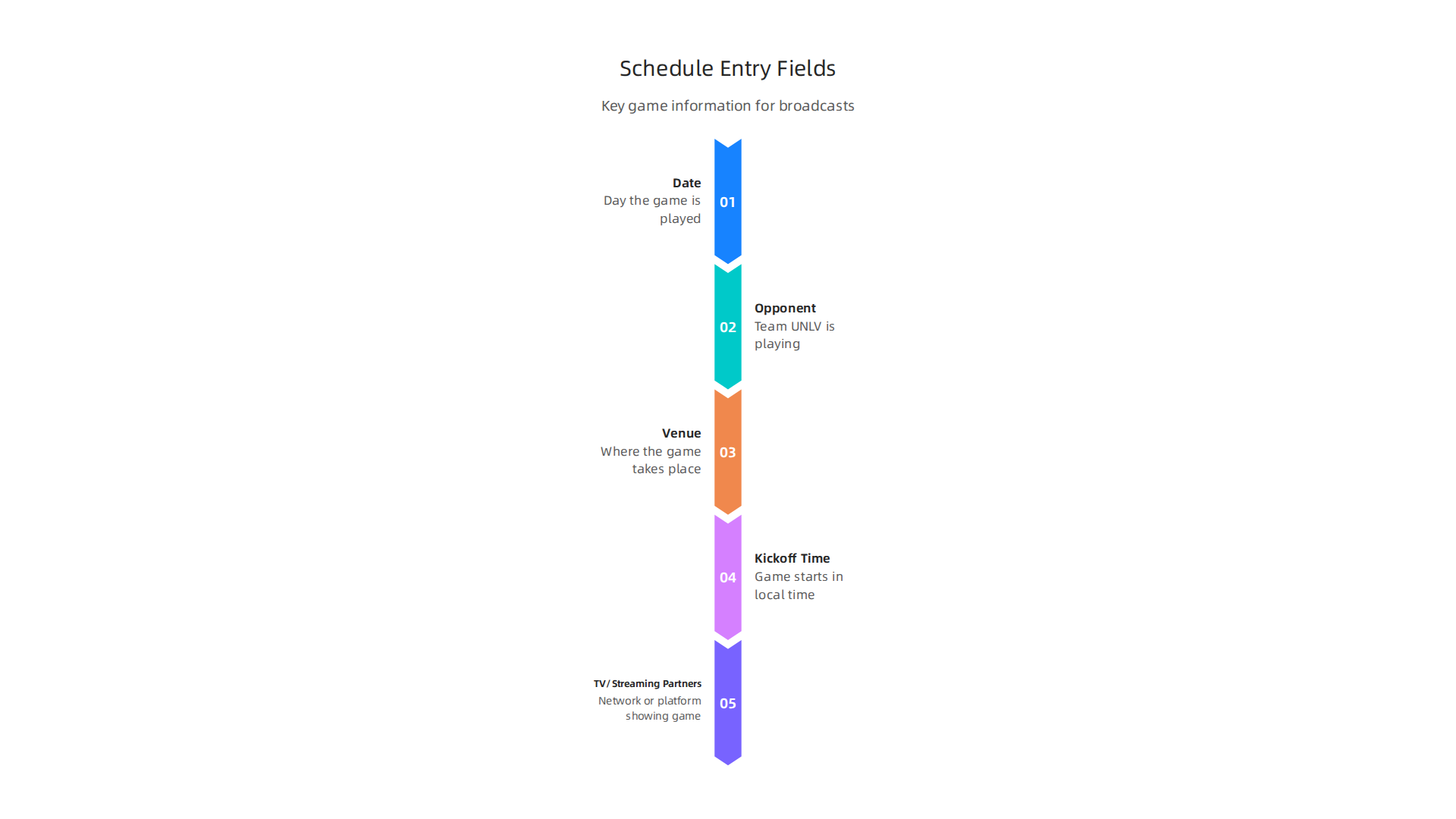
When you look at an official UNLV football schedule, you’ll see a few important pieces of information for each game.
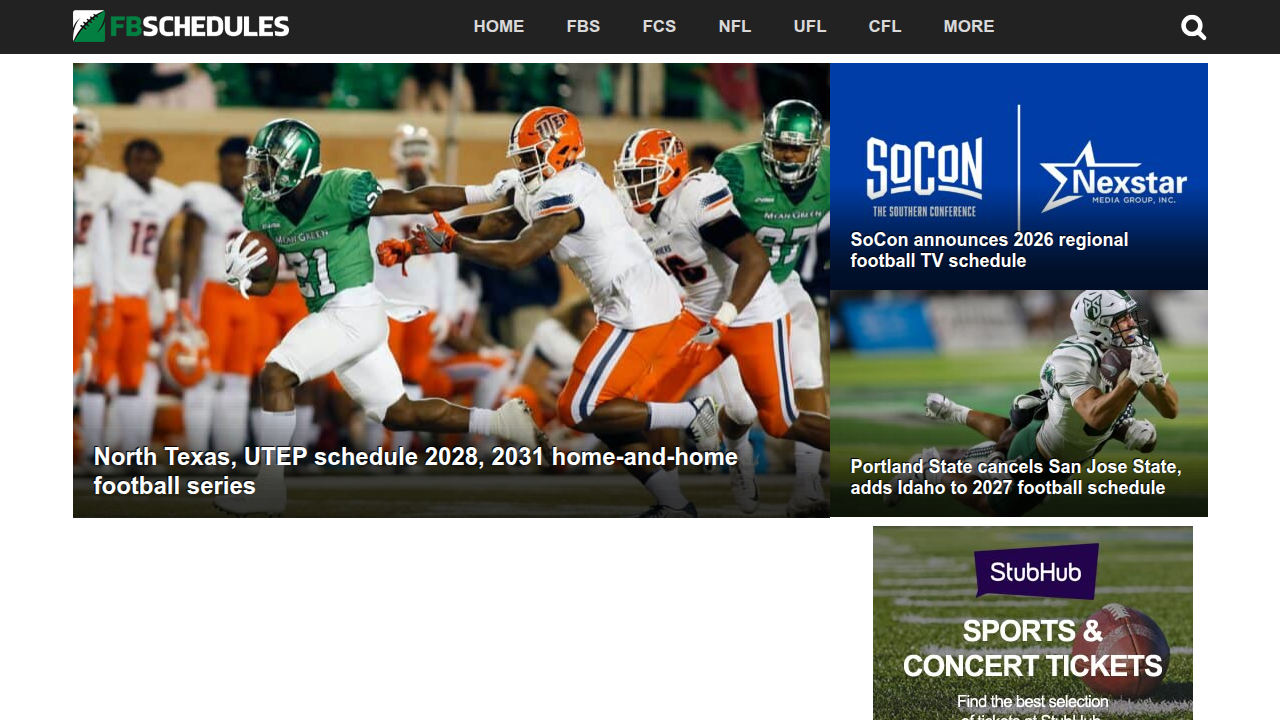
For 2026, the UNLV Rebels will have an exciting lineup of games. For example, their season kicks off with a game against Memphis on August 29.
You’ll typically find:
- Date: The day the game is played.
- Opponent: Which team UNLV is playing against.
- Venue: Where the game takes place. This could be Allegiant Stadium in Las Vegas for home games, or another team’s stadium for away games, like when they play at Hawaii on September 5, 2026 2026 UNLV Football Schedule – FBSchedules.com.
- Kickoff Time: This is one of the most important details. It tells you exactly when the game starts in the local time zone. For instance, the game against Memphis is set for 7 p.m. PT (Pacific Time), and the Hawaii game is also at 7 p.m. PT UNLV football’s TV schedule features 1st regular-season game on Fox.
- TV/Streaming Partners: This tells you which network or platform will show the game. For the 2026 UNLV football season, games will be shown on networks like FOX, The CW, ESPNU, and CBS Sports Network 2026 UNLV Rebels football team – Wikipedia. This is key for rights holders.
Knowing these details from sources like the official 2026 Football Schedule Announced – Las Vegas – UNLV Rebels helps plan broadcasts.
Schedule Elements Affecting Broadcast Planning
For global brands and broadcasters, understanding how certain schedule details work is a must. It helps you deliver excellent broadcasts and keep fans happy, whether they’re watching UNLV football or a Virginia football game.
- Kickoff Windows: These are the specific times games are set to start. A 7 p.m. PT kickoff means the game begins at that exact moment. For global viewers, this time needs to be translated into their local time zones.
- Time Zones: This is a big one. A game starting at 7 p.m. Pacific Time is much later in New York (10 p.m. ET) and even later in London (6 a.m. BST the next day). For fans in Asia or Australia, it might be the middle of the day. Broadcasters need to manage these differences to ensure fans can watch at suitable times, or know when to catch replays. This is part of optimizing college football broadcasting for sports enterprises, no matter where their fans are Optimizing College Football Broadcasting for Sports Enterprises.
- Daylight Saving Shifts: Some places in the world change their clocks twice a year for daylight saving. This can shift kickoff times by an hour. Broadcasters must keep track of these changes to avoid mistakes in their schedules, especially for games played in the spring or fall. These shifts can affect how you maximize global reach with collegiate football broadcast schedules and team coverage Maximize Global Reach with Collegiate Football Broadcast Schedules and Team Coverage.
By paying close attention to these elements, broadcasters can make sure that every UNLV football game, along with other big college games, reaches a wide audience at the right time.
After understanding the tricky parts of kickoff times and time zones, the next big piece of the puzzle for broadcasting college sports is knowing who owns the rights to show the games. This is all about "broadcast windows" and "rights," which decide which network or streaming service gets to carry a game like UNLV football.
Broadcast Windows & Rights: Networks, Local TV, and Streaming Partners
Putting a college football game on TV or online for fans around the world is a big job. It involves many deals between conferences, schools, and TV networks.

How Broadcast Rights Work
In college football, the rights to show games usually belong to the conferences themselves.
For example, UNLV football plays in the Mountain West Conference. The conference makes deals with big TV networks like FOX, CBS, and ESPN to show its games.
These networks then pay the conference, and that money is shared among the schools. This is a common way college football conferences bundle their broadcast rights for distribution How College Football Conferences’ Bundling of Broadcast …. The NCAA itself also owns television and digital streaming rights for many championships NCAA Television Rights Overview.
Sometimes, there are special agreements. For instance, a new law called the "Protect College Sports Act of 2026" talks about a "Local Outlet option." This means a local TV station might get to show a game for free to people in the home team’s area S.4668 – Protect College Sports Act of 2026 119th …. This is great for fans who want to watch their local team, like UNLV football, without needing a special cable package.
Broadcast Windows and Where You Can Watch
Broadcast windows are the specific time slots that networks set aside for games. You’ll often see "Big Noon Saturday" on FOX, for example, which is a prime slot for a big college game Networks Unveil 2026 College Football Broadcast Schedules. These windows help networks organize their schedule and avoid having too many games at the same time.
Another important point is "territorial restrictions." This means that sometimes a game is only allowed to be shown in certain parts of the country. This happens to make sure that other games being broadcast at the same time, perhaps a Virginia football game, get their own viewers. For global brands, these restrictions can make it tough to show every game everywhere. This is why having a strong regional sports broadcasting strategy for global organizations is so important.
The Rise of Streaming
In 2026, streaming plays a huge part in how we watch sports. Most major networks also have streaming apps where you can watch games live. This is really helpful for reaching fans outside of the traditional TV zones, including those who follow UNLV football from different countries. Streaming platforms offer more flexibility and can help broadcasters overcome some of those territorial limits. If you’re looking to reach fans all over, choosing the right live TV channels and streaming platforms for global sports broadcasting is a must.
This mix of network TV and streaming means that a company like TPT Global, which provides full broadcast services, has to manage lots of different systems. They make sure the right game gets to the right platform for the right audience.
When planning a global broadcast strategy, understanding these rights and windows is key to making sure every fan, whether they’re discussing UNLV football on a sports forum or following espn sports news soccer, can enjoy the action. If you’re a major sports organization facing these challenges, you might be asking: Why Choose TPT Global for your broadcasting needs?
Navigating the world of sports broadcasting rights can be complicated, but getting it right means more fans get to watch their favorite teams. If you need expert help with your global broadcast strategy, we’re here to help.
Request a Broadcast Consultation
Navigating the world of sports broadcasting rights can be complicated, but getting it right means more fans get to watch their favorite teams. If you need expert help with your global broadcast strategy, we’re here to help.
Live Streaming & OTT Options for UNLV Games: Platforms, Latency, and Monetization
After looking at how broadcast rights and windows work, the next big step is understanding how live streaming and Over-The-Top (OTT) services bring games like UNLV football right to your screen. In 2026, streaming is no longer just an extra option; it’s how many fans, especially younger ones, prefer to watch.
What are OTT Platforms?
OTT stands for "Over-The-Top," which simply means content delivered over the internet, bypassing traditional cable or satellite TV. Think of it like Netflix, but for live sports. For college sports, there are a few types of platforms that matter:
- Direct-to-Consumer (DTC) Platforms: These are services run directly by the schools or conferences themselves. For example, a university might have its own app where you can subscribe to watch certain games. This gives them full control over the content and how it’s presented.
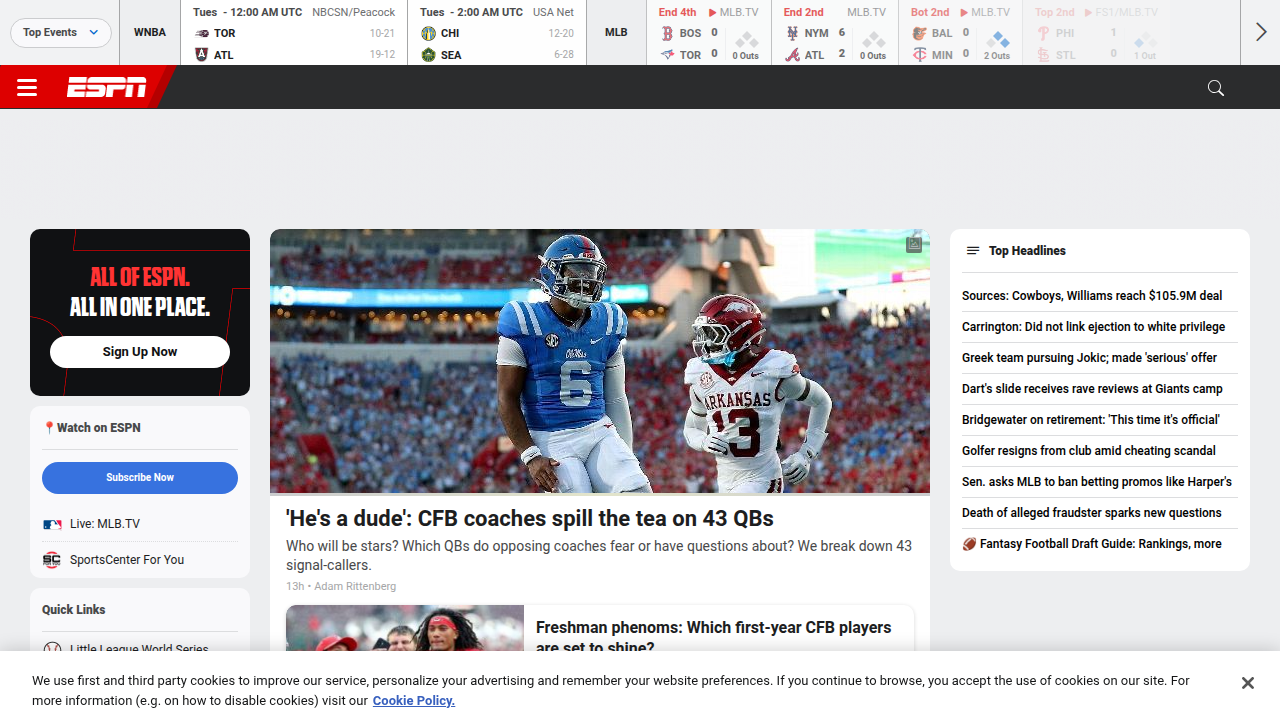
- Aggregator Platforms: These are larger streaming services that gather content from many different sources. ESPN+, Peacock, and Paramount+ are good examples.
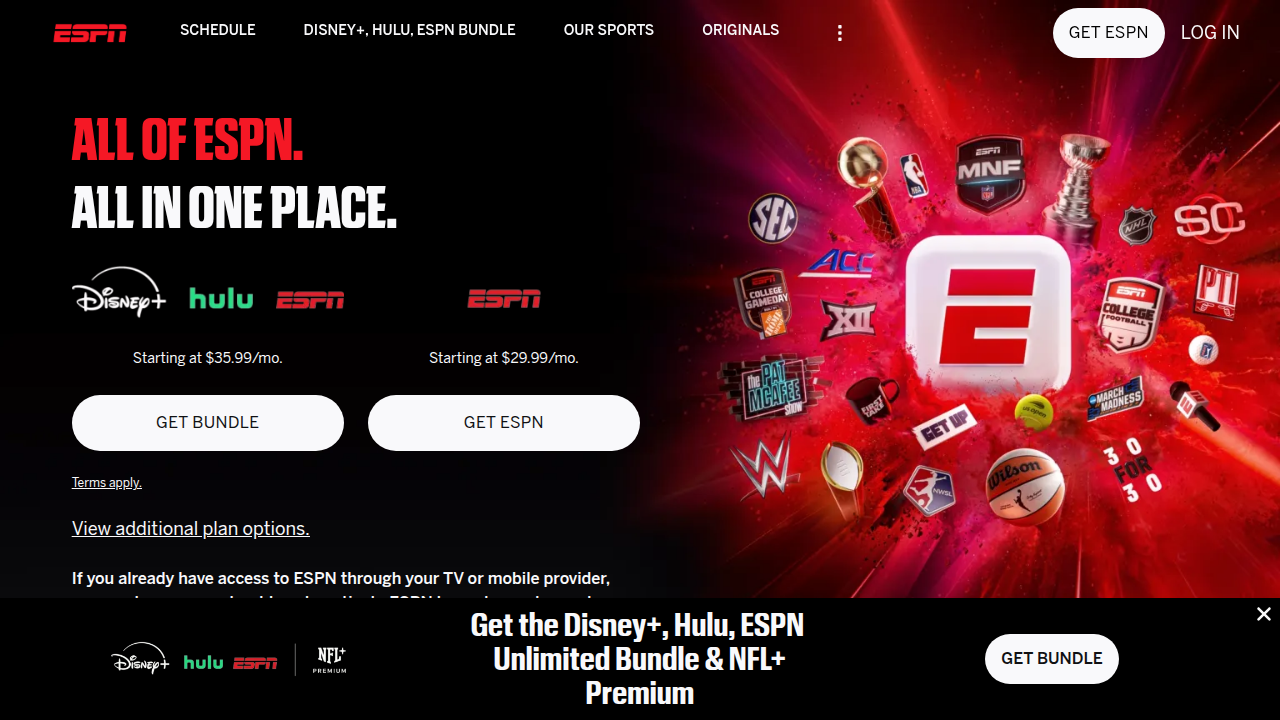
They often have deals with multiple conferences and sports leagues, so you can watch a wide variety of events, from UNLV football to espn sports news soccer, all in one place.
- Conference OTT Platforms: Some conferences create their own dedicated streaming services. The Mountain West Conference, home to UNLV football, could have a platform just for its teams, offering exclusive content and games that might not be on major TV networks.
The Challenge of Latency in Live Sports
One of the biggest technical challenges for live sports streaming is "latency." This is the delay between when something happens in the real game and when you actually see it on your screen. Imagine someone posting a touchdown on a sports forum before you even see the play happen on your stream. That’s high latency, and it can really spoil the fun.
Standard streaming methods can have a delay of 20 to 45 seconds. But for live sports, viewers need to see the action almost instantly. This is where "low-latency streaming" comes in. New technologies like Low-Latency HLS (LL-HLS) and Low-Latency DASH (LL-DASH) can cut this delay down to just 2 to 8 seconds, or even lower in some cases, making the viewing experience much closer to live TV Live Sports OTT Streaming: Technical Playbook 2026. Some even aim for sub-second latency for the fastest possible viewing Achieving Sub-Second Latency for Sports Streams.
To make sure games stream smoothly and quickly, broadcasters use Content Delivery Networks (CDNs). These are networks of servers spread out globally. When you watch a game, the video comes from a server closest to you, which helps reduce delays and buffering, giving you a better picture. Companies also use "adaptive bitrate streaming," which means the video quality adjusts based on your internet speed, so you get the best possible picture without interruptions. Providing this kind of flawless delivery for events like a Virginia football game is a key part of broadcast success.
How Streaming Platforms Make Money
Monetization, or how these platforms earn money, is vital for their survival. Common methods include:
- Subscriptions: Fans pay a monthly or yearly fee to access content, like with ESPN+.
- Advertisements: Ads are shown before, during, or after games, similar to traditional TV. Targeted ads can make this very effective.
- Pay-Per-View (PPV): Less common for regular season college games, but sometimes used for championship events or special matchups where fans pay for a single game.
For sports organizations and broadcasters, getting these technical aspects right is crucial for keeping fans engaged and happy. Whether you’re broadcasting UNLV football or a major international sporting event, a smooth, low-latency stream helps deliver the excitement without delay. If you’re a major sports organization looking to perfect your streaming delivery and reach a global audience, it’s important to have strong partners.
Discover how professional services can elevate your live sports broadcasts and ensure a seamless experience for fans worldwide. Explore Our Broadcast Services
Understanding the best ways to get college football games, like those of UNLV, to fans requires a deep dive into these platforms and technologies. It’s all about making sure every viewer, no matter where they are, gets a top-notch experience. Partnering with experts who can optimize college football broadcasting for sports enterprises is a smart move in today’s digital world.
After making sure streams are smooth and quick for fans, the next important part is how the games are actually put together. This means everything that happens behind the scenes to capture the action and send it out to the world. For games like UNLV football, getting this right makes a huge difference in how much fun fans have watching.
Production Quality & Technical Requirements for Global Broadcasts
Bringing a live sports event to screens around the world needs a lot of careful planning and good equipment.

It’s more than just pointing a camera at the field. We need to think about all the moving parts that make a broadcast exciting and easy to watch, no matter if it’s a big game or local coverage.
What Goes On During Production Day?
Imagine a college football game day. To capture every play, you need several key things right there at the stadium:
- Many Cameras: A single camera can’t show everything. For a professional broadcast of a UNLV football game or even a Virginia football match, you need many cameras. Some follow the ball, some show close-ups of players, some show the coaches, and others capture wide shots of the whole field. More cameras mean viewers don’t miss any important moments.
- Good Sound: Clear sound is super important. Microphones are placed all over the field to pick up the sounds of the game. Special microphones are used for the commentators, who explain what’s happening. And don’t forget the crowd noise, which adds to the excitement.
- Lots of Wiring: All these cameras and microphones need to be connected. This means miles of cables for video, audio, and communication. It’s a complex setup that needs to be perfect so everything works without a hitch.
- Commentary: The people talking about the game are a big part of the experience. Their voices and insights help fans understand the plays and feel more connected to the game.
- OB Trucks vs. Remote Production: In the past, a huge "Outside Broadcast" (OB) truck, basically a mobile TV studio, had to be at every game. It held all the mixing equipment, video editors, and sound engineers. Now, many productions use "remote production." This means a smaller crew is at the stadium, and the main production team works from a studio far away, connected by fast internet. This can save money and make it easier to cover many games, like all the different UNLV football games on the schedule, but it relies heavily on strong, reliable connections.
Making Remote Production Smooth
Remote production is becoming very popular because it lets companies cover more games without sending huge teams all over the world. But it comes with its own set of rules:
- Fast Internet: This is the most important part. To send all the camera feeds and audio signals from the stadium to a remote studio, you need incredibly fast and stable internet. Any delay can mess up the live broadcast.
- Secure Connections: All the video and audio needs to travel safely. Broadcasts use special, secure networks to make sure no one can mess with the signal.
- Backup Plans (Redundancy): What if the main internet connection goes down? Good remote productions have backup connections ready to go. This is called redundancy, and it’s like having a spare tire. If one system fails, another one can take over instantly so viewers don’t even notice. This is key for keeping the quality high and making sure an unexpected technical glitch doesn’t ruin the live experience for fans.
Making sure everything works perfectly is crucial for keeping fans engaged. Whether you’re watching UNLV football or an international sports event like espn sports news soccer, the quality of the production helps you feel like you’re right there in the action. To learn more about how to set up broadcasts for top performance, consider checking out different 2026 live sports broadcasting strategies for global reach and quality.
High-quality broadcasts, whether local or global, also depend on following certain standards. For example, international sports like ICC Cricket have their own strict official broadcast standards that ensure a consistent viewing experience worldwide. Ensuring every detail, from the camera angles to the commentary, meets professional standards helps make sports broadcasting a success.
When planning for global broadcasts, experts think about every detail, from the first camera shot to the final edited replay. They want to make sure the picture is clear, the sound is crisp, and the action is always in view. This helps keep fans on the edge of their seats, rather than frustrated by technical issues or a poor view of the game. For sports organizations aiming for flawless global delivery, it’s wise to consider professional help.
If you are a major sports organization or rights holder looking to ensure your live productions meet the highest standards and reach audiences everywhere, it’s time to talk to the experts.
Request a Broadcast Consultation
Putting on a great live sports broadcast means more than just having good cameras and fast internet. It also means handling many different helpers, or "vendors," and keeping costs down.
For big events like a UNLV football game or an international espn sports news soccer match, how you manage these parts can save a lot of money and make things run smoother.
How to Make Vendor Management Easier
When you plan a big event, you might find yourself working with many different companies. One company for cameras, another for sound, another for lighting, and still another for internet. This can get confusing and costly. A smart way to make it simpler is to work with fewer companies that can do more things for you.
This idea is called "vendor consolidation." Instead of many small vendors, you work with a few larger "integrated production partners" who can handle many tasks at once. Think of it like getting all your groceries from one big store instead of going to five different small shops. This can reduce how many people you need to talk to and help avoid mistakes. It also means that these partners might know your needs better over time, helping to make the broadcast for something like a virginia football game more consistent. This approach helps reduce the number of suppliers and makes things more central for your company 2026 events Vendor Consolidation 2026: A Framework for Smarter …. You might even find that one good partner can offer different services you didn’t know about Vendor Consolidation in Events: Relief, Risk, and the New Reality for Lean Teams.
You can also use what are called "managed service models." This is where one company takes care of a whole big part of your production, like all the digital streaming or all the camera setup, so you don’t have to worry about the small details. This helps keep things organized, especially when you’re trying to reach a global audience. For major sports organizations, simplifying these complex workflows is a key goal. You can find more information about optimizing these kinds of broadcasts by understanding how to streamline global live sports production for major rights holders.
Smart Ways to Save Money
Saving money is always important, especially for large-scale broadcasts. Here are some smart ways to do it:
- Hybrid Remote Production: We talked about remote production before, where less equipment and fewer people are at the stadium. "Hybrid" means you mix it up. Maybe some cameras are run remotely, but you still have a small team on-site for crucial tasks. This cuts down on travel and equipment costs.
- Shared Resources: If you are broadcasting many games, like a whole season of UNLV football, can you share some equipment or crews between games? This could be sharing a graphics team or certain types of special cameras that don’t need to be at every single event.
- Optimized Crew Planning: Think carefully about how many people you truly need for each part of the broadcast. Sometimes, a smaller, highly skilled team can do the job of a larger, less organized one. Using a central point of contact for all vendor communication can also help keep things clear and efficient How do you coordinate multiple vendors for corporate ….
By thinking smartly about how you manage your vendors and plan your spending, large-scale event organizers can make their broadcasts high-quality and cost-effective. This means better shows for fans and better business for the organizations.
If you’re looking for a partner that can handle many parts of your sports and media events, from live broadcasts to event management, consider checking out Trans Group.
Beyond just handling vendors and saving money, getting the most out of your live sports broadcasts in 2026 also means being smart about how you use information. Especially schedule data.
Using Schedule Data for Distribution, Promotion, and Fan Engagement
Data from game schedules, like for a UNLV football or Virginia football game, is very powerful. This information isn’t just for knowing when to play. It can help you plan everything from when to send out your broadcasts to how you talk about them to fans. It helps you make sure all your broadcasts, even espn sports news soccer matches, reach the right people at the right time.
Think of schedule data as a map for your broadcast timeline. By using special tools called APIs (Application Programming Interfaces) or data feeds, you can automatically get game times and other important details. This helps you figure out when to prepare your production and when to send the content to different places. It also feeds into your promotional calendar. Knowing game dates and times far in advance lets you plan out social media posts, ads, and other ways to excite fans. For example, knowing the UNLV football schedule helps you build up hype for each game. Using these tools to plan game schedules is a key practice for sports teams today, helping with Optimizing Game Scheduling for Sports Teams. You can also learn more about how to maximize global reach with collegiate football broadcast schedules and team coverage.
The real magic happens with automation. Schedule data can power "programmatic scheduling," meaning your broadcast system can almost run itself based on the game times. It can also help with "dynamic graphics insertion," where game scores or player stats appear on screen automatically. This keeps the broadcast fresh and exciting. Imagine seeing a live graphic update as soon as a point is scored in an espn sports news soccer match. You can also use "geo-targeted messaging." This means sending special messages or ads only to fans in certain areas, making your promotions super specific and effective. This kind of data use helps keep fans engaged and makes your broadcasts more impactful, as shown in strategies for Winning Attention in Sports Marketing: Audience Strategies for 2026.
If you’re curious to see how these ideas come to life, consider watching some examples.
Watch Our Latest Broadcast Work
Using schedule data well is important, but seeing how big sports groups use it helps even more. Let’s look at how top organizations handle college football broadcasts, like for a UNLV football game, to reach fans everywhere.
Case Examples & Best Practices: How Top Organizations Broadcast College Football
Big organizations, like major TV networks and college sports groups, have clear ways to broadcast games. For example, they carefully manage who gets to show games. The NCAA, which oversees college sports, has rules about TV and online streaming rights for its championships. They also have rules for using video footage after games for news, usually limiting it to a few minutes for a short time after the event NCAA Footage Usage and Licensing Policies.
In 2026, college football broadcast rights are often split among many networks. This means no one network shows all games from every big conference How To Stream College Football In 2026. This makes it tricky but also offers more ways for fans to watch. Big networks like FOX and ESPN announce their college football schedules, including key times like "BIG NOON SATURDAY" Networks Unveil 2026 College Football Broadcast Schedules. This kind of detailed planning is key for any team, from UNLV football to Virginia football, wanting to get their games out to the world.
For example, a big conference might work with a broadcast partner to plan out the season schedule. The conference decides which teams play each other, but the TV networks often pick the exact game times each week Breaking down the CFB TV selection process. This ensures games are shown at popular times. Imagine an espn sports news soccer match being scheduled at prime time because the network knows more people will watch. This approach helps maximize fan engagement for all types of broadcasts. To really master this, organizations need a solid plan for their broadcasts. You can learn more about optimizing college football broadcasting for sports enterprises.
Here’s a simple checklist for rights holders and broadcast directors before game day:
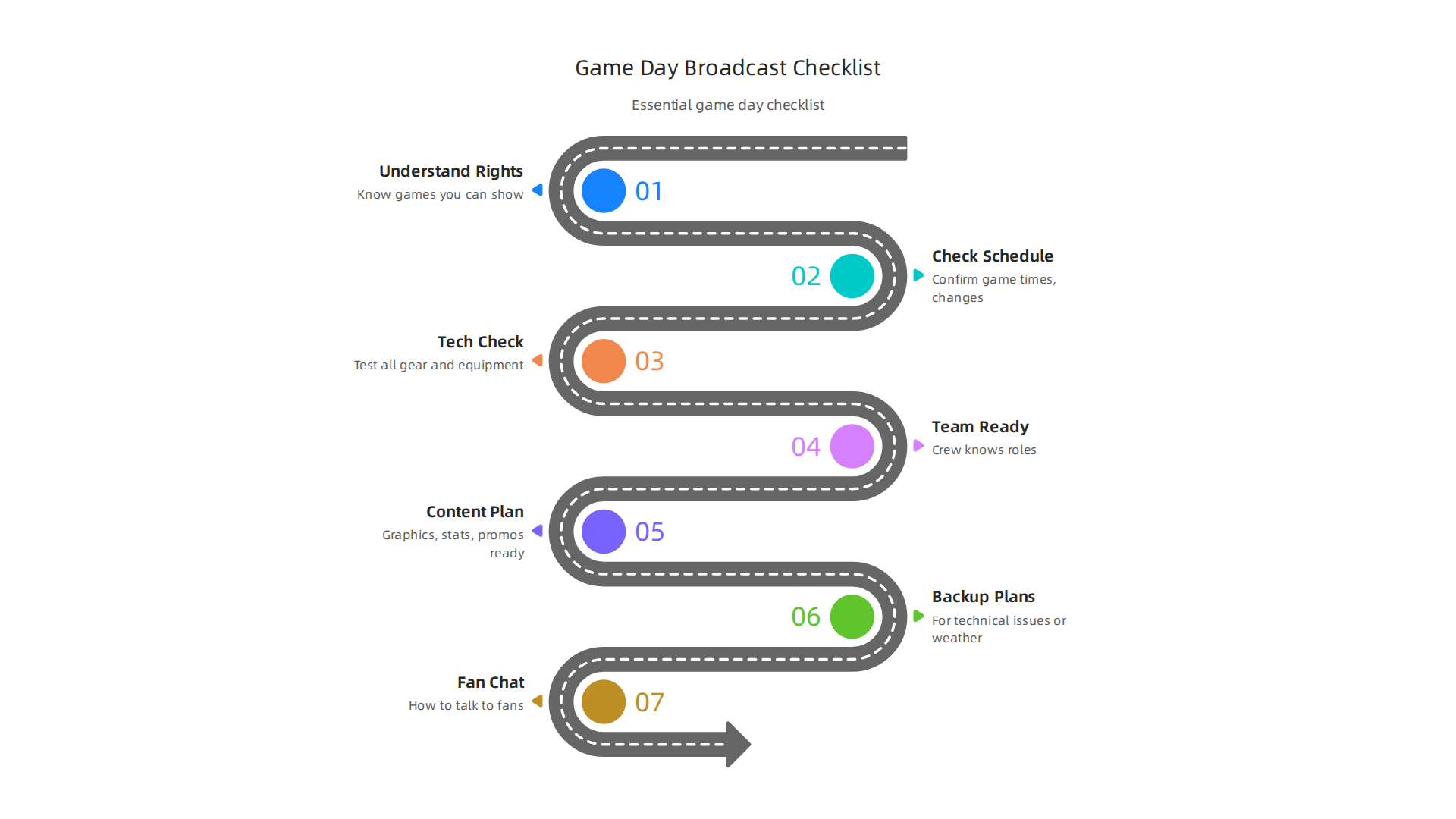
- Understand Rights: Make sure you know exactly what games you can show and where.
- Check Schedule: Confirm all game times and changes. Be ready for last-minute shifts.
- Tech Check: Test all cameras, microphones, and streaming gear. Make sure everything works.
- Team Ready: Ensure your broadcast crew knows their roles and the game plan.
- Content Plan: Have graphics, stats, and promotions ready to go.
- Backup Plans: Always have a plan B for technical issues or weather.
- Fan Chat: Think about how you’ll talk to fans on social media or a
sports forumduring the game.
By following these steps, you can help make sure every broadcast, whether it’s a big championship or a regular season game, runs smoothly and reaches its audience. This kind of careful planning is vital for success in global live sports broadcasting.
If you’re a broadcast director or a rights holder and want to make sure your broadcasts are top-notch, we can help.
Request a Broadcast Consultation
Summary
This article explains how to plan and deliver college football broadcasts to global audiences using the 2026 UNLV football schedule as a running example. It covers how to read official schedule entries (date, opponent, venue, kickoff time, and TV/streaming partners), why kickoff windows, time zones and daylight saving shifts matter, and how broadcast rights and territorial restrictions shape who can show each game. The piece also walks through modern streaming and OTT options, explains latency challenges and CDN/low-latency solutions, and outlines production and remote‑production requirements like cameras, audio, secure connections and redundancy. It offers practical vendor-management and cost-saving approaches such as consolidation and hybrid workflows, plus ways to use schedule data and APIs for distribution, promotion and automation. Finally, the article provides a simple pre-game checklist and points to best practices and partners to help rights holders and broadcasters deliver high-quality, globally accessible college-football coverage.