





College football is more than just a game; it is a massive event that draws millions of eyes every year. For big companies and event planners, understanding how to handle college football streams is key to reaching people everywhere.

In 2026, college football continues to be a huge hit. For example, the College Football Playoff (CFP) National Championship game brought in an amazing 30.1 million viewers for ESPN, with a peak of 33.2 million watchers. The CFP Quarterfinals even saw a 9.5% increase in viewers compared to the year before, showing just how popular these games are becoming, especially when big teams like Indiana and Alabama play.
This huge interest means great chances for global reach and sponsorships. When a company can broadcast games like an IU football schedule matchup or a Washington State football game to fans around the world, they build strong connections and make their brand known. This helps get more people excited and involved.
However, putting these live college football streams out there for a large audience is not easy. Big companies often face many tough challenges. They need to deal with complex technical setups, making sure the stream reaches everyone smoothly, no matter where they are. Imagine trying to show a U of M football game or an Alabama vs. Wisconsin showdown to fans across different countries and time zones; it requires a lot of planning.
There are also big challenges with how widely to send the stream, making sure they have the rights to show the games, and keeping costs under control. Getting all these parts right can be hard, leading to a lot of stress for those in charge. That is why having good broadcast solutions is so important.
If you are looking to learn more about how big companies handle sports broadcasts, you might want to Learn More About TPT Global and how they help.

They offer special services to make sure these live streams work perfectly.
Companies also struggle with making sure the quality of the broadcast stays high everywhere, reaching fans on many different devices, and keeping up with new technology. Managing many different groups for one broadcast can also lead to problems and higher costs. It can be tough to make sure fans get a clear, fast stream without delays. To see what kind of high-quality broadcasting is possible, you can Explore Our Broadcast Services.
The challenges of sending college football streams to many viewers are real, but understanding who is watching and where they are makes a big difference. In 2026, fans do not just sit in front of a single TV anymore. People watch college football games in many different ways.
Think of the audience in a few ways:

- Linear TV Viewers: These are the people who watch games on regular cable or broadcast channels. Even with all the new ways to watch, many still tune in this way for big games.
- OTT Platform Viewers: This group watches through streaming services that deliver content over the internet, like specific sports apps or subscription services. This is a growing area for college football streams, letting fans watch an iu football schedule game or a Washington State football match without cable. The way people watch sports has been changing, with college football viewership seeing a boost in numbers overall due to these new ways to access games. This shows how important it is to be able to broadcast across different platforms.
- Mobile Viewers: Many people watch games on their phones or tablets, especially when they are on the go. This means broadcasts need to look good and work well on small screens.
- International Viewers: College football has fans all over the world. Broadcasting a U of M football game or an Alabama vs. Wisconsin matchup globally means dealing with different time zones and language needs.
How games are scheduled also plays a huge role in how many people can watch them. This is called "windowing." Imagine a big game like the College Football Playoff happening. If it is scheduled at a prime time for viewers in one country, it might be the middle of the night for fans in another. Companies need to think about this carefully.
By spreading games out across different time slots and platforms, broadcasters try to reach as many people as possible. This means some games might be shown live on traditional TV, while others are available first on streaming platforms, or even delayed for international audiences. It is all about making sure that no matter where a fan is, they have a chance to watch their favorite team. Choosing the right platforms is key for businesses looking to reach a worldwide audience with their sports content. If you want to dive deeper into how different channels and streaming services play a role, you can read more about choosing live TV channels and streaming platforms for global sports broadcasting.
Handling all these different ways people watch college football streams requires smart planning and good technology. Companies need to make sure their broadcasts are top-notch, no matter the device or location. This complex process is why professional broadcast solutions are so important for major sports events.
When you think about the many ways fans connect with their teams, from traditional TV to cutting-edge streaming, it’s clear that a good broadcast partner is invaluable. You might be wondering how some companies excel in this area. Discover Why Choose TPT Global for your broadcasting needs.
Scheduling and Rights: Building a reliable game-day schedule globally
Building on the idea of "windowing" games for different audiences, the actual scheduling of college football streams is a tricky puzzle. It is not just about picking a time. There are special rules and deals that decide when and where a game can be shown. These are called media rights, and they say which network or streaming service gets to show certain games.

For example, different networks have rights to different conferences or even different time slots on a Saturday. In 2026, no single national network holds exclusive rights to all major conferences. Instead, rights are split up by package type, like primary broadcast windows or primetime marquee matchups How To Stream College Football In 2026 | Top Services & Tips. FOX often airs games starting at noon ET, while CBS might show Big Ten games in the afternoon. ESPN has a big hand in the College Football Playoff games, often showing them across its different platforms, including Disney+. Sometimes, they even share these big games with other networks like TNT Sports to reach more people ESPN sends College Football Playoff games to WBD’s TNT, Max.

This "hybrid distribution" of content, using streaming, pay-TV, and free channels, is a solid trend for premium sports Hybrid Viewing Models Solidify for Streaming.
One key part of scheduling is "broadcast windows." These are specific time slots when games are allowed to air. Broadcasters try to spread out popular games across these windows so that fans do not have to pick between two big matches at the same time. This also helps them show more games overall. Think about a mastering the Michigan football schedule for global broadcasts game or an alabama vs wisconsin matchup. If both play at the same exact time, some fans miss out. This is why networks carefully plan their schedules, sometimes revealing them months in advance Networks Unveil 2026 College Football Broadcast Schedules.
Then there are "blackout rules." These rules mean a game cannot be shown in certain local areas, even if you have the channel. This usually happens to protect ticket sales for games that are not sold out. Imagine wanting to watch an unlocking growth in collegiate sports broadcasting game, but because you live too close to the stadium and the game is not full, you cannot watch it on TV. These rules can be frustrating for fans trying to access college football streams.
Another challenge is "overlapping events." Sometimes, many games are happening at once, or even other big sports events like professional football. Companies have to decide which games to highlight and which platforms to put them on. This is especially true for global audiences, where different games are popular in different regions. For example, some college football streams for a washington state football game might get priority in one area, while another game is highlighted elsewhere.
When schedules change, it affects many people. A change in game time means production crews have to adjust their plans, maybe working different hours. Distribution partners, who help get the game to homes, also need to update their systems. Sponsors who paid for ads during a specific time might get upset. It is a big dance to make sure everyone is on the same page. This shows why good planning and being flexible are so important in the world of broadcasting college football streams. The complex system of media rights can be difficult to navigate, but it ensures games reach their intended audiences across many platforms.
If you are a large sports organization looking to handle these challenges and ensure your broadcasts reach a global audience smoothly, it is worth thinking about expert help. It can be hard to manage all the moving parts of live sports broadcasting by yourself. Request a Broadcast Consultation to discuss your project needs.
When networks manage the tough job of scheduling games, they also need to make sure the games look good and get to viewers quickly. This means looking at the technical side of things, especially for college football streams that travel across the world. Getting high-quality video to fans with almost no delay is key, no matter if they are watching an alabama vs wisconsin game in the US or an iu football schedule matchup in Europe.
Key Components for Smooth Streams
To send live video around the globe with low delay, several important technical parts must work together perfectly.

- Contribution Paths: This is how the video signal first leaves the stadium. It needs to be super reliable, often using high-speed internet lines or satellite links to get the raw video to a main broadcast center.
- Encoders: Once the video arrives, it goes through special devices called encoders. These machines compress the huge video files into smaller ones that can travel over the internet without losing much quality. This step is vital for making college football streams stream smoothly.
- CDN Selection: A Content Delivery Network (CDN) is like a global network of servers that stores and delivers video closer to viewers. Picking the right CDN is very important. It ensures that someone watching a washington state football game in Asia gets it from a server nearby, which makes the stream faster and more reliable. For large events, using a global CDN is a must for speedy delivery What is Low Latency Video Streaming?: The Complete Guide.
- Protocols: These are the rules for how video data is sent. For low-latency sports streaming, new types of protocols are used. These include Low-Latency HLS (LL-HLS) and LL-DASH, which work with something called CMAF (Common Media Application Format). These technologies can cut down delays to just a few seconds, or even less than a second Achieving Sub-Second Latency for Sports Streams – CDN Blog.

Also, SRT (Secure Reliable Transport) is used to send video from the game site to the CDN with high quality and low delay How to Deliver Low-Latency Multiview Sports Streams to Global …. These special protocols are much faster than older methods, which is crucial for live sports where every second counts Why low latency matters in sports streaming (and how to achieve it).
- Monitoring: Live streams need constant watching. Teams keep an eye on everything to fix problems right away. This means checking video quality, stream speed, and if viewers are having any issues.
Keeping Streams Strong and Available Everywhere
Broadcasting major u of m football games or other popular college football streams means planning for huge numbers of viewers.
- Scalability: The system must be able to handle millions of viewers at once, especially during big games. This requires CDNs that can deliver enormous amounts of data, sometimes "multi-terabit peak loads," without slowing down.
- Redundancy: What if something breaks? Good broadcast systems have backup plans for everything. This means having extra encoders, different internet paths, and more than one CDN to ensure the stream never stops. If one part fails, another takes over instantly. This "geo-distributed" approach means having equipment spread out in different places, so a problem in one spot does not affect everyone. This kind of careful planning helps deliver flawless live sports broadcasts to keep fans engaged.
For sports organizations aiming to deliver these complex, low-latency college football streams to a global audience, finding a partner with the right technical know-how is essential. A company specializing in end-to-end broadcast production can manage all these intricate details.
Are you looking to enhance your sports broadcasts and ensure they reach fans worldwide with cutting-edge technology? Explore Our Broadcast Services to see how expert solutions can make a difference.
When aiming to deliver top-notch college football streams and other major sports events to fans around the world, understanding the technical parts is just one piece of the puzzle. How these broadcasts are actually put together, from the stadium to your screen, plays a huge role in both quality and cost. This involves different ways of working, called production workflows, and knowing what makes them expensive or affordable.
Comparing Production Models for Cost and Reliability
In 2026, broadcasters have more choices than ever for producing live sports. Each choice comes with its own set of costs and ways of working:

- Traditional OB-Van Production: Think of the classic "Outside Broadcast" van. This is a big truck filled with equipment and people who travel to the game site. All the cameras, sound, and switching gear are right there, making a full control room on wheels. This method offers great control and quality, but it can be very expensive. You have to pay for travel, lodging for large crews, and moving all that heavy equipment, whether it’s for an alabama vs wisconsin game or a smaller regional matchup.
- Remote Production (REMI): This is a newer way of doing things that has become very popular. With remote production, only a small team and cameras are at the game venue. The video signals are sent over fast internet lines to a main control room far away, sometimes hundreds or thousands of miles. This "home base" control room then mixes the show. This approach can save a lot of money because fewer people travel, and you don’t need huge OB-vans for every event. Some reports show savings of up to 70% compared to traditional methods while still covering many events from one central spot Industry Insights: Cost reduction and operational efficiency drive …. It’s a smart way to cover an iu football schedule or a washington state football game without breaking the bank. Experts agree that remote production workflows are redefining live sports broadcasting in 2026 Remote Production in 2026: How REMI Workflows Are Changing Live Sports Broadcasting.
- Cloud-Based Live Production: This takes remote production a step further by using the internet and cloud computing power for many parts of the broadcast. Instead of buying and owning all the expensive equipment, broadcasters can rent computing power and software from cloud companies. This makes production more flexible and scalable, meaning you can easily handle small games or massive events like a u of m football championship without a huge upfront investment. Cloud workflows help reduce costs by using resources only when needed, which also saves energy CLOUD-BASED TV SPORTS PRODUCTION AND DISTRIBUTION …. Many find that cloud solutions offer greater efficiency and agility, leading to lower production costs and better ways to meet fan demands Cloud Workflows Are Redefining Live Sports Production.
Managing Operational Costs
Even with cost-saving methods like remote and cloud production, there are still costs to watch out for. For example, moving video data out of the cloud (called "egress cost") can be a big, hidden expense that people often forget to plan for. Keeping a close eye on these costs and using data to find smart ways to save money is very important Cost Optimization Strategies in Remote Sports Broadcasting.
Working with Partners: Vendors and Agreements
Putting together a live global sports broadcast is a huge task. It often means working with many different companies, like those providing cameras, internet links, or cloud services. This is called vendor coordination. It’s important to have clear agreements (Service Level Agreements, or SLAs) that spell out what each partner will do and how reliable their services will be.
Deciding whether to work with many different vendors or just one main company has its pros and cons. Using many vendors might give you more choices and specialized services, but it also means more work to manage everything. Going with a single, experienced partner can simplify the process, making it easier to manage all the parts of producing global college football streams.
Are you looking for a partner that can handle all the complex details of sports and media production, from strategy to live broadcasting? Consider learning more about Trans Group.

After choosing how to produce your broadcasts, the next big step is deciding how to get those games to fans everywhere. This is where your distribution strategy comes into play. In 2026, fans watch sports in many ways, so a smart plan uses different platforms to reach everyone who wants to see their favorite teams.
Multi-Platform Delivery for Wider Reach
To truly maximize how many people see your college football streams, you need to send your content to more than just one place. This often means using a mix of traditional TV, streaming services, and agreements with other media companies.
- Linear TV (Traditional Broadcast): This includes channels like ABC, CBS, Fox, and ESPN. Many fans still watch games this way, especially big matchups like an alabama vs wisconsin game. These networks often have huge reach, but their schedules are fixed.
- Over-the-Top (OTT) Streaming: These are services that deliver content over the internet, like ESPN+, Peacock, Paramount+, or Disney+. They offer flexibility for fans to watch on their phones, tablets, or smart TVs. Many major sports events, including college football, are now found on these platforms, often through a "hybrid" model that mixes traditional TV with streaming options Hybrid Viewing Models Solidify as Streaming Integrates into Premium Sports Distribution. For example, you can stream many games, whether it’s an iu football schedule or a u of m football championship, through these apps. Disney+ has even started adding more live sports to its service to keep up with this trend.
- Syndication Partners: These are other companies or local stations that you allow to broadcast your content. This helps fill in gaps where your main channels might not reach or lets you offer more games, like lesser-known regional matchups or specific team coverage such as a washington state football game, to passionate local fans.
The goal is to choose a mix of these partners that gets your content to the most viewers. Major conferences and networks often sign big deals for their TV and streaming rights, carefully deciding where each game will be shown College Sports Television Deals and Media Rights. This ensures that key events are widely available while also allowing for growth on newer platforms. To learn more about selecting the right channels and platforms, consider reading about choosing live TV channels and streaming platforms for global sports broadcasting.
Protecting Your Content and Enhancing the Viewer Experience
When sending your valuable sports content across many platforms, it’s important to protect it and make sure fans have the best possible experience.
- Digital Rights Management (DRM): This is like a lock on your content. It makes sure that only people who have paid or have permission can watch your college football streams. This is key for keeping your content safe from being shared illegally.
- Ad Insertion: This means putting ads into the broadcast in a smart way. For streaming, ads can be targeted to different viewers, so one person might see an ad for a car while another sees an ad for a local restaurant. This helps make more money from the broadcast.
- Personalization: Imagine a fan being able to choose different camera angles, see specific stats for their favorite player, or even hear commentary in their own language. This makes the viewing experience much better and more personal. Technical setups need to allow for these kinds of features to truly engage fans in 2026.
Choosing the right partners for distribution and handling these technical details carefully helps you reach more fans and make more money from your broadcasts, all while protecting your valuable content.
Want to see how we bring these strategies to life?
Watch Our Latest Broadcast Work
To really make the most money and get many eyes on your games, it’s not enough to just send your college football streams everywhere. You also need smart plans for ads and ways to check if your efforts are working.
Sponsorship and Ad Strategies for Max Money
When you show games on both regular TV and streaming, you need to think about how sponsors and ads fit in. The goal is to make sure you earn as much as possible, no matter how fans watch.
- Targeted Ads on Streaming: On streaming platforms, ads can be super smart. Instead of everyone seeing the same ad, streaming services can show different ads to different people. For example, a young fan watching an iu football schedule game might see an ad for a new video game, while an older viewer watching the same u of m football game sees an ad for a car. This makes ads more useful for viewers and more valuable for advertisers.
- Protecting Sponsor Value: When games are on both traditional TV and streaming, it’s key to make sure sponsors get their money’s worth. This means careful planning so their messages reach a big audience across all platforms. For big games like an alabama vs wisconsin matchup, a lot of people are watching, so sponsors pay good money for that exposure. In fact, the 2026 College Football Playoff National Championship game saw huge viewership, averaging 30.1 million viewers on ESPN alone, showing just how big the audience can be for these events and why ad strategy is so important for CFP title game viewership.
Knowing What Works: Measuring Your Broadcast Success
It’s super important to know if your choices are actually working. You need to keep track of key numbers to see how well you’re reaching fans, keeping them engaged, and making money.

- Engagement Metrics: This means looking at how much fans are involved. Are they just watching, or are they staying for the whole game? Do they click on extra features or use interactive tools? For example, understanding what fans enjoy when watching a washington state football game can help you make future broadcasts even better. You can dive deeper into how to maximize fan engagement with flawless real-time sports scores to keep viewers hooked.
- Conversion and Revenue: This part is about whether your broadcasts are helping to make money. Are people subscribing to your streaming service because of the games? Are sponsors happy with how many people saw their ads? Tracking these numbers helps you see the direct impact on your business.
- Reporting to Sponsors: Sponsors want to know that their money is well spent. You need good ways to show them clear numbers about how many people saw their ads and how engaged those people were. This builds trust and helps you get more sponsors in the future. Strong reporting can also help you understand how broadcasting regional football solutions for global reach and revenue growth can be beneficial.
By carefully planning your ads and always checking your results, you can make sure your [college football streams] not only reach a lot of fans but also bring in the best possible income. This thoughtful approach helps your sports content succeed in the busy world of 2026 broadcasting.
Ready to talk about how these strategies can work for your next big broadcast?
Request a Broadcast Consultation
By carefully planning your ads and always checking your results, you can make sure your college football streams not only reach a lot of fans but also bring in the best possible income. This thoughtful approach helps your sports content succeed in the busy world of 2026 broadcasting.
Ready to talk about how these strategies can work for your next big broadcast?
Best Practices and Enterprise Case-Study Frameworks
Making your college football streams truly great means more than just showing the game. It involves smart planning for game day and always learning how to do better next time. Big companies that broadcast sports know this well. They use clear rules and checklists to make sure every game, from a small local match to a huge u of m football showdown, goes off without a hitch.
Game Day Operations: Making Sure Everything Works
Imagine it’s game day. Fans are waiting to watch their favorite team. For broadcasters, this means being super prepared. Here’s a look at what goes into a smooth operation:
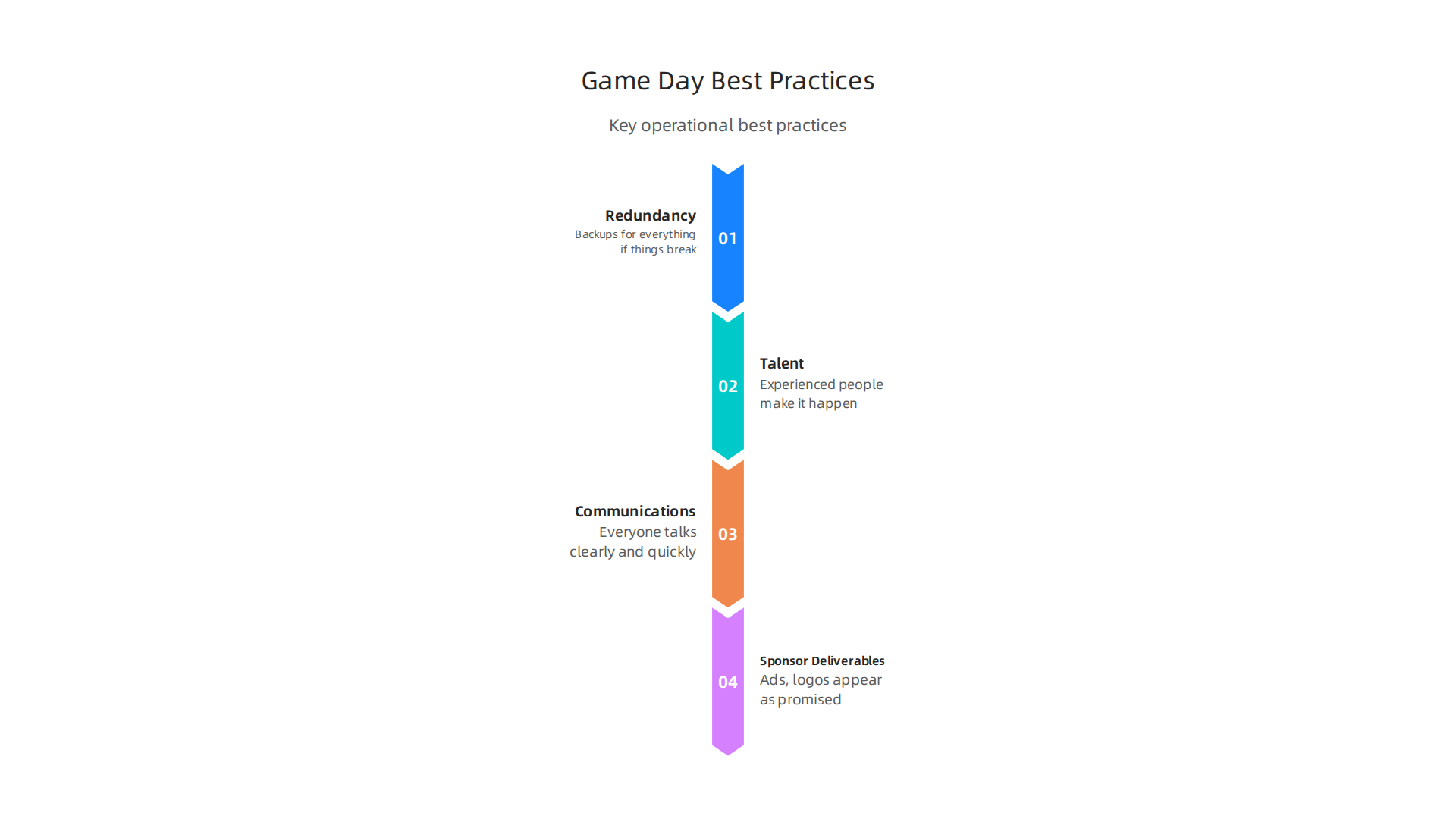
- Redundancy (Backups for Everything): In live broadcasting, things can go wrong. That’s why having backups is super important. Think about extra cameras, sound equipment, internet connections, and even power sources. If one thing stops working, the backup kicks in right away. This is crucial for seamless global sports broadcasts, especially as hybrid viewing models, combining traditional TV and streaming, become the norm in 2026, which makes production even more complex to handle Hybrid Viewing Models Solidify as Streaming Integrates into Premium Sports Distribution.
- Talent (The People Who Make It Happen): A broadcast is only as good as its team. This includes the camera operators, sound engineers, directors, and of course, the commentators who bring the game to life. Having experienced people who know what they’re doing makes a huge difference. For instance, ESPN uses very detailed production setups for major events like the College Football Playoff Semifinals, often involving over 20 different viewing options At CFP Semifinals, ESPN Again Flexes Its Operational Muscle With ….
- Communications (Staying Connected): Everyone on the broadcast team needs to talk to each other clearly and quickly. This means using special headsets and communication systems. If a camera needs to zoom in on a player from
washington state footballoralabama vs wisconsin, the director needs to tell the operator instantly. - Sponsor Deliverables (Making Sponsors Happy): Sponsors pay good money to have their brands seen. Broadcasters must make sure that all ads, logos, and special messages appear exactly as promised, on every platform. This builds trust and ensures ongoing partnerships.
Learning After the Game: Post-Mortems and Getting Better
Once the game is over and the broadcast ends, the work isn’t finished. Smart companies use a process called a "post-mortem." It’s a fancy way of saying they review everything that happened.
- Looking Back and Learning: The team sits down to talk about what went well and what could have been better. Was the sound clear? Did the pictures look good? Did the ads run on time? This helps them learn from each experience. You can even Deliver Premium Total Sports TV For Broadcasters In 2026 by focusing on these details.
- Making Changes for Next Time: Based on what they learn, they make plans to improve future broadcasts. This is a constant cycle of getting better and better. This approach is key for major rights holders aiming to Streamline Global Live Sports Production For Major Rights Holders.
- Using Case Studies: Companies often look at past events as case studies. They study how they delivered an
iu football schedulegame last year to make this year’s broadcast even more engaging for fans. This continuous improvement helps ensure that all college football streams are of the highest quality, driving more viewership and better results.
This dedication to best practices and constant learning is what sets top-tier sports broadcasters apart. It ensures that every game is delivered flawlessly to fans around the world, whether they’re watching on TV or a streaming device. To see how these ideas come to life, you can Watch Our Latest Broadcast Work and see how we manage these complex events.
Summary
This article explains how major companies plan, produce, and distribute college football streams to reach global audiences in 2026. It covers why college football remains a high-value property (large viewership and sponsorship opportunity), who is watching (linear, OTT, mobile, international), and the scheduling and rights challenges broadcasters face, such as windowing and blackout rules. The piece walks through the technical stack needed for low-latency, reliable delivery—contribution paths, encoders, CDNs, protocols like LL‑HLS and SRT—and the scalability and redundancy required for peak events. It compares production models (traditional OB vans, REMI/remote workflows, and cloud-based production), highlights cost drivers and vendor coordination, and outlines multi-platform distribution, DRM, ad strategies, and measurement. Finally, it gives practical operational guidance for game day and post-mortem improvement, and explains why enterprise broadcast partners are often essential for flawless global sports delivery.