





Global Sports Popularity and Broadcasting: Why it Matters for Enterprise Broadcasters
Think about sports today. From the roar of the crowd at a football match to the quiet tension of a tennis championship, sports bring people together like little else.

In 2026, the world continues to be deeply in love with sports. But for big companies that broadcast these events, this love isn’t just about fun. It’s about serious business. Understanding which are the most watched sports worldwide helps these companies make very important choices.
For large broadcasters, knowing the most popular sports means knowing where to put their money. It affects big decisions like which games to buy the rights for, how to plan to send these games out to viewers everywhere, and how big their production teams need to be. For example, football (soccer) is the most watched sport in the world, with over 3.5 billion fans across the globe, and cricket comes in second with 2.5 billion fans in 2026 Most Watched Sports in the World Statistics 2026. These huge numbers mean that broadcasting these top 10 sports in the world comes with many challenges. Companies face high costs and tough technical hurdles to get a clear, smooth picture to screens across many countries and time zones.
In this article, we will look closely at what drives viewership for the most watched sports worldwide. We will share data-backed insights on which sports are truly global and where different sports are most loved. We will also dive into the special challenges that come with broadcasting live sports events to a global audience. Plus, we will explore smart ways to use different platforms, from regular TV to online streaming, to reach every fan. Our goal is to give large-scale broadcasters clear, helpful steps they can take to succeed. It’s all about delivering amazing experiences to fans while also reaching business goals, helping you to achieve winning strategies for global sports broadcasting in 2026.
To learn more about the team behind top-tier sports broadcasting, you can Learn More About TPT Global.
Current global rankings: Which are the most watched sports worldwide?
When we talk about the most watched sports worldwide, it’s like asking who the biggest stars are in a huge concert. Everyone has their favorites, but some acts just draw the biggest crowds globally. For broadcasters, knowing which sports capture the most attention helps them plan everything, from what games to show to how to make the broadcast look amazing.
Based on global fan numbers in 2026, a few sports truly stand out.
Football, or soccer as it’s known in some places, is by far the leader. It has about 3.5 to 4 billion fans across the world Data reveals the world’s 10 most-watched sports. This means almost half the people on Earth follow football! Next up is cricket, which has around 2.5 billion fans, mostly loved in places like South Asia, the UK, and Australia Top 10 Most Followed Sports in the World 2026.
Basketball follows with a huge audience of about 2.2 billion fans, popular in the Americas, Europe, and Asia. Then comes field hockey, with about 2 billion fans, especially strong in South Asia and Europe. Tennis also makes the list with around 1 billion fans all over the world. Even esports, or electronic sports, is growing super fast. In 2026, it reached about 640.8 million viewers, showing how much people love watching video game competitions Esports Statistics 2026: Most Popular Games.
It’s important to know that how we measure "most watched" can change the rankings a little. There are different ways to count:
- Broadcast Reach: This looks at how many people watch games on TV or streaming services.
- Fan Base: This counts how many people say they follow a sport, even if they don’t watch every game.
- Live Attendance: This measures how many people actually go to the stadiums or arenas to watch in person.
- Digital Engagement: This counts how many people interact with a sport online, like on social media or by watching highlight videos.
Because of these different ways of counting, one report might show slightly different numbers or rankings than another. For example, some reports focus on big events like the FIFA World Cup, which can attract up to 5 billion viewers for a single tournament Most Watched Sports in the World – statsgeo.com. This is why major broadcasters need a clear understanding of these different numbers and what they truly mean for reaching a global audience. Mastering how to deliver these events is key to success.
To learn how to deliver world-class sports events, you can Mastering global sports broadcasting for world class live events.
Broadcasters need to look beyond just one type of number to get the full picture of the most watched sports worldwide. They need to understand what draws in fans and how to keep them engaged across all platforms.
If you’re interested in top-tier production and distribution of these huge events, we invite you to Explore Our Broadcast Services.
Regional viewership variations and audience demographics
When we talk about the most watched sports worldwide, understanding that full picture means looking at how popular a sport is in different places and with different kinds of people. A sport that’s huge in one country might be less known in another. This is key for sports companies and broadcasters, as it helps them tailor their shows.
For example, while football (soccer) is loved almost everywhere, cricket truly dominates in places like South Asia, the UK, and Australia Most Watched Sports Worldwide: The Global Rankings Explained. Field hockey also has a big following in South Asia and parts of Europe, showing a clear regional focus Most Popular Sports in the World. Basketball, on the other hand, finds strong fan bases across the Americas, Europe, and Asia. Knowing these regional preferences is vital for those who hold the rights to show these games.
Beyond geography, different groups of people often prefer different sports. Let’s look at age and gender. Generally, more men tend to watch sports compared to women. For instance, a YouGov report shows that in 2026, about 77% of men actively engage with sports content, compared to 56% of women YouGov Sports Whitepaper. Younger people, especially those aged 18 to 24, also show higher levels of sports engagement. This means that shows designed for these groups might need different styles or platforms.
Esports is a great example of this. While it’s growing fast, its audience is often younger. In 2026, many esports fans are millennials and Gen Z. Though still mostly male, women make up a good 44% of the esports audience, showing its potential to grow among different groups Southeast Asian esports market report.
These differences have big meanings for broadcasters. They need to think about:
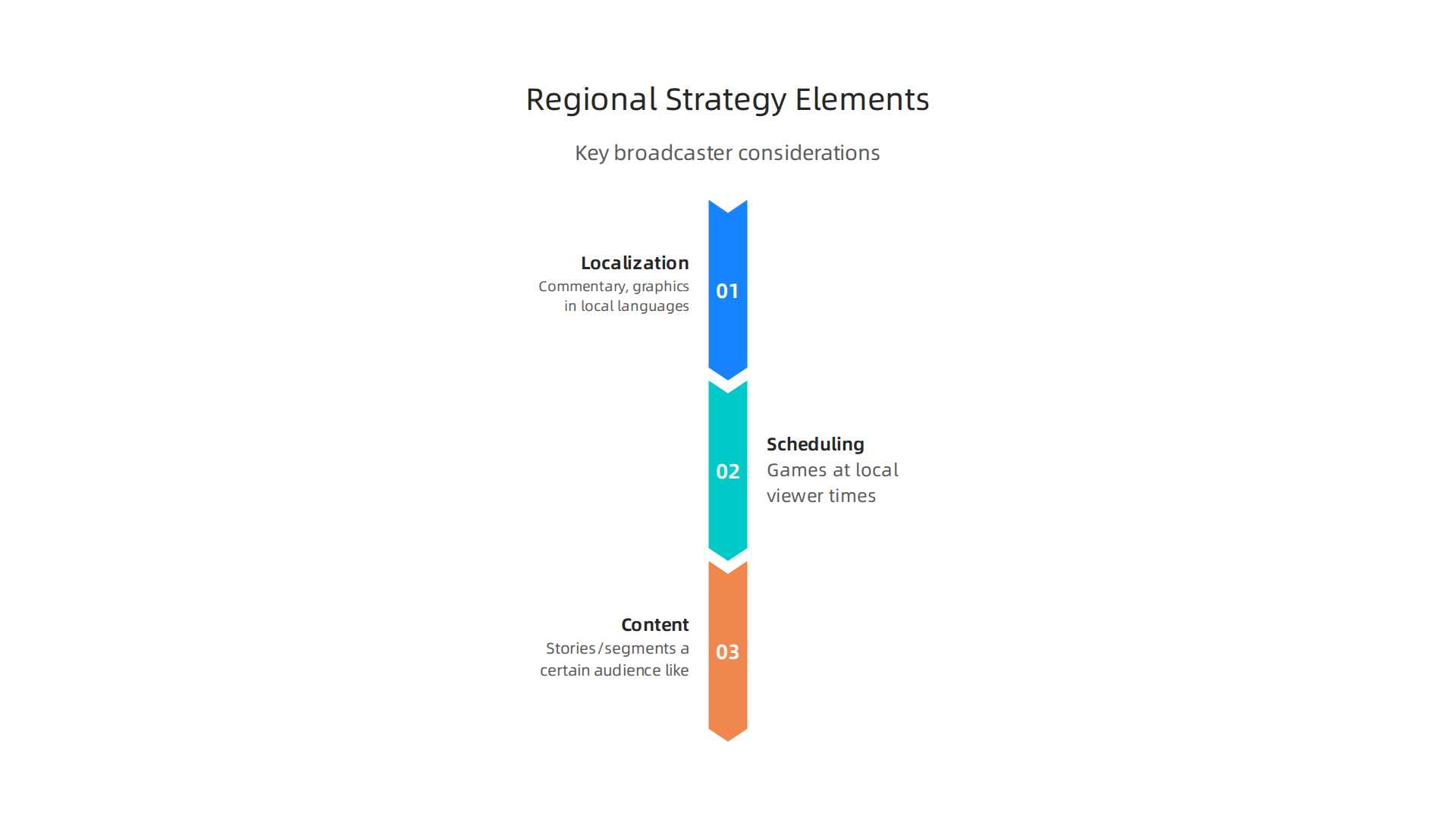
- Localization: This means offering commentary and graphics in local languages. Imagine watching a football match in English, Spanish, or Arabic, depending on where you are.
- Scheduling: Games must be shown at times that make sense for local viewers. A game played in the morning in one country might be late at night somewhere else.
- Content: What kind of stories or segments will a certain audience like best? Younger fans might prefer short, quick highlights on social media, while older fans might still love watching a full game on traditional TV. Some reports even show that in 2026, about 60% of sports audiences still prefer traditional cable or satellite TV, though this changes with age The State of Sports Media 2023.
For global organizations looking to reach audiences everywhere, crafting a smart regional sports broadcasting strategy is not just helpful, it’s a must. It ensures that the most watched sports worldwide are enjoyed by everyone, no matter where they live or who they are.
If you’re a rights holder or broadcaster facing these challenges, we can help. Request a Broadcast Consultation today to discuss your specific needs.
Broadcasting challenges for high-demand sports
After figuring out who wants to watch what and where, the next big challenge is actually getting those games to everyone. Broadcasting the most watched sports worldwide, especially events like the World Cup or the Olympics, is a huge and tricky job. It comes with many operational hurdles and big costs.
One major challenge is handling a massive number of viewers all at once. Imagine millions of people across the globe trying to watch a football match at the same exact second. The systems must be very strong and able to grow instantly without breaking down. This is called scalability. To make sure fans don’t miss a moment, broadcasters need backup plans for everything. This is called redundancy. If one system fails, another must be ready to take over right away How Live Broadcasting Workflows Handled the 2026 U.S. Soccer World Cup. In 2026, many broadcasters are using low-latency streaming, which means the delay between the live action and what you see on your screen is very short, often just 2-5 seconds. This is especially important for sports with chat or betting features Low-Latency Live Streaming: Sub-3-Second Guide 2026. Making sure these systems work without a hitch often involves many different companies working together, which can be hard to coordinate.
Building backup streams and clear communication plans are key to powering big events like esports tournaments Powering eSports Events in 2026 with Low-Latency Tech.
Another tough part is dealing with broadcast rights. Different companies own the rights to show a game in different countries or on different platforms (like TV, phone apps, or the internet). This means a complex web of agreements and technical setups. For example, broadcasting an international cricket match involves many standards and tournament rules set by groups like the ICC – International Cricket Council. Each territory might have its own rules for how a game can be shown, like whether it can be streamed online or only on TV. This is where centralizing the feed helps global distribution with local customization, as seen with the 2026 World Cup How Technology and Broadcast Innovation Are Powering the 2026 World Cup.
All these moving parts make delivering high-quality, seamless broadcasts a huge undertaking. For those aiming to deliver world-class live events and master these challenges, understanding Mastering Global Live Sports Broadcasting Challenges for Flawless Delivery is crucial. This is how the top 10 sports in the world reach their fans.
If you’re interested in how experts handle these complex systems, you can Explore Our Broadcast Services and see real examples of top-notch production. We help organizations deliver unrivaled quality and global reach, making sure the biggest sports today are enjoyed by fans everywhere.
Now, let’s talk about where people actually watch these big games. It’s not just on TV anymore. In 2026, the most watched sports worldwide reach fans through three main places: regular TV, streaming apps, and social media. Each one has its own way of getting the game to you and making money.
Traditional TV
Traditional TV, also known as linear TV, still has a huge audience, especially for older viewers. Many sports fans, about 60%, still like watching sports through cable or satellite. This preference for traditional TV goes up for people over 55 years old, where it remains strong The State of Sports Media – 2023. However, it’s a close race with streaming. Actually, in 2026, about 51% of sports viewers prefer TV, while 49% prefer streaming platforms The Ormax Sports Audience Report: 2024. TV makes money from commercials and cable subscriptions. For many of the top 10 sports in the world, TV is still a big part of their income.
Streaming and OTT Platforms
But streaming services and apps, also called OTT (Over-The-Top), are quickly catching up. Younger fans, especially those between 18 and 39, are increasingly choosing streaming. In 2026, streaming platforms are set to spend a lot on sports rights, showing how important they’ve become. This amount is about $14.2 billion, which is a 7% jump from 2025 The Biggest Sports Marketing Trends We’ve Seen So Far in 2026.
These platforms let sports organizations connect directly with fans. They often do this through special subscriptions or by letting you pay to watch just one game. This direct method can bring in more money and offer special content for super-fans Streaming Media | Subscription Business Model. Getting content onto streaming platforms globally needs good internet, strong servers, and special tools to make sure everyone sees a clear picture without delays. For big events like a BBC News Sport Football match, this is very important.
Social Media
Then there’s social media. While it might not be for watching a whole game live, it’s huge for highlights, behind-the-scenes peeks, and connecting with fans. Platforms like YouTube, TikTok, and X (formerly Twitter) help spread the word about sports today and attract new, younger viewers. Many fans use their smartphones to watch video content, including sports clips Global Sports Video Trends Report.
Each platform needs a different strategy. For example, a global sports group might show the main game on TV, offer a special ‘all-access’ stream for subscribers, and post exciting highlights on social media.

This way, they reach different fans in different ways, all at the same time. You can learn more about choosing live TV channels and streaming platforms for global sports broadcasting.
Managing all these ways to show sports requires smart planning and good technology. Companies need to be able to deliver high-quality broadcasts across all these platforms, smoothly and without issues. This is how they make sure fans around the world can enjoy their favorite teams and athletes.
If you are looking for a partner who can manage every part of your sports and media needs, from planning to production and delivery across all platforms, consider how Trans Group provides a single-window solution.
When big sports events are shown around the world, it is not just about picking a platform. The real magic happens behind the scenes, where many technical details must be just right. This includes making sure the video gets to you super fast, handling all the cameras and different feeds, and making the show feel local to you.
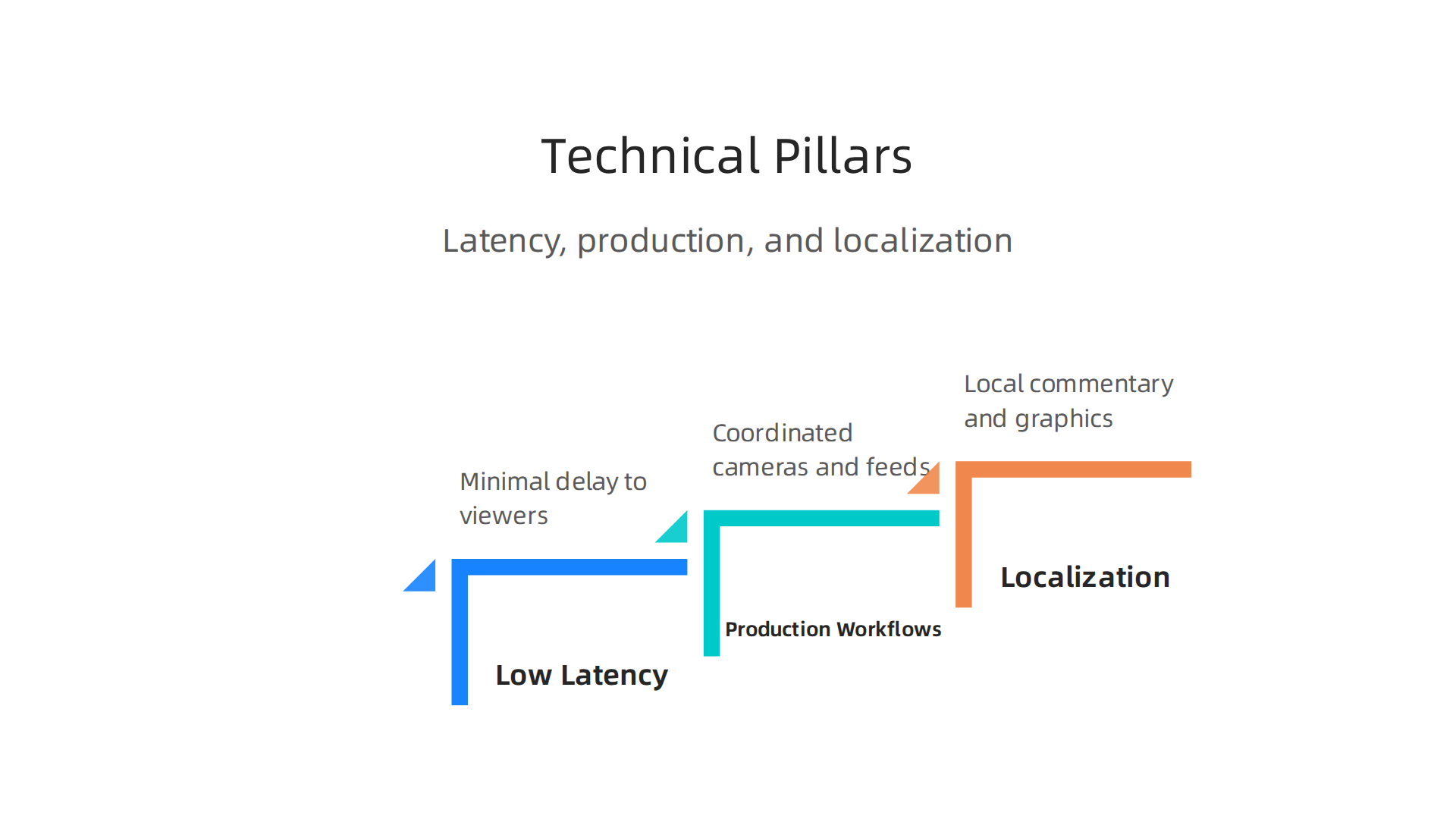
These choices really change how you experience the most watched sports worldwide.
Low Latency Streaming
One of the biggest technical challenges for sports today is "latency." This is the tiny delay between something happening in the game and you seeing it on your screen. For normal TV, this delay can be many seconds. For standard online streaming, it can be up to 45 seconds Complete Guide to Watching Live Sports in 2026. Imagine your neighbor cheering for a goal before you even see it! This is a big problem, especially for things like sports betting or when chatting with friends online.
To fix this, companies use "low-latency streaming." This new way of sending video cuts down the delay to just 2 to 5 seconds. Sometimes it is even under 1 second Low-Latency Live Streaming: Sub-3-Second Guide 2026. Special methods like LL-HLS and LL-DASH are very important in 2026 for making this happen. These work by sending small bits of video very quickly, like tiny chunks, instead of waiting for bigger parts. For example, LL-HLS can get the delay down to about 1.5 to 3 seconds Adaptive Bitrate and Low-Latency HLS – CDN Blog. This means you see the action almost as it happens, keeping the excitement real.
Production Workflows
Making a live sports broadcast, like a big bbc news sport football match, is a huge job. It is not just one camera. Think about all the different camera angles, slow-motion replays, and expert comments. A "production workflow" is like a very detailed plan for how all these different parts come together. It means managing many video feeds at once, choosing the best shots, and making sure everything looks great on every screen, whether it is a TV or a phone. This process must be very organized to deliver a smooth and exciting show for games that are among the top 10 sports in the world. Companies need to excel at mastering global live sports broadcasts for world-class delivery.
Localization Practices
To reach fans all over the globe, sports broadcasts need to feel local. This is called "localization." It means:
- Different Languages: Providing commentary in Spanish for viewers in Mexico, French for Canada, or Arabic for the Middle East.
- Local Ads: Showing commercials that are relevant to people in specific countries.
- Local Graphics: Using on-screen graphics or scores that match local time zones or preferences.
Localization makes the broadcast more personal and helps fans feel a stronger connection to the game, no matter where they live. It also ensures that the broadcast follows all the specific rules and agreements for showing content in each country.
Impact on Viewer Experience
All these technical choices directly affect how much a fan enjoys the game. Low latency means less chance of spoilers and a more connected feeling. Good production means a clear, exciting picture with all the best moments shown. And localization makes the broadcast feel like it was made just for you. When these things are done well, fans are happy and keep coming back to watch their favorite sports today. If they are not, viewers might get frustrated and miss out on the thrill of the game.
To make sure your sports broadcasts meet these high standards, from low latency to perfect localization, you need expert help. Explore Our Broadcast Services and see how TPT Global ensures top-notch quality for your audience.
Making sure fans are happy is one part of the puzzle. The other big part is how sports events make money and how the rights to show those games are handled. This is called "monetization and rights management." It is how organizations earn money from the most watched sports worldwide and deliver them to fans.
Commercial Models for Sports Broadcasting
There are a few main ways that global sports events make money from broadcasting:
- Subscription Models: This is like paying for a service such as Netflix or a special sports channel. Fans pay a regular fee to watch their favorite games, be it
bbc news sport footballor basketball. Streaming platforms are spending a lot on sports rights, with an estimated $14.2 billion in 2026 alone The Biggest Sports Marketing Trends We’ve Seen So Far in 2026. - Ad-Supported Models: This is the traditional way, where channels show commercials during breaks in the game. The money from these ads helps pay for the broadcast.
- Hybrid Models: Many services use a mix of both. You might pay a basic subscription, but still see some ads, or have an option for a premium, ad-free experience.
- Territory-Specific Licensing: This means selling the rights to show a game in one country or region to a specific broadcaster, and then selling the rights for another country to a different company. This allows for customized delivery and monetization across the globe.
Overall, subscription and advertising are the biggest ways sports media makes money today Global Sports Media Market Size, Share & Forecast, By ….
Managing Media Rights at Scale
Media rights are simply the permission given to a company to broadcast a sports event.

Think of it like a license. For huge events or the top 10 sports in the world, these rights are very valuable. In 2026, global sports rights are expected to go beyond $67 billion Global sports rights climb to over $67 billion in 2026.
Here are important things to think about when managing these rights:
- Negotiating Deals: Sports leagues and event organizers work hard to get the best deals for their games. They talk with TV channels, streaming services, and other media companies. This can involve many different platforms for one event.
- Global Reach: It is not enough to just sell rights in one country. To reach all the fans of
sports today, rights need to be sold and managed for many different parts of the world. This often means breaking up the rights by country, language, or even platform. You can learn more about how to manage these types of deals successfully in this guide to Mastering Razorback Football Broadcast for Global Rights to Revenue. - Protecting Content: With so many ways to watch, it is vital to make sure only authorized companies are showing the games. This helps protect the value of the rights and ensures everyone gets paid fairly.
- New Ways to Monetize: Beyond just showing games, sports organizations are finding new ways to make money. This includes special content that goes straight to fans through their own apps or websites.
Monetization and rights management are key for any major sports organization. It is how they fund the games and bring the excitement to fans everywhere. For broadcasters looking to navigate these complex waters and secure competitive advantages, it helps to understand Why Choose TPT Global.
Making money from sports and handling broadcasting rights are big tasks. But making sure everything works smoothly behind the scenes is just as important. For the most watched sports worldwide, this means learning from major events and using smart tactics.
Case studies and lessons from major international broadcasts
Big sports events, like the FIFA World Cup 2026, teach us a lot about putting on a show for a global audience. The 2026 World Cup was a huge success and showed important lessons for media companies What the 2026 FIFA World Cup Taught Global Media Giants.
Here are some key lessons:
- Great Planning (Orchestration): Imagine trying to show
bbc news sport footballgames across many countries at once. It needs perfect planning. For big events like the World Cup, a central video feed helps send the games everywhere. Then, local broadcasters can add their own flavor, like special commentary or graphics. This kind of technology helps power the biggest events How Technology and Broadcast Innovation Are Powering the 2026 World Cup. - Always Have a Backup (Contingency Planning): Things can go wrong with live broadcasts. That’s why having many backup streams and ways to communicate is a must. If one system fails, another can quickly take over. This helps keep the broadcast reliable even for the
top 10 sports in the world. One major lesson from eSports events is that backup streams and communication layers are crucial Powering eSports Events in 2026 with Low-Latency Tech. - Working Together (Partner Consolidation): When many companies are involved in a broadcast, it can get messy. It often works better to have fewer partners who work closely together. This makes everything simpler and more connected.
To learn more about putting together a great global broadcast, check out how to Mastering global live sports broadcasts for world-class delivery.
Repeatable tactics for better broadcasts
Broadcasters use special methods to make sure the games you watch are clear, fast, and exciting.
- Making it Reliable: To prevent games from cutting out, broadcast teams use many different ways to send the video. They might use several internet connections and special tools that can send video even if one connection is weak. This helps keep the
sports todayrunning smoothly for fans. Using "redundant streaming workflows" and multiple internet providers makes broadcasts more robust How Live Broadcasting Workflows Handled the 2026 U.S.. - Reducing Delay (Low Latency): Have you ever heard your neighbor cheer before you see the goal on your screen? That’s "latency" or delay. For live sports, especially the
toughest sports in the worldwhere every second counts, less delay is better. Low-latency streaming aims to get the action from the camera to your screen in under five seconds, sometimes even faster Low Latency Live Streaming: The 2026 Edge Playbook. New technologies like LL-HLS and LL-DASH help reduce this delay a lot Low-Latency Live Streaming for Sports in 2026. To make it even faster, broadcasters can use specific settings for their cameras and reduce how much video their player stores up before showing it to you Ultra Low Latency Live Streaming Guide 2026. - Keeping Fans Hooked: Good technology means fans get a better experience. When the picture is clear, the sound is good, and there’s no delay, fans feel like they are right there in the action. This keeps them watching and talking about the game, which is great for everyone involved.
Global sports broadcasting is a complex field, but with smart planning, reliable technology, and a focus on the fan experience, organizations can deliver world-class events.
Are you a major sports organization looking to enhance your live broadcast production and reach a global audience? We can help. Get in touch to discuss your needs.
Summary
This article explains why understanding the most watched sports worldwide matters for enterprise broadcasters and how that knowledge shapes rights, production and distribution decisions. It reviews global fan rankings in 2026—highlighting football, cricket, basketball and the rise of esports—then explains different viewership metrics such as broadcast reach, fan base and digital engagement. The piece breaks down regional and demographic differences, and shows how those patterns demand localization, scheduling and tailored content. It also walks through the major technical challenges of global live delivery—scalability, redundancy, low latency and complex rights—and compares the roles of traditional TV, streaming platforms and social media. Practical tactics, revenue models and lessons from large events (like the World Cup) are presented so broadcasters can plan resilient, fan-first workflows and monetize content across territories. After reading, rights holders and broadcasters will understand concrete steps to design platform strategies, reduce risk and deliver high-quality global sports experiences.