






Introduction — Why ‘Sports Tomorrow’ Matters to Global Broadcasters
In 2026, the world of sports broadcasting is changing faster than ever. For big global broadcasters, it’s a mix of exciting chances and real headaches.

Think about it: getting live sports to fans all over the world used to be hard enough. Now, the costs of making these shows are going up. There are also many new technical things to learn, making the process much more complex. Plus, viewers expect top-notch quality, no matter where they are or what device they’re using.
Fans today want to watch sports in new ways. Many are moving away from traditional TV to streaming services for their favorite games and highlights. For example, a report from IBM in August 2026 showed that regular TV broadcasts are losing ground as more people choose subscription streaming options for sports content IBM Sports Intelligence Report. This shift means broadcasters must work harder to deliver clear, exciting shows across all platforms. This challenge is what we mean when we talk about "sports tomorrow." It’s about how to keep up with these changes and still make money.
This article will help you understand the emerging production models and smart ways to use technology. We will look at new ideas for how broadcasters can deal with rising costs and make sure their live sports look amazing everywhere. We will share practical tips for how sports enterprises can face these challenges head-on in 2026 and beyond. By focusing on smart strategies and new tools, we can learn how to master global sports broadcasting challenges for world-class live events.
Want to know more about how experts help global broadcasters succeed?
Learn More About TPT Global
1. Macro Trends Shaping ‘Sports Tomorrow’
The shift in how people watch sports, which we talked about earlier, is part of bigger changes affecting the whole industry. These major trends are really shaping what "sports tomorrow" looks like for broadcasters everywhere.
Fans Are Watching Everywhere Now
One huge trend is that sports fans are no longer just sitting in front of a TV set. They’re on phones, tablets, computers, and even smart watches.

They use many different streaming apps and social media sites to catch games, highlights, and replays. For example, a 2026 study showed that younger viewers, like Gen Z and Millennials, are increasingly using new tools like AI to get sports information Research: 2026 Sports viewership trends. This means rights holders, who own the rights to show the games, and distributors, who get the games to you, have to be super flexible. They need to send out content in many formats to many places at once. It’s not just about one broadcast anymore; it’s about a wide network of digital streams. This complexity greatly affects modern tv and film production for live events.
Many fans discover new teams or players through short videos online, with about 62% doing so, according to a 2025/2026 study Key Insights From The Study. This habit means broadcasters must think beyond just the live game. They also need to create lots of smaller, engaging clips and highlights for different platforms. Tools like a smart video summarizer can help create these clips fast. This demand requires new ways of thinking about everything from how cameras are set up to how the final video editing techniques for live sports production are done.
The Rising Cost of Live Shows
Another big trend is how much money it costs to put on a live sports broadcast. The price for each minute of live production keeps going up. This is because shows need more cameras, better graphics, and faster ways to send everything around the world. These costs can be a real burden for broadcasters. Because of this, companies are looking for smarter, more central ways to produce their shows. Instead of having a full crew at every single game location, they want to do more work from a central office. This makes it easier to control quality and save money.
This push towards simpler, centralized systems is key for keeping global sports broadcasting costs down while still delivering amazing quality. By focusing on these smarter setups, broadcasters can make sure their "sports tomorrow" efforts are both exciting and affordable.
Ready to see how top-tier live sports broadcasts are produced?
Explore Our Broadcast Services
2. Cloud-Native and Distributed Production Architectures
To make sports broadcasts exciting and also keep costs down, the industry is moving towards new ways of doing things. These new ways are called "cloud-native" and "distributed production architectures." Think of them as smart systems that help manage everything behind the scenes for "sports tomorrow."
Less Gear, More Cloud Power
Cloud-native production means using the internet’s power, or "the cloud," instead of lots of heavy, expensive machines at every game.

Imagine producing a show from anywhere, using computers connected to the internet. This helps broadcasters in a few big ways:
- Smaller Footprint: You don’t need a huge truck full of equipment and a big crew at every event. Much of the work can happen far away in a central office. This makes setting up much simpler and cheaper.
- Flexible Resources: When you use the cloud, you only pay for what you use. If a big game needs lots of cameras and special effects, you can quickly get more power from the cloud. When a smaller game is on, you use less. It’s like having a faucet you can turn up or down as needed. This flexibility is key for staying affordable.
- Easier to Scale: If you suddenly have many more viewers, the cloud can handle it without problems. This is important for big events like the FIFA World Cup 2026, where streaming infrastructure needs to scale huge amounts without slowing down How to Scale Streaming for FIFA 2026 | AWS & AI Guide | Info Services.
This smart way of working helps simplify streamline global live sports production for major rights holders by letting teams focus on creating great content rather than managing piles of gear.
Balancing Central Control and Local Action
Another part of this new way is called "distributed production." It means you have some equipment at the actual game location (the "edge") and some main equipment back at a central hub, often using the cloud.
- Edge Capture: Small teams or even automated cameras at the stadium capture the live action. They send the raw video through the internet to the central hub.
- Central Control: Most of the editing, graphics, and final touches are done at the central office. This helps keep the quality consistent across all broadcasts. It also means the same expert teams can work on many different games.
The challenge here is getting the video from the game location to the central hub super fast. This is where special technologies called "streaming protocols" come in. They help send video with very little delay, known as low latency. Some of these protocols, like WebRTC and SRT, can deliver video in less than a second Low Latency Streaming: Sub-Second at Scale (2026) – Fora Soft. SRT is often seen as a reliable way to move a live video feed, even over regular internet connections White Paper – SRT vs RIST for professional video …. These advanced streaming protocols are vital for keeping fans glued to the action without annoying delays [Video Streaming Protocols: Everything You Need to Know 2026 … and are key to delivering world-class global live broadcasts in 2026.
These cloud-native and distributed systems are changing how broadcasters handle live sports. They help manage complex global events while making sure everything runs smoothly and looks great for fans around the world.
To learn more about how expert teams can transform your broadcast operations, you can Request a Broadcast Consultation.
The way we watch sports is changing fast, and machines are playing a bigger role behind the scenes. This change is all about using Artificial Intelligence (AI) and smart automation. These new tools are helping make "sports tomorrow" more exciting and efficient for everyone.
Smart Machines That Help Produce the Show
Imagine computers that can see, hear, and even think a little bit. That’s what AI is bringing to live sports. It helps with many parts of "tv and film production," making things quicker and better.

- Picking the Best Camera View: During a game, lots of cameras are rolling. AI can now watch the game and figure out where the most important action is happening. It can automatically choose the best camera angle, like tracking a player as they run or focusing on a goal being scored. This means viewers always see the best shots without a human having to switch cameras every second. Companies are already using vision AI to make camera systems smarter at tracking fast players and finding exciting moments How Fletcher is Redefining Sports Capture with Vision AI.
- Making Quick Highlight Videos: After a big play, fans want to see it again right away. AI can act as a "video summarizer," quickly finding the key moments, clipping them out, and getting them ready to share. This helps create those short, exciting clips for social media or replays during the game How Pixellot Democratized Sports Video with Enterprise AI.
- Helping the Commentators: AI can help commentators by giving them facts and stats about players or teams in real time. Some AI systems are even learning to help write commentary, especially for less popular sports, creating up to 87% of the commentary pipeline for events like the FIFA World Cup 2026 Real-Time AI Agents for Live Sports Broadcasting. This means human commentators can focus on bringing their unique personality and insights to the broadcast.
- Making Live Graphics Easier: Think about the score displayed on screen or player names popping up. AI can help create and update these graphics faster. This ensures information is always correct and looks great, without a big team of people doing it all by hand.
These tools are not just for the biggest sports. Automated systems are also helping lower-tier sports get streamed, reaching more fans through social media RED Sport: Pioneering AI-Driven Sports Broadcasting.
What This Means for the People Behind the Scenes
Using AI and automation changes how production teams work.
- More Efficient Work: Machines can do repetitive tasks very quickly. This makes the whole "tv and film production" process much more efficient. Fewer people might be needed for some jobs, but those people can focus on more creative and important tasks. Some studies show that fully automated professional TV platforms can cut event production costs by as much as 90% Automating professional TV production for sports. This allows smaller teams to produce more high-quality shows for various sports How Sky Achieves Scale and Creativity with Automation – Vizrt.
- New Skills Are Needed: As AI takes over some tasks, people need to learn new skills. Instead of just pressing buttons, production crews might need to learn how to manage AI systems or how to use new "video editing tips" that work with automated tools.

This means growth and new opportunities in "filmmaking communities." To keep up, it’s essential to understand advanced video editing techniques for live sports production.
- Keeping Control and Making Sure It’s Fair: A big question is, what if the AI makes a mistake? Who is responsible? It’s very important to have humans overseeing the AI to make sure everything is fair and accurate. Rules and guidelines are put in place to manage these automated decisions. The goal is for AI to assist, not completely replace, human judgment.
By combining human expertise with smart machines, broadcasters can simplify your live sports production with a unified end-to-end solution and deliver even better sports experiences for fans everywhere.
If you’re curious about the kind of exciting broadcast experiences that AI and automation can help create, you can Watch Our Latest Broadcast Work.
The amazing AI tools help make sports broadcasts better, but getting those shows to fans all over the world, super fast, is another big challenge. This is where "Global Distribution" comes in. It’s all about making sure that no matter where a fan is watching, they get to see the game clearly, quickly, and without problems. This is key for "sports tomorrow."
Getting the Game to You Super Fast
When you watch a live game, you want to see the action as it happens, not a few seconds later. This is called "low-latency delivery." Imagine if your neighbor cheered for a goal before you even saw it on your screen! To stop this, broadcast teams use special ways to send video.
There are a few main methods, like SRT, RIST, and WebRTC. Each has its own strengths:
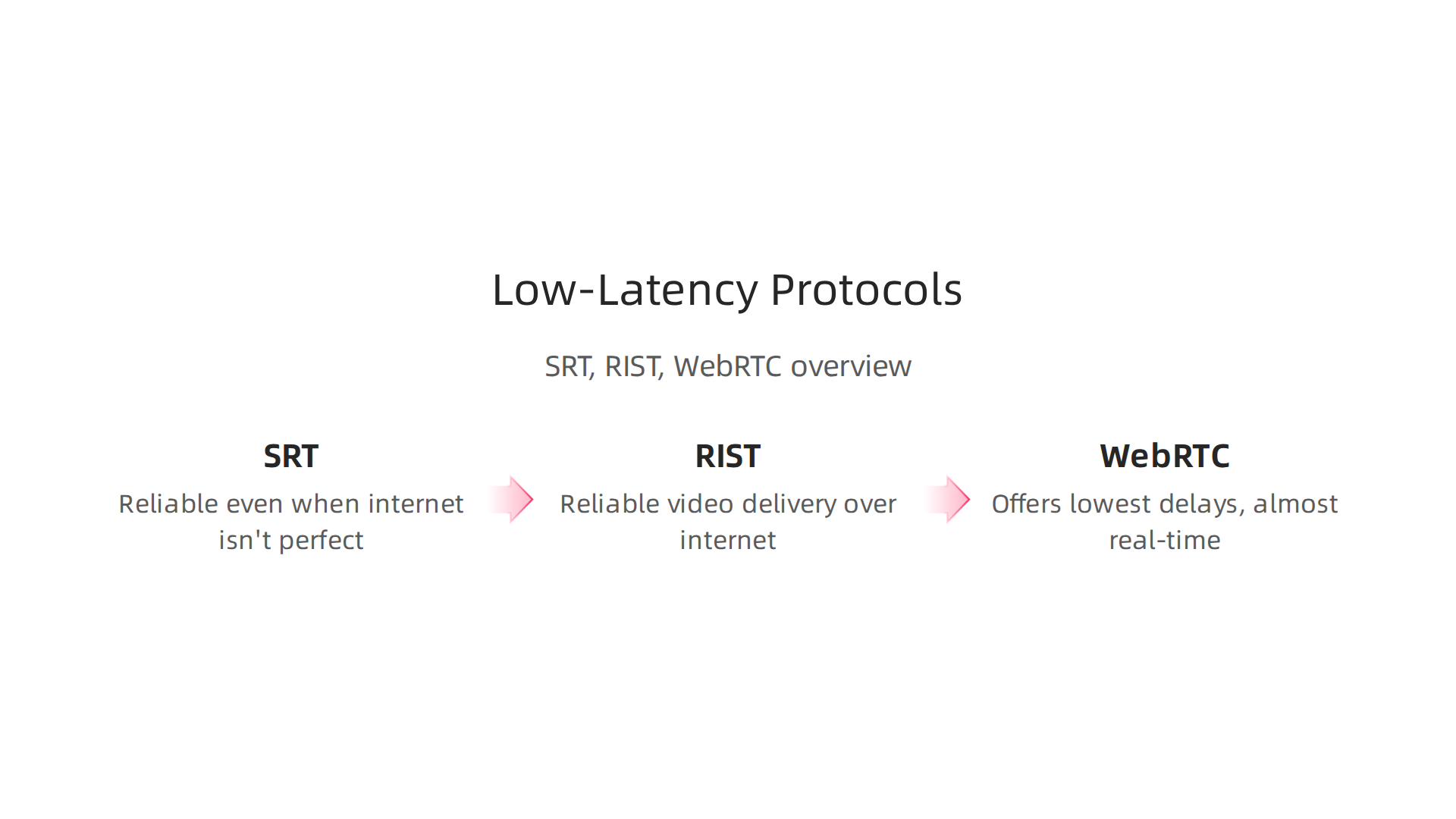
- SRT (Secure Reliable Transport): This is often used to send video from where the game is happening to the broadcast center. It’s known for being reliable even when the internet isn’t perfect, and it keeps delays very low, often under one second SRT: The Professional Standard for Public-Internet Contribution.
- RIST (Reliable Internet Stream Transport): Like SRT, RIST is also very good at sending video reliably over the internet. Some studies even show RIST might work better than SRT in really tricky network spots, like when using wireless connections Articles and deep-dives.
- WebRTC (Web Real-Time Communication): This is often used for things like video calls, but it’s becoming very popular for live sports too. It offers some of the lowest delays, letting you see the action almost as it happens, sometimes under half a second from when the camera sees it to when it’s on your screen [Video Streaming Protocols: Everything You Need to Know 2026 …. When it comes to getting video to many people very quickly, WebRTC and new technologies like MoQ can make sure you see the game under 500 milliseconds Low Latency Streaming: Sub-Second at Scale (2026) – Fora Soft.
Smart Ways to Share Content Globally
Once the video signal is ready, it needs to travel around the world. This is where Content Delivery Networks, or CDNs, become very important. Think of a CDN as a huge network of computers that store copies of the video in many places. When you want to watch a game, the CDN sends the video from the computer closest to you. This makes the video load faster and smoother.
For big events like the FIFA World Cup 2026, broadcasters often use many CDNs together. This is called a multi-CDN strategy. It helps make sure that if one network has a problem, others can take over. Using "edge computing," which means bringing the video processing closer to the viewer, also helps lower delays and keep the quality high How to Scale Streaming for FIFA 2026 | AWS & AI Guide | Info Services. Picking the Best CDN for Live Sports Streaming 2026 is a big decision for any global broadcast.
Playing by the Rules: Rights and Regional Access
Broadcasting sports globally isn’t just about technology. It’s also about rules and laws, especially for "rights management." Sports leagues sell the right to show their games in different countries. This means a game available in one country might not be allowed in another. This is often handled through "geo-blocking," where your location is checked to make sure you have the right to watch.
For example, when broadcasting international tournaments like those overseen by ICC Cricket – Official, there are very specific rules about who can show the games where. It’s important for "tv and film production" companies to follow these rules to avoid issues and ensure fair play for everyone involved. Relying on unauthorized streams like some unofficial "sportsurge streams are risky why professional broadcasts win fans over" can lead to poor quality and legal problems. Instead, official broadcasters ensure fans get the best possible viewing experience while respecting content rights. If you’re looking to plan broadcasts across many countries, it’s wise to learn about crafting a winning regional broadcasting strategy for global sports rights holders.
Managing all these moving parts, from super-fast delivery to complex rights, is a big job. It calls for smart planning and the right tools to bring the excitement of "sports tomorrow" to every fan, everywhere.
Ready to see how professional services can help you manage these complex global broadcast needs?
Explore Our Broadcast Services
The excitement of "sports tomorrow" goes beyond just watching a game; it’s about feeling truly connected to the action. After making sure broadcasts reach everyone quickly and fairly, the next big step is making those experiences special for each fan. This is called fan engagement, and it’s a huge and growing part of the sports world. In fact, the global fan engagement market is quite large, valued at about $7 to $8 billion in 2026, and it’s set to keep growing even more, driven by new digital ways to interact with sports The State of Fan Engagement in 2026.
One way to make sports more exciting is through "second-screen experiences." This means using your phone or tablet to get extra content while you watch the game on TV. Imagine seeing instant player stats, joining polls, or chatting with other fans, all at the same time. Another cool thing is using AR (Augmented Reality) and VR (Virtual Reality) overlays. These can make you feel like you’re right in the stadium, or show you player names and stats floating over the field. Creative teams in "tv and film production" are always finding new ways to make these experiences happen. Getting real-time scores and stats to fans smoothly is key to this kind of interaction, as it helps maximize fan engagement with flawless real-time sports scores.
Making the viewing experience personal for each fan is also a big deal. Instead of everyone seeing the exact same broadcast, what if you could choose your own camera angle or get highlights focused only on your favorite team? This kind of personalization uses smart technology to deliver what you want to see. Think about how "video editing tips" and "video summarizer" tools help create quick, custom highlight reels just for you, letting you catch up on the moments that matter most to your specific interests. These innovations help sports feel more tailored and enjoyable.
All this deep engagement also opens up new ways for sports organizations to make money. These are often called "new monetization paths."

For example, "dynamic ads" mean the commercials you see can change based on who you are or what you like, making them more interesting to you. "Micro-payments" let you pay a small amount for something special, like an exclusive behind-the-scenes look or a unique camera feed during a game. Plus, "targeted sponsorships" allow brands to reach very specific groups of fans who are most likely to be interested in their products. This whole market is growing rapidly; by 2034, the global fan engagement market is expected to be worth around $66.7 billion Fan Engagement Market Size, Share | CAGR of 15.2%. These smart approaches help boost revenue as global sports brands unify broadcast retail fan engagement across all platforms.
By combining exciting fan engagement, personalized content, and smart new ways to earn money, "sports tomorrow" promises a much richer and more interactive experience for everyone. It’s about making every moment count, both for the viewer and for the teams and leagues.
Want to see how world-class sports broadcast production makes a difference?
Watch Our Latest Broadcast Work
Making "sports tomorrow" exciting for fans and finding new ways to make money is only possible if the way sports events are put together is smart and efficient. This means looking closely at how operations are run, especially for big games watched all over the world. The goal is to keep quality high while also managing costs.
One big choice is whether to use one company that does everything (a "full-stack provider") or to pick the best tools from many different companies (a "best-of-breed" approach). Using a single company for all your needs can make things much simpler. You work with one main partner, which can mean clearer talks and easier problem-solving. For example, some organizations have found that using a single vendor for many services can greatly simplify their systems Alum Rock Union School District Case Study. This kind of unified approach can also help keep expenses down because you’re not juggling many different bills. If you’re looking for a single-window solution that handles everything from commercial strategy to live broadcast production, Trans Group offers a comprehensive full-stack approach.
On the other hand, choosing the "best-of-breed" means you get to pick the perfect tool for each specific part of your "tv and film production." This can give you more freedom and access to very specialized features. However, it can also lead to more complicated setups, where you have to make sure all those different tools from different companies work together without issues. For some, like the Minnesota Timberwolves, switching from many vendors to one main platform made their work much easier The new growth model for NBA teams.
Another key way to save money and run things better is through smart staffing and control. Instead of sending large crews to every event, many groups are now using "hybrid teams." This means some staff are at the event, while others work remotely from a main control room. This setup can really cut down on travel and hotel costs.

Also, these central control rooms can manage many events at once, which makes things more efficient. For instance, companies are now automating parts of live sports production to reduce manual work and lower costs Automating Live Sports Production with Streamcake. This kind of automation is a big part of how "sports tomorrow" is being produced. Artificial intelligence (AI) also helps, for example, by automatically tracking players or making quick highlights, which means fewer people are needed on-site How Sky Achieves Scale and Creativity with Automation. These new ways of working allow smaller teams to create more high-quality shows.
By using these modern operational models, sports organizations can reach more fans around the world and keep them engaged without spending too much. It’s all about working smarter and using technology to make every broadcast great. To learn more about how comprehensive solutions can simplify your workflow, consider how to simplify your live sports production with a unified end to end solution.
Ready to talk about your specific broadcast needs? You can Request a Broadcast Consultation today.
Summary
This article explains how global sports broadcasters can navigate the rapid changes of 2026 by adopting cloud‑native, distributed production and intelligent automation. It covers the key viewer trends—more streaming, multi‑device consumption and short‑form discovery—that drive demand for flexible multi‑format delivery. The piece outlines how edge capture plus centralised control reduces onsite costs, why protocols like SRT, RIST and WebRTC matter for sub‑second latency, and how multi‑CDN and edge computing scale global delivery. It also explores practical uses of AI for camera selection, highlights and commentary, the operational tradeoffs between full‑stack and best‑of‑breed vendors, and strategies to boost fan engagement and new revenue streams. Readers will learn concrete approaches to lower production costs, maintain broadcast quality worldwide, and plan future‑proof workflows for world‑class live sports.