



When you settle down to watch a thrilling game, like a Ducks football match, you feel the excitement right away. But have you ever thought about what it takes to bring that live game to your screen, especially if you are watching from far away?

Actually, showing live sports like this to fans around the world is a very big and hard job for broadcasters and sports managers.
The main challenge is how much it costs and how technically difficult it is to create and send live football games to people in different countries. In 2026, the way people watch sports has changed a lot, with streaming, regular TV, and free TV all mixing together to deliver content. This "hybrid viewing model" adds layers of complexity for those trying to reach a global audience Hybrid Viewing Models Solidify as Streaming Integrates into Premium Sports Distribution. For example, broadcasting a big game like Nebraska vs Iowa or even a regional New Mexico football game globally means dealing with different rules for showing content in each country. This also means high costs for special cameras, staff, satellite connections, and advanced streaming technology. It is a big puzzle to make sure everyone sees the best quality picture without delays.
To help with these problems, businesses need a clear plan. This guide will give you simple steps and ideas to handle the money side, make sure the picture quality is great, understand broadcasting rights, and pick the best ways to send out sports content. We will also look at how to choose the right partners to work with. These are the tools a smart sports manager needs to make sure connections: sports today are strong and clear for every fan. If you are looking to overcome these tough broadcasting challenges, you can find more help in mastering global sports broadcasting challenges.
If you want to understand more about how we help global sports organizations, you can Learn More About TPT Global.
Our goal is to give you a clear playbook for running a successful global sports broadcast, just like we would for optimizing college football broadcasting for sports enterprises.
Bringing a live sports game to screens around the world is a multi-step journey, starting right from the stadium. Think about a big game, like a exciting ducks football match. The journey from the field to your TV or phone involves many parts working together. It is like a very complex relay race.
Here is a simple look at how it works:
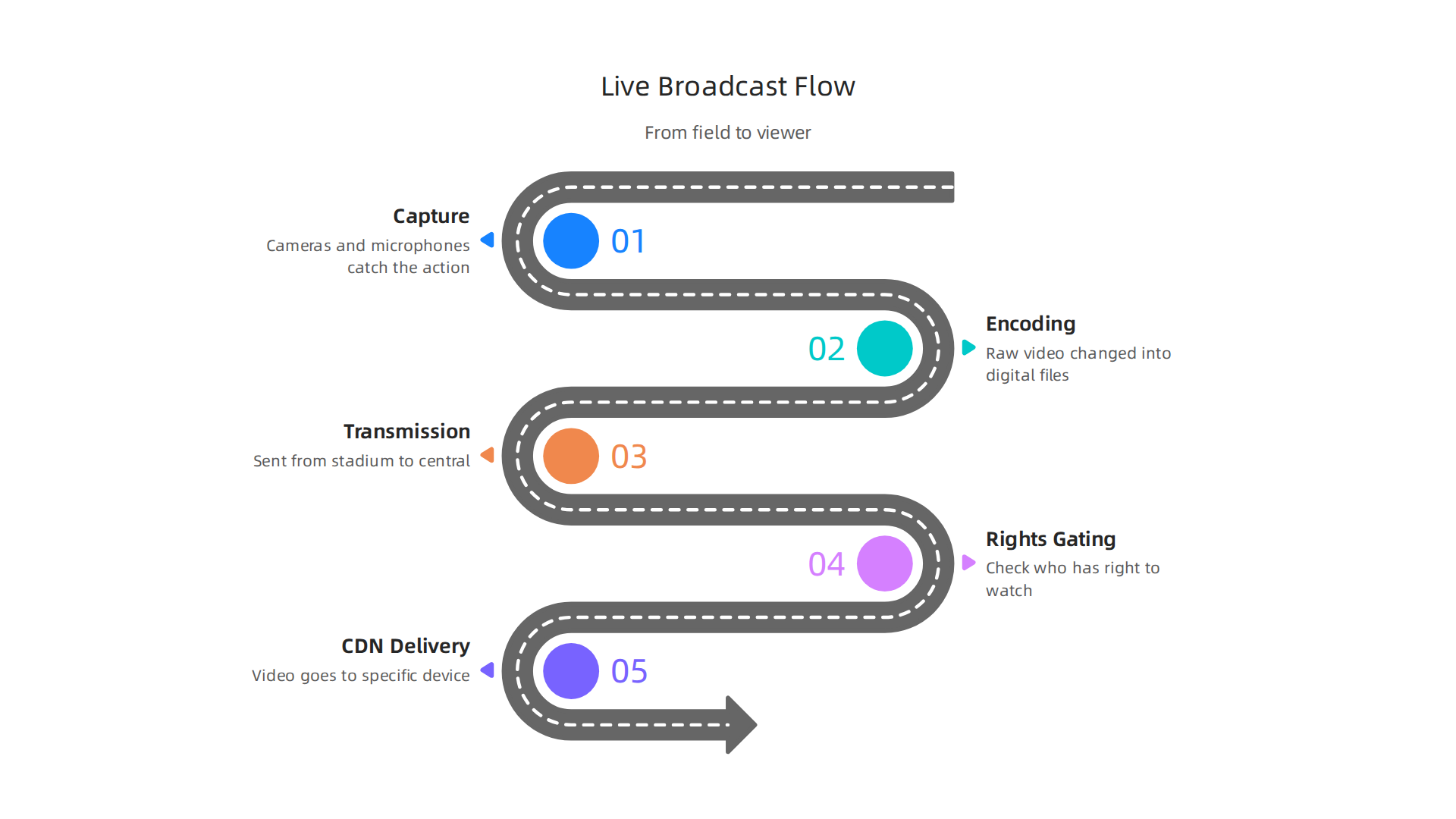
- Capture: First, special cameras and microphones at the stadium catch all the action. These are high-quality tools that get every detail, from the roar of the crowd to the crunch of players meeting on the field.
- Encoding: Next, this raw video and audio needs to be changed into digital files. This is called encoding. It makes the video smaller so it can travel faster, and it also creates different versions for different screen types, like a big TV or a small phone.
- Transmission: Once encoded, the digital video is sent from the stadium to a central place. This usually happens very fast using satellite connections or super-fast fiber optic cables.
- Rights Gating: This is where things get tricky. Before the game can be shown, the broadcasters must check who has the right to watch it in different countries. Showing a nebraska vs iowa game in one country might be allowed, but not in another due to specific rules and deals.
- CDN/OTT Delivery: Finally, the video goes to a Content Delivery Network (CDN) or an Over-The-Top (OTT) platform. These are like huge digital mail systems that make sure the video gets to your specific device, whether it is a streaming app on your smart TV or a website on your computer.
One of the biggest problems here is called "latency." This is the time delay between what happens on the field and when you see it on your screen. In 2026, many viewers find that streaming a live game can be slower than watching it on regular TV. For example, some streams during the Super Bowl in 2026 were delayed by more than a minute, meaning viewers could see spoilers on social media before the play even showed up on their screen Why a Few Seconds Can Make or Break the Live …. This delay can really hurt the fun of watching live sports. Experts say standard streaming can have delays of 20 to 45 seconds, which is too long for many fans Live Sports OTT Streaming: Technical Playbook 2026 | MwareTV Blog. Many people want delays to be under 5 seconds, especially for things like online betting or watching with friends.
This whole process gets even harder when you think about a full season of games, not just one ducks football match.
- Many Games at Once: Imagine managing not just one game, but many games happening at the same time, like a regional new mexico football game and other big college matches. Each needs its own full broadcast setup.
- Different Feeds: For each game, there are often many different camera angles, replays, and highlights being created at the same time. A good sports manager has to keep track of all of these.
- Languages and Local Ads: To reach people all over the world, broadcasts might need different languages for commentary and local advertisements shown in specific regions. This means preparing many versions of the same game.
- Different Devices: People watch sports on everything from big TVs to small phones. Each device needs the video to be sent in a special way to look its best.
This is why managing "connections: sports today" on a global scale is a huge job. It demands smart planning and the right tools to make sure every fan, no matter where they are, gets to enjoy the game without frustrating delays or blurry pictures.
If you are a sports manager looking for ways to streamline your global broadcasts and engage fans more effectively, we can help.
Watch Our Latest Broadcast Work
Bringing a live game to viewers everywhere, like a exciting ducks football match or a intense nebraska vs iowa rivalry, definitely costs a lot of money. Knowing where these budgets go is the first step for any sports manager wanting to make smart choices. In 2026, the global "connections: sports today" industry faces some big cost factors.
Primary Budget Categories for Live Sports
Here’s a look at the main areas where money is spent:
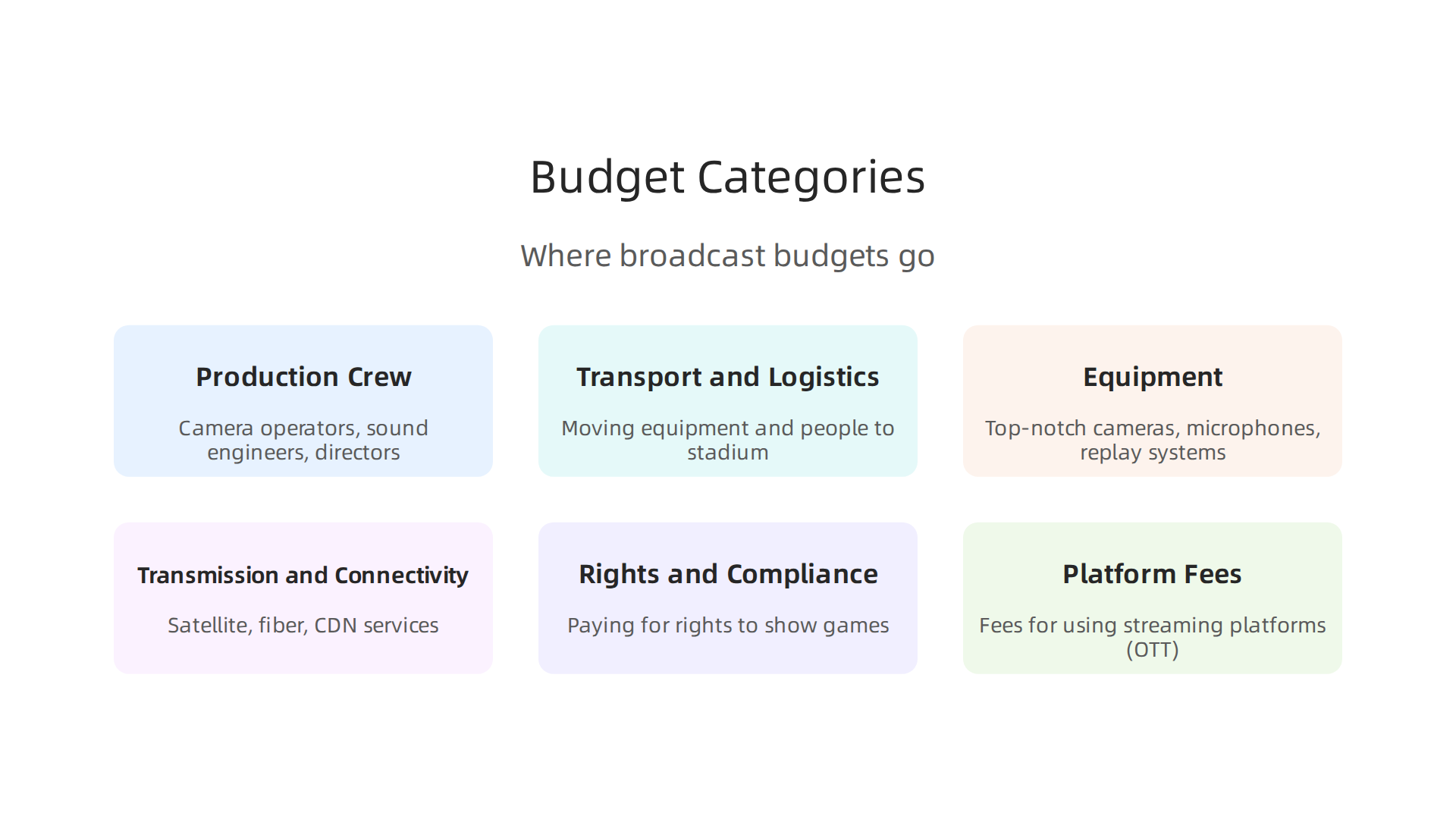
- Production Crew: This includes all the people needed to make the broadcast happen. Think camera operators, sound engineers, directors, producers, and commentators. For a big game, many skilled people are needed, and their salaries make up a large part of the budget.
- Transport and Logistics: Moving equipment and people to and from the stadium for every
new mexico footballgame, for instance, costs a lot. This means travel, hotels, and getting heavy gear safely to each location. - Equipment: Top-notch cameras, microphones, replay systems, editing machines, and graphics tools are very expensive. These are high-tech items that need regular upgrades and maintenance.
- Transmission and Connectivity: Sending the video signal from the stadium to homes around the world is costly. This involves paying for satellite time, fast fiber optic cables, and Content Delivery Network (CDN) services to make sure the video gets to everyone reliably.
- Rights and Compliance: One of the biggest costs is paying for the rights to show the games. These rights can be very expensive, especially for popular sports. For example, global sports rights were expected to increase by an extra $5 billion in 2026 due to major world events Global sports rights climb to over $67 billion in 2026. Broadcasters also need to make sure they follow all the rules for showing the game in different countries.
- Platform Fees: If the game is streamed online, there are fees for using streaming platforms (OTT services) and making sure the video looks good on many different devices.
For sports organizations wanting to control these costs while still delivering amazing broadcasts, it is good to have a partner who understands the full picture.
Explore Our Broadcast Services
Practical Ways to Save Money
Luckily, there are smart ways for a sports manager to handle these costs without lowering the quality of the broadcast:
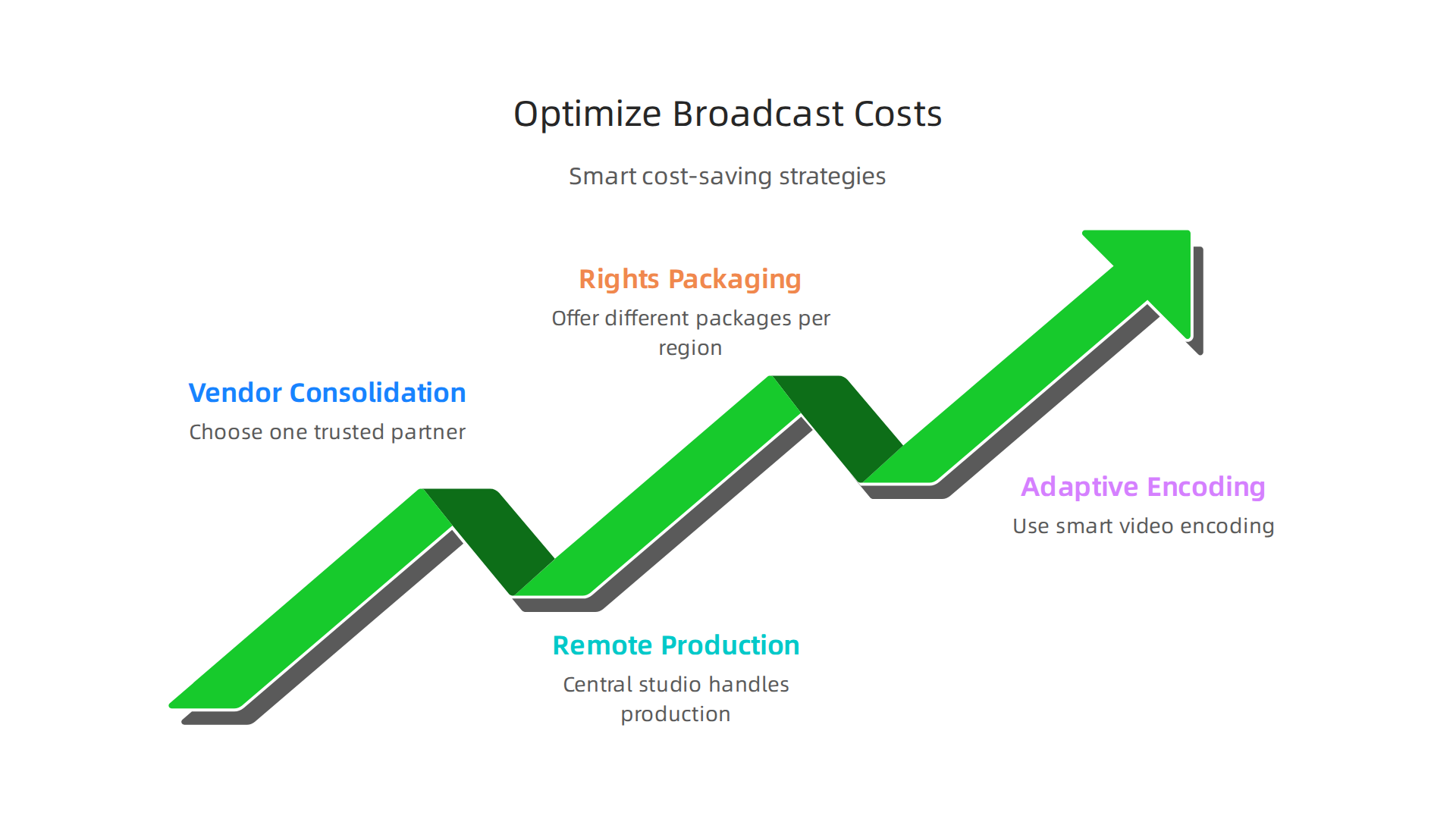
- Vendor Consolidation: Instead of working with many different companies for different parts of the broadcast, sports groups can choose one trusted partner that offers a full range of services. This can help streamline the process and often leads to better deals. Choosing a full-service provider can simplify your entire workflow. You can learn more about how a single-window solution can help Trans Group.
- Remote Production: This is a big one. Remote production means that instead of sending a huge team and lots of equipment to every stadium, much of the work is done from a central studio far away. This saves a lot of money on travel and staff. It also cuts down on the carbon footprint. Many companies in 2026 see remote production as a top priority because it helps save money by having fewer people and less gear on site Remote Production – the new norm for projects large and small. It has led to multi-million dollar savings for some large sports networks Pac-12 Networks Connectivity Powered by Zayo.
- Rights Packaging: Broadcasters can be smart about how they sell or buy broadcasting rights. This might mean offering different packages for different regions or types of devices to make sure they get the most value for their content.
- Adaptive Encoding and CDN Strategies: Using smart technology to encode videos means the files are made smaller and in different quality levels, so they fit any screen perfectly. This uses less internet data. Also, choosing the right CDN partner and negotiating good prices can greatly reduce the cost of delivering video to fans worldwide.
By thinking smartly about these areas, sports organizations can deliver world-class content without breaking the bank. It is all about finding the right balance between cost and quality, and using the best tools and partners to simplify your live sports production.
Getting live sports to viewers worldwide isn’t just about managing costs. It’s also about making sure the picture is clear, the sound is perfect, and everything happens at the right time, no matter where someone is watching. For a sports manager in 2026, keeping up with these technical details for every ducks football game or nebraska vs iowa rivalry is super important. This is because bad quality can make fans unhappy very quickly.
Key Things to Watch for Top Broadcast Quality
To deliver an amazing experience in the "connections: sports today" world, sports businesses look at several important measures.
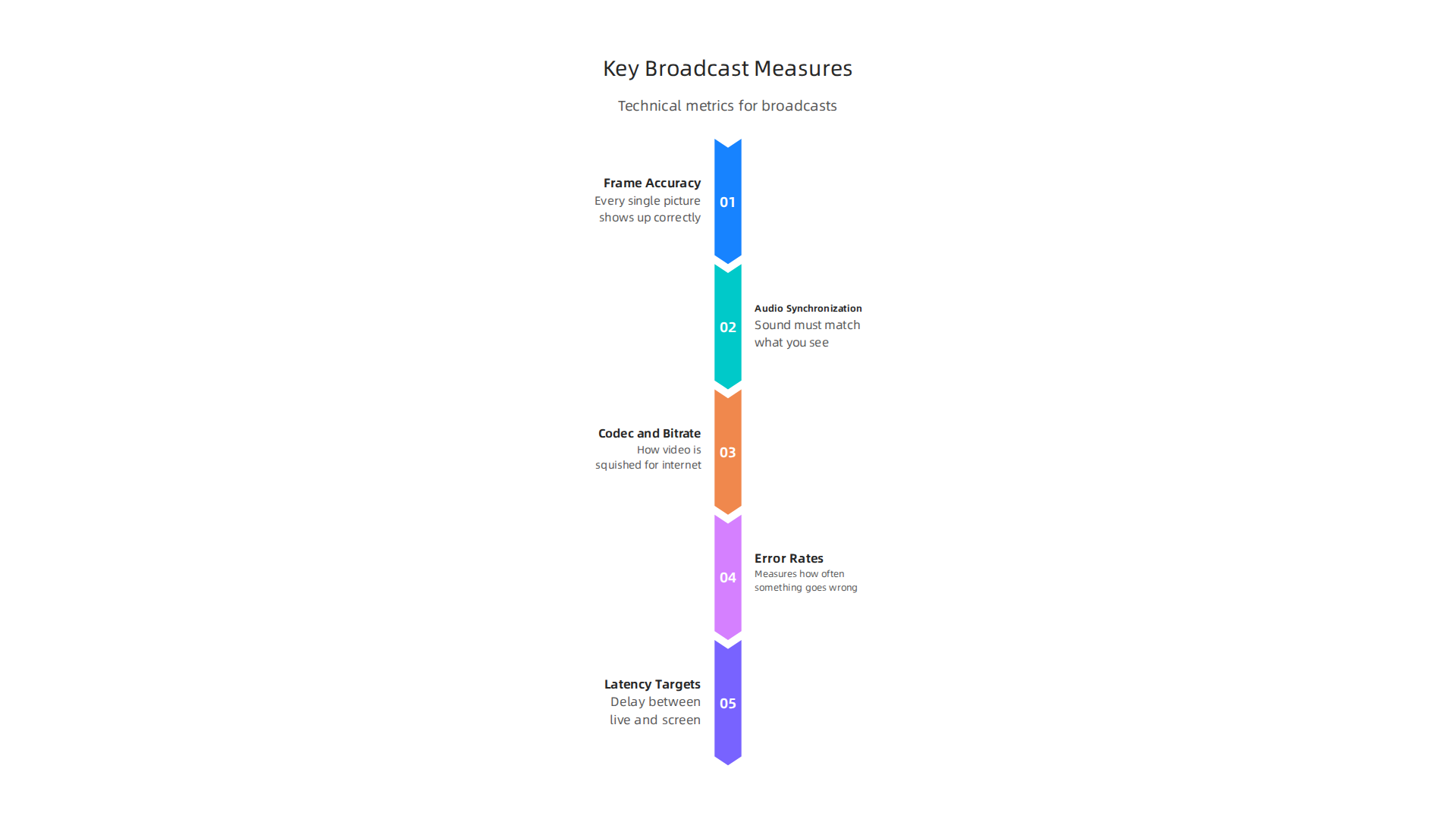
These help them know if their broadcast is working well:
- Frame Accuracy: This means every single picture (frame) in the video shows up correctly and in the right order. If frames are missing or out of place, the video can look jumpy or cut out. Imagine trying to follow a
new mexico footballplay if the picture keeps skipping. - Audio Synchronization: The sound must match what you see on the screen perfectly. When a player kicks a ball, you expect to hear the sound at the exact moment you see the foot hit the ball. If the sound is off, it can be very distracting and hard to watch.
- Codec and Bitrate Management: These are fancy words for how video is squished down to be sent over the internet and how much data is used. Managing them well means viewers get the best picture quality for their internet speed. A good system makes sure the video is clear and smooth, whether someone is watching on a big TV or a small phone.
- Error Rates: This measures how often something goes wrong, like a video glitch or a sudden stop (buffering). Low error rates mean a smooth, uninterrupted viewing experience for everyone.
- Latency Targets: This is one of the biggest challenges. Latency is simply the delay between something happening live at the stadium and when you see it on your screen. In live sports, even a few seconds of delay can be a big problem. Fans can see spoilers on social media before the action happens on their screen. For example, during the 2026 Super Bowl, some streams were delayed by more than a minute, which meant viewers found out about scores from their phones before they saw them on TV Why a Few Seconds Can Make or Break the Live …. For sports betting, streams often need to be almost instant, trailing the live action by less than 1.5 seconds Achieving Sub-Second Latency for Sports Streams – CDN Blog. Standard streaming can have delays of 20 to 45 seconds, which is just too long for exciting live sports Live Sports OTT Streaming: Technical Playbook 2026 | MwareTV Blog. To solve this, new low-latency methods aim for delays of only 3 to 8 seconds, or even under one second for "real-time" viewing Low-latency sports streaming: Latency tiers, benchmarks, ….
How to Keep Quality High Everywhere
Making sure all these things work perfectly for millions of fans in different places requires smart strategies:
- Edge Monitoring: This means watching the video quality very closely at the "edges" of the network, which are the places closest to where viewers are watching.

By doing this, problems can be found and fixed quickly before too many people notice.
- SLA-Driven CDNs: Using Content Delivery Networks (CDNs) that promise certain levels of service (SLA stands for Service Level Agreement) helps ensure that the video is delivered quickly and reliably. These agreements mean the CDN provider has to meet specific quality goals.
- Automated Alerting: When something goes wrong, systems are set up to send automatic warnings to the technical team right away. This allows problems to be addressed much faster than if someone had to manually check everything.
- Regional Encoding Profiles: Different parts of the world have different internet speeds and device types. By creating special video settings (encoding profiles) for different regions, broadcasters can make sure the video looks its best for local viewers, no matter their connection.
Ensuring consistent technical quality at scale is a complex task that demands constant attention and the right tools. If your organization is looking to deliver flawless live sports broadcasts to a global audience, finding the right support is key.
To learn more about how to make sure your broadcasts always look and sound their best, you can explore detailed strategies for delivering flawless global live sports broadcasts for maximum fan engagement.
Are you ready to enhance your live sports productions and ensure exceptional technical quality for your viewers worldwide?
Request a Broadcast Consultation
Making sure your carefully produced live sports broadcast reaches everyone, everywhere, is the next big step for a sports manager. It’s not just about clear pictures; it’s about getting the right content to the right people in the right places. This involves understanding how to split up and share live game coverage across many different platforms.
Packaging Sports for Every Viewer
Imagine a big game, like a ducks football match or a fierce nebraska vs iowa rivalry. The full, high-quality video feed that goes to a traditional TV channel is very different from what you see on a streaming app or a quick social media clip.
- For TV Broadcasters: These partners usually get the full, raw feed of the game. They then add their own commentators, graphics, and ads for their specific audience. This is the traditional way sports have been shown, focusing on delivering a complete viewing experience.
- For OTT Platforms (Streaming Services): Online streaming platforms, like those that offer direct-to-consumer services, get the game content in a way that works best for internet delivery. This often means different video formats and settings that let viewers watch on phones, tablets, or smart TVs. Sometimes, these platforms might even have special features like multiple camera angles or interactive stats. In 2026, many sports leagues are exploring hybrid ways to share content, using both traditional TV and streaming services together to reach more fans Hybrid Viewing Models Solidify as Streaming Integrates into ….
- For Social Media Clips: For platforms like Instagram or TikTok, broadcasters don’t send the whole game. Instead, they create short, exciting clips of big plays or highlights. These are fast to watch and easy to share, helping to create buzz around the
connections: sports todayworld and get more people interested in the sport.
Understanding Where and When Sports Can Be Watched
One of the trickiest parts of sharing sports is dealing with "rights." These are like special permissions that say who can show a game and where.
- Geo-Rights (Where You Can Watch): This means that a game might only be allowed to be shown in certain countries or regions. For example, a
new mexico footballgame might be shown on one channel in the US, but a different channel might have the rights to show it in Europe. These agreements help sports leagues make money by selling rights to different companies around the world Sports Media Rights Sales and Monetisation Strategy in 2026. - Blackouts (When You Can’t Watch): Sometimes, even if you live in the right country, you might not be able to watch a game. This is called a blackout. It often happens to protect local ticket sales or local TV deals. For instance, if a game is playing nearby, the broadcast might be blocked in that area to encourage people to buy tickets and go to the stadium. Or, a specific local TV channel might have exclusive rights, meaning no other channel can show it in that area Blackouts of sports events and TV shows.
- Sublicensing (Sharing the Rights): Sometimes, a company that buys the rights to a game might sell a piece of those rights to another company. This is called sublicensing. For example, a big TV network might buy the rights to a whole league’s games, but then sell the rights for online streaming to a specific streaming platform. This allows for even wider reach and different ways for fans to watch Sports Broadcasting Rights Saudi Arabia: What To Know 2026.
Making Smart Choices for Maximum Reach
Sports organizations, also known as "rights holders," have to make important decisions about how to share their games to get the most viewers and make the most money.
- Exclusive or Wide Open? They can choose to sell exclusive rights, meaning only one company can show their games in a certain area. This can bring in a lot of money from that one company. Or, they can sell non-exclusive rights to many different companies, which might bring in less money from each but lets more people watch the games. Finding this balance is key for any
sports manageraiming for global broadcast success. - Old TV or New Streaming? Rights holders must also decide if they want to focus mostly on traditional TV (linear approach) or put streaming (digital-first) at the front of their plans. Many are now using a mix of both, as new streaming options can help them earn extra money from super-fans who want special content Streaming Media | Subscription Business Model.
- Working with Partners: Teaming up with different TV channels, streaming platforms, and even social media sites is a smart way to reach more fans around the world. These partnerships can help spread the excitement of games across many different screens.
Making these choices helps sports leagues and teams make sure their games are seen by as many fans as possible, no matter where they are or how they prefer to watch. To learn more about how to set up your content for global audiences, explore winning strategies for global sports broadcasting in 2026.
If you want to see how these strategies come to life, take a look at some of the latest projects.
Watch Our Latest Broadcast Work
After understanding how to share sports games across different platforms and deal with broadcast rights, the next big question for any sports manager is: who will help you do all this? Sports organizations need to pick the right partners, or "vendors," to bring their games to fans around the world. This is a big choice, like deciding if you want one main builder for your house or many different experts for each room.
Vendor Models: When to Consolidate Vendors and When to Use Specialist Partners
When it comes to broadcasting live sports, there are two main ways to work with outside companies.

You can choose one company to do everything, or you can pick many different companies, each one being the best at a certain task. Both ways have good and bad points.
Single-Vendor, Full-Stack Providers
Imagine hiring one big company that handles all parts of broadcasting, from the cameras at the ducks football game to sending the video to your phone app. This is called a "full-stack" or "single-vendor" approach.
- What it means: One company takes care of production, streaming, graphics, and everything in between.
- Good points: It’s often simpler to manage. You only have one main contact, which can make things like agreements (Service Level Agreements, or SLAs) and keeping an eye on the work (governance) much easier. Costs can also be more clear and predictable. For example, if you’re a major league, having one partner can simplify your
connections: sports todayoperations. - Things to think about: While convenient, one company might not be the absolute best at every single task. You might give up some control over how certain small parts of the broadcast are handled.
One example of a company that helps with the full range of sports and media services is Trans Group. They act as a single point of contact for many needs.
Specialist Partners (Best-of-Breed Vendors)
The other way is to hire many different companies, each known for being the very best at one specific thing. This is called using "specialist partners" or a "best-of-breed" approach.
- What it means: You might have one company that handles only the cameras and replays for a big game like
nebraska vs iowa. Another company might handle just the graphics and scores. And yet another might be in charge of making sure the stream goes out smoothly over the internet. - Good points: You get top-notch quality for each part of your broadcast. You can pick the exact tools and services that fit your needs best, giving you more control over each detail.
- Things to think about: This way can be much more complex. Managing many different contracts, making sure all the different companies work well together (integration), and figuring out who is responsible if something goes wrong can be a headache. It also makes setting overall performance goals (SLAs) much harder.
How to Make the Right Choice
For large leagues and big sports organizations, choosing the right vendor model needs careful thought. Here are some things a sports manager looks at:
- How much control do you need? If you want to be very hands-on with every small detail of, say, a
new mexico footballgame broadcast, specialist partners might be better. If you prefer to hand off the whole job, a single vendor is simpler. - How big and complex is your broadcast? Very large, global events with lots of advanced tech might benefit from specialist experts. However, newer remote production methods are making it cheaper and easier to produce events from a central hub, cutting travel costs and reducing the need for huge on-site teams Remote Production – the new norm for projects large and small. Remote production is a top focus for broadcast professionals in 2026, leading to big cost savings Hybrid workflows drive live broadcast in 2026 with AI on the horizon.
- Can you predict your costs? A single vendor often gives one fixed price, making budgeting easier. Many specialists might mean more variable costs, but sometimes overall savings due to cloud-based production CLOUD-BASED TV SPORTS PRODUCTION AND DISTRIBUTION ….
- How much risk are you willing to take? Having many partners means more points where things could go wrong, but also potentially more flexibility. A single partner centralizes risk but might limit options. Choosing the right vendor involves asking key questions about their experience and understanding of the sports industry Selecting a Sports Tech Vendor: 10 Questions Every ….
The choice often depends on the specific needs of the sports organization, its budget, and how much control it wants to keep. Finding the right balance ensures games are shown to the world with the best quality and reach.
If you are looking for more strategies to master global sports broadcasting, learn more about Mastering Global Sports Broadcasting Challenges.
6) Low-latency streaming, OTT strategies, and future-proofing live football coverage
Making sure games like ducks football get to fans with the best quality and reach also means thinking about how fast the video gets there. This speed is called "latency." If the delay is too long, fans might see spoilers on social media before they see the big play on their screen. In 2026, many sports streams still lag, sometimes by a full minute, leading to missed moments and frustration for viewers trying to watch the Super Bowl, for example Why a Few Seconds Can Make or Break the Live ….
To fix this, sports manager teams use special ways to make streams faster.
Options for Faster Streaming
- Low-Latency HLS (LL-HLS) and Low-Latency DASH (LL-DASH): These are common ways to cut down delay. They can bring the wait time from 20-45 seconds to just 3-8 seconds Live Sports OTT Streaming: Technical Playbook 2026. This is much better for live
new mexico footballgames. - CMAF and Chunked-CTE: These are like special ways to package the video that help make it even faster, reducing delay by sending smaller parts of the video more often.
- WebRTC Hybrids: For almost no delay at all, like less than one second, some use WebRTC. This is often needed for things like online betting platforms where every second counts Achieving Sub-Second Latency for Sports Streams. However, these super-fast methods can be harder to use for very large audiences, such as millions watching
nebraska vs iowa.
Getting the latency right is a big deal for keeping fans happy and making sure they don’t get important plays spoiled. Different types of latency are used for different needs: standard latency is 10-30 seconds, low latency is 5-7 seconds, ultra-low is around a second, and real-time is under a second Low-latency sports streaming: Latency tiers, benchmarks, ….
Planning for the Future
For broadcasters to stay ahead, they need to future-proof their operations. This means:
- Building with blocks: Using systems made of small, separate parts, called "modular architectures." If one part needs an update or fix, you don’t have to change the whole system. This makes it easier to add new features or adjust to new technology, keeping your
connections: sports todaysmooth. - Automatic checks: Setting up automated testing helps find problems quickly without a lot of human effort. It makes sure everything works as it should, reducing chances of things going wrong during a live broadcast.
- Working together: Keeping strong ties with companies that deliver your content (CDNs) and those who manage who can watch your games (rights platforms) is key. Good teamwork means your broadcasts are smooth and reach all the right viewers.
By focusing on these areas, sports organizations can deliver world-class live broadcasts that keep fans engaged and happy, no matter where they are.
We offer full-service solutions to manage all these challenges. Explore Our Broadcast Services to see how we help.
To learn more about putting together a great global live broadcast in 2026, check out these winning strategies for global sports broadcasting in 2026.
Summary
This article explains the full playbook for delivering live sports to global audiences in 2026, from stadium capture to viewer playback. It walks through the technical chain—capture, encoding, transmission, rights gating and CDN/OTT delivery—while highlighting the biggest operational pressures: cost, complexity and latency. You will learn the primary budget categories (production crew, logistics, equipment, transmission, rights and platform fees) and practical ways to save money, such as remote production and vendor consolidation. The guide covers quality KPIs like frame accuracy, audio sync, codec/bitrate management and latency targets, plus regional packaging and rights strategies for TV, streaming and social clips. Finally, it helps sports managers choose the right vendor model and future-proof systems with modular design, automated testing and close CDN/rights partnerships so broadcasts stay reliable and engaging worldwide.