




Why WSU football broadcast strategy matters now
In 2026, college football is more popular than ever. Millions of fans tune in to watch their favorite teams play, and for big programs like WSU football, how these games are shown to the world is super important.

It is not just about showing a game; it is about reaching many people, getting new fans, and helping the school succeed.
For example, the big College Football Playoff National Championship game in 2026 brought in over 30 million viewers across ESPN, showing just how many eyes are on collegiate football CFP title game delivers 30.1m viewers for ESPN. When WSU football games are broadcast well, it helps more people see the team. This can lead to better players wanting to join, more money for the school’s sports programs, and a stronger connection with fans everywhere.
WSU has been busy making sure their games get wide exposure. For the 2025-26 season, WSU and Oregon State signed a special one-year media deal with The CW, ESPN, and CBS Pac-12 Gets One-Year Test-Run Media Deal Before Expansion. Then, for the current 2026 season, WSU’s collegiate football broadcast schedules and news show games on various channels like USA Network, The CW, and CBS Sports Network How to watch every WSU football game this season. The school even made a big 10-year deal for radio broadcasts and ticket sales, which started in July 2025 WSU announces 10-year radio broadcast, ticket sales agreement. These deals show that getting games to fans is a top priority.
But putting on live sports shows for a global audience is very hard. Large organizations face many challenges when trying to produce and send out sports content worldwide.
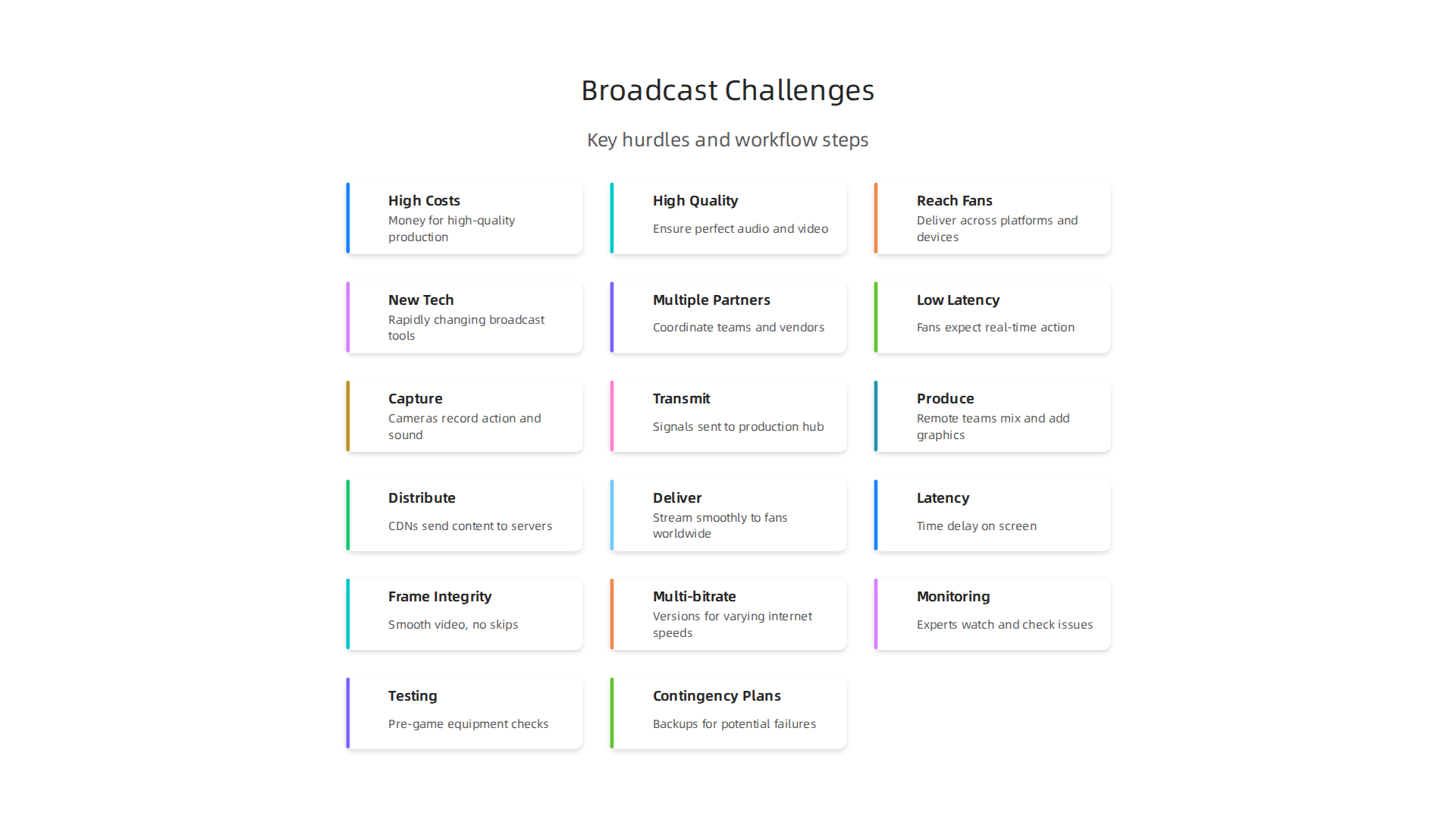
Think about these common problems:
- High Costs: It costs a lot of money to produce a high-quality live broadcast, from cameras and equipment to the people who work behind the scenes.
- Keeping Quality High: It is tough to make sure the broadcast looks and sounds perfect in every country, across different TVs and online streams.
- Reaching Everyone: Getting games to fans on all the different traditional TV and digital platforms can be tricky.
- New Technology: The world of broadcasting changes fast. Teams and leagues need to keep up with new cameras, streaming methods, and ways to show the game.
- Working with Many Partners: Often, many different companies are involved in broadcasting. Keeping them all on the same page can be a headache.
- No Delays: For live sports, fans want to see the action right away. Making sure online streams do not lag or freeze is a big deal.
These difficulties mean that having a smart plan for collegiate sports broadcasting dynamics is not just a nice-to-have, it is a must-have. When a program like WSU football wants to share its team coverage and history with the most fans possible, they need excellent solutions to these common problems. To learn more about tackling these challenges, you might want to Explore Our Broadcast Services and see how expert teams help create flawless global sports broadcasts.
Learning how to deliver world-class live sports broadcasts can help teams like WSU connect with their fans, no matter where they are. You can find more helpful information about Mastering Global Sports Broadcasting Challenges to understand what goes into making these events a success.
Current Broadcast Landscape for WSU Football
While tackling big challenges in live sports broadcasts is key, it is also important to look closely at how WSU football games are shown right now. In 2026, the way fans watch games has changed a lot, and WSU has been working hard to keep up.
For the current 2026 season, WSU football games can be found on a mix of TV channels and digital platforms. This means fans have several ways to tune in. You will see games on networks like USA Network, The CW, and CBS Sports Network. The Pac-12 Conference has even expanded its partnership with The CW to include 13 regular season football games each year through the 2031 season, giving WSU Athletics a wider reach Pac-12, The CW announce new media rights deal through 2031 season. This shows a clear move to get collegiate football broadcast schedules and news to as many eyes as possible, both on traditional TV and online. WSU has also announced specific kickoff times and TV choices for its 2026 football season, helping fans plan their viewing Kickoff Times, TV Selections Announced for 2026 WSU Football Season.
How Fans Watch WSU Football Now
Today’s college football fans watch games in many ways. While a big part of fans, about 78%, still watch major events live on TV, many also use other devices at the same time.

For example, some fans will use a second screen, like a phone or tablet, to check social media or stats while the game is playing Media in March: Go Beyond The Bracket. Younger fans, like Millennials and Gen Z, often prefer to stream their sports content online as their main way to watch Key Insights From The Study. This shift means that for WSU to share its collegiate football team coverage and history effectively, it needs to be available on all kinds of screens. This also includes thinking about how to best offer college sports matchups & schedules across different platforms. To really connect with all fans, from those who love traditional TV to those who prefer streaming, it is important to find ways to reach them all. To learn more about how to best reach these diverse audiences, check out how to Optimize College Football Streams for Global Audiences in 2026.
Rules and Changes Affecting WSU’s Broadcasts
The world of collegiate sports broadcasting dynamics is also shaped by rules from the conference and other official groups. The Pac-12 Conference, for example, has seen many changes lately. WSU and Oregon State have been in a unique spot, which has made their media deals special and sometimes tricky. These conference-level rules decide how many games can be shown on certain networks, what time games can start, and how much money the schools get from these deals. These rules affect where and how you can watch WSU football, making sure that the broadcast plans fit within the wider system of college sports. Crafting broadcast schedules for college football requires careful planning. You can explore how experts go about Mastering College Football Broadcast Schedules for Global Reach to understand the effort involved.
Making sure WSU football games reach every fan, no matter how they watch, is a big and ongoing job. It means working with many partners, understanding what fans want, and following all the rules. It is a mix of technology, business, and a deep understanding of sports fans.
If you are curious about what makes a broadcasting partner stand out in this complex world, learn more about our commitment to quality and innovation.
Why Choose TPT Global
Production workflow: from stadium capture to global streams
Getting a WSU football game from the stadium to your screen is a big journey. It involves many steps and lots of smart technology.
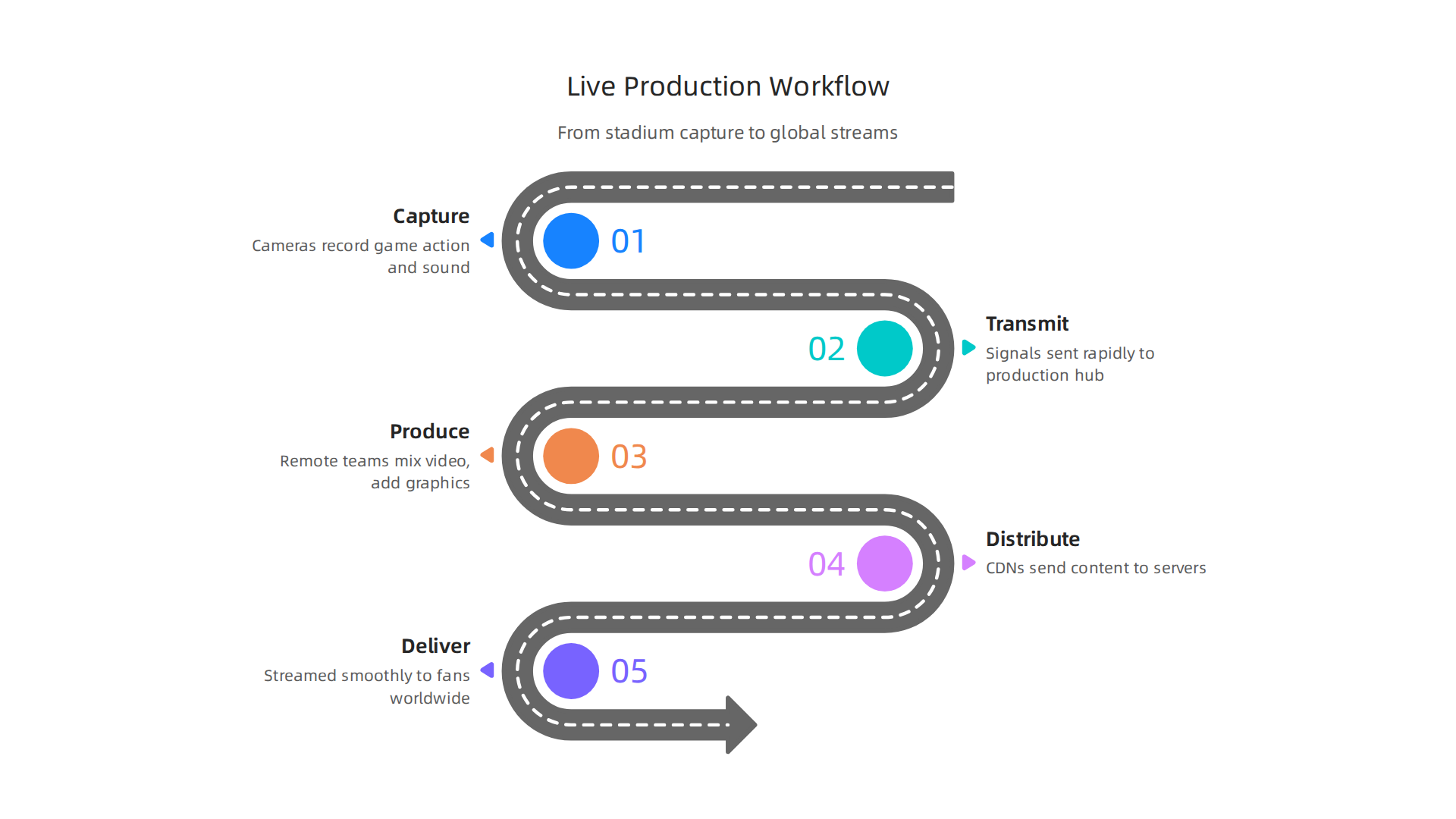
Think of it as a long chain, where each part needs to work perfectly for you to see the action clearly and without delay. This whole process is called the production workflow, and it makes sure that collegiate football broadcast schedules and news get out to everyone.
The journey starts at the stadium. Here, cameras capture all the exciting moments of the WSU football game. Microphones pick up every sound, from the crowd cheering to the referee’s whistle. This raw video and audio is the very first step. Then, this information needs to travel. Fast and reliable ways are used to send the signals from the stadium to a production hub. This can be done through special cables or even over the internet, using high-speed connections. The goal is to get the live feed to where it can be edited and turned into a finished broadcast as quickly as possible. Low latency, meaning very little delay, is key for live sports, with less than 200 milliseconds often needed for smooth operations like director communication and replay decisions Remote Production in 2026: How REMI Workflows Are Changing Live Sports Broadcasting.
New Ways to Produce WSU Football Games
In the past, a big mobile TV truck, called an Outside Broadcast (OB) unit, would be at the stadium. This truck had all the gear and people needed to mix the shots, add replays, and get the game ready for broadcast. This is the traditional on-site model.
But things are changing fast in 2026. Now, many productions use remote or cloud-based strategies. This means that much of the work, like mixing the video and adding graphics, happens away from the stadium. Sometimes, teams work from a central studio hundreds of miles away. Other times, they use cloud technology, where powerful computers over the internet do a lot of the heavy lifting. This hybrid approach, using some equipment on-site and some in the cloud, is becoming the normal way to do things Cloud-Based Broadcast Workflows: Remote Production and …. Cloud setups are great for tasks like editing, storing old footage, and getting the video ready for different types of screens. This helps manage collegiate football team coverage and history more effectively.
These new ways of working can make things simpler and sometimes even save money. However, they also bring new challenges, like making sure the internet connection is always strong and fast enough. It also needs careful planning to manage latency, or the small delays that can happen when signals travel over long distances or through the cloud Managing Latency in Broadcast Networks.
Getting WSU Football to Fans Everywhere
Once the game is produced, it needs to reach fans all over the world. This is where Content Delivery Networks (CDNs) come in. Think of a CDN as a super-fast delivery service for video. It has servers in many different places, so when you want to watch a WSU football game, the video comes from a server that is close to you. This makes the streaming smoother and faster. Major CDNs are important for live sports streaming to handle many viewers at once Live Sports OTT Streaming: Technical Playbook 2026.
Many different companies and experts work together to make this happen. There are camera crews, sound engineers, video editors, and broadcast engineers, among others.

Each vendor or team has a role, from capturing the game to making sure it lands on your TV or phone. Keeping all these parts working together, especially when using remote teams or cloud tools, can be tricky. This often causes complexity or can raise costs if not planned well. These challenges are a big part of collegiate sports broadcasting dynamics and getting college sports matchups & schedules to fans.
We focus on delivering world-class, end-to-end solutions for live sports. To see how we bring these complex workflows to life and ensure flawless delivery, we invite you to Explore Our Broadcast Services.
Ensuring that WSU football games look great and arrive on your screen without a hitch is super important. After all the hard work of capturing and producing the game, the final step is making sure the quality is top-notch and there are no annoying delays. This is where quality assurance and best practices for low-latency streaming come in.
Key Technical Checks for Great Live Streams
When we talk about making sure a live broadcast is perfect, there are a few important things we always check. These are often called Key Performance Indicators, or KPIs.
- Latency: This is the time it takes for the action on the field to show up on your screen. For live sports, a very low delay is a must. For example, less than 250 milliseconds is often needed for commentators to react naturally to the game, and even less for important team communications during the broadcast itself CASE STUDY – VITEC. Many people working in live sports production really value lower latency more and more each year, as it helps with smooth operations and happy viewers Hybrid workflows drive live broadcast in 2026.
- Frame Integrity: This means that the video stream is smooth and doesn’t skip or freeze. You want to see every moment of the WSU football game without any choppy parts.
- Multi-bitrate Encoding: Imagine your internet connection isn’t the fastest. Multi-bitrate encoding creates several versions of the same video at different quality levels. Your device then picks the best quality stream that your internet can handle, so you always get the smoothest picture possible. This helps reach a wider audience, no matter their internet speed. Setting up redundant encoders with automatic failover is also key to preventing interruptions Achieving Sub-Second Latency for Sports Streams.
- Monitoring: This is like having a team of experts constantly watching the broadcast from behind the scenes. They check everything from how fast the stream starts to if it ever pauses to "rebuffer." If anything looks off, they get an alert right away, often before you even notice a problem What it really takes to deliver live sports with 100% reliability. Remote monitoring is a big part of this in 2026, especially with more teams working from different places Remote Production Perfection: From Cloud Capture to ….
Making Sure Everything Runs Smoothly
To protect your viewing experience and avoid issues during a live WSU football broadcast, special testing and backup plans are essential.

- Testing: Before any game goes live, everything is tested thoroughly. This means checking all cameras, microphones, internet connections, and cloud tools. Every detail is written down, from the number of cameras to the maximum acceptable delay Private 5G for Live Sports Broadcasting Deployment Guide. This helps find and fix problems before they can affect the broadcast.
- Contingency Plans: Things can sometimes go wrong. That’s why backup plans are so important. This might mean having extra equipment ready, or different internet paths for the video signal. If one system fails, another can take over instantly, so you keep watching without interruption. Proper setup allows today’s networks to support low latency for distributed teams, and good monitoring can find problems before they impact viewers Cloud Workflows Are Redefining Live Sports Production.
Ensuring quality in these ways helps manage the complexities of collegiate sports broadcasting dynamics. It means fans get to enjoy college sports matchups & schedules without issues.
Balancing Speed and Reach
One big challenge is finding the right balance between making the stream super-fast and making sure it works on all kinds of devices. Some really advanced, ultra-low latency solutions might not work perfectly on older phones or slower internet connections. The goal is to provide a fast stream for those who can handle it, but also make sure that everyone else can still watch the game with good quality. This means carefully choosing the right technologies and settings. Experts need to know how to deliver flawless global live sports broadcasting in 2026.
These efforts are all part of a larger plan to optimize college football streams for global audiences in 2026. This careful balance ensures everyone can enjoy the excitement of collegiate football team coverage and history.
Managing these technical details to ensure world-class live sports broadcasting requires deep expertise and robust solutions. If you’re looking to elevate your sports broadcasts and tackle these challenges, we can help. Request a Broadcast Consultation today to discuss your needs.
To truly get the excitement of collegiate football team coverage and history out to as many fans as possible, it’s not enough to just make a great broadcast. You also need to share it widely and in smart ways. This means thinking about all the places people watch videos these days and how to reach them best.
Audience Reach: Multi-Platform Distribution and Engagement Tactics
Getting WSU football games to a huge audience means putting them on many different types of screens and services. In 2026, fans don’t just sit in front of a TV anymore. They watch on phones, tablets, and computers, often using special apps.
Think about these different ways to share the game:
- Linear TV: Regular television channels still reach a lot of people. It’s a key way for broad viewership and often sets the main schedule for college sports matchups & schedules. But it’s not the only way anymore.
- OTT (Over-the-Top) Apps: These are streaming apps like ESPN+ or a conference’s own app. They are super popular, especially with younger fans. Many people, including a lot of Millennials and Gen Z, choose streaming as their main way to watch sports Key Insights From The Study. This shift to online viewing keeps growing each year Sports industry outlook 2026 North America.
- Social Platforms: Sites like YouTube, TikTok, and Instagram are huge for engaging fans. For live sports, a "digital-first" plan often means creating vertical videos specifically for these platforms The 2026 Sports Media Playbook: why you must invest in … – LinkedIn. These platforms are crucial for catching the attention of younger viewers and keeping the conversation going Ahead of the Game: Sports Horizon Scanning 2026.
- Conference Networks: Many collegiate sports broadcasting dynamics involve showing games through specific conference channels or apps. These often have a loyal audience who follow all the teams in that league, including WSU football.
Broadcasters now combine the wide reach of traditional TV with the extra viewers streaming brings. This lets them connect with fans wherever they are watching The 2026 upfront planning series live sports planning.
Monetization and Rights Packaging
Deciding where and how to show a WSU football game also ties into how money is made. Sports leagues and teams make deals for their broadcast rights. These deals can be different for:
- Local Audiences: How games are shown in the area where the team is located.
- Conference Audiences: How games are shown across all states or regions covered by the conference.
- International Audiences: How games reach fans in other countries.
The way these rights are packaged and sold is changing. More teams are producing their own broadcasts and distributing them through a mix of streaming apps, TV partners, and their own online channels The State of Local Sports Rights in 2026 – Narendra Nag. This helps maximize revenue and allows for more flexible distribution of collegiate football broadcast schedules and news.
Engagement Tactics
To truly connect with fans and grow viewership, broadcasters are using smart engagement tactics:
- Alternate Streams: Imagine watching a WSU football game and being able to pick a camera angle just for the quarterback, or a stream that shows live stats popping up on your screen. This creates a more personal experience.
- Localized Feeds: For global fans, having commentators speaking different languages or showing content specific to their region can make a big difference.
- Social-First Content: Creating short, exciting clips and highlights specifically for social media helps draw people in and encourages them to share the excitement. Around 31% of college sports fans use a second screen to engage on social media during live events Media in March: Go beyond the bracket | Nielsen. This number is even higher for some groups.
- Personalized Experiences: Fans in 2026 expect things like special promotions based on their location, content chosen just for them, and unique merchandise offers. Artificial intelligence (AI) helps make these personalized experiences possible 2026 Global Sports Industry Outlook.
These efforts help make sure that collegiate sports broadcasting dynamics are vibrant and exciting, bringing fans closer to the action no matter where they are. To see more about how top-notch production quality drives fan engagement, you can Explore Our Broadcast Services.
By focusing on these multi-platform strategies and engagement tactics, WSU football can reach its widest audience ever, creating passionate fans around the globe. This kind of careful planning and execution is why many large organizations choose TPT Global for their broadcast needs. Find out more about how we help our clients succeed. Why Choose TPT Global.
To reach a wide audience, broadcasting WSU football games costs money. It’s not just about showing the game; it’s about all the moving parts behind the scenes. Understanding these costs is key to smart planning for collegiate football broadcast schedules and news.
Game-Day Broadcast Costs
Putting on a game-day broadcast for any college sports matchups & schedules involves several big costs:
- Equipment: This includes cameras, microphones, special replay machines, and graphics systems. For a single event, a basic professional production can cost anywhere from $3,300 to $8,000, and more complex broadcasts can reach around $18,500 Broadcast Production Quote Calculator — Build Your Estimate. Think about all the gear needed for top-notch collegiate football team coverage and history.
- People: A crew of skilled workers is needed. This includes camera operators, sound engineers, directors, producers, and commentators. Their skills are essential for a smooth broadcast.
- Travel and Setup: Getting all the equipment and people to the stadium, setting it all up, and then taking it down costs money. Sometimes, teams even pay to host special broadcast events, like when Cal reportedly paid ESPN $4,500 to host "College GameDay" in 2024 College Football Program Charged ESPN $4500 to Host ….
- Distribution: Sending the broadcast out to TVs and streaming apps requires fees for satellite time or internet bandwidth.
These costs add up, making it important for big organizations like universities to find ways to be efficient.
Vendor Consolidation vs. Specialist Suppliers
When choosing who to work with for broadcasts, there are two main paths:
- Vendor Consolidation: This means working with fewer, larger companies that can handle many different broadcast needs.
- Pros: It can make things simpler, with fewer contracts to manage and often lower overall costs through bulk deals. Studies show this approach can lead to net savings by reducing the number of suppliers Vendor Consolidation Playbook with Benchmark Data. For collegiate sports broadcasting dynamics, this can ensure consistent quality for all WSU football games. If you’re looking for a comprehensive, single-window solution for sports and media, check out Trans Group.
- Cons: You might lose some flexibility, and you rely heavily on one company for many services.
- Specialist Suppliers: This means hiring different companies that are experts in one specific area, like one for cameras, another for graphics, and a third for sound.
- Pros: You get the best in each specific field.
- Cons: It’s more work to manage many different vendors, and if they don’t work well together, it can cause problems. It can also be harder to get overall cost savings this way.
Many organizations start by reviewing all their current suppliers to see where they can simplify Vendor Consolidation 2026: A Framework for Smarter ….
Procurement Best Practices
For large buyers, like those managing the broadcast of WSU football, smart ways of buying services are important. Here are some good tips:
- Know Your Needs: Clearly define what you need for every aspect of your broadcast, from cameras to commentary.
- Clear Contracts: Make sure all agreements with vendors clearly state what services will be provided, how much they cost, and what quality to expect.
- Monitor Performance: Always keep an eye on how well your chosen vendors are doing. Check if they meet deadlines and quality standards Supplier Consolidation 2026: Benefits, Risks, and Steps – Varisource.
By using these smart procurement strategies, organizations can streamline their operations and save money while still delivering high-quality collegiate football team coverage and history. To learn more about how big companies can improve their broadcast operations, you might want to read about optimizing college football broadcasting for sports enterprises.
For tailored advice on broadcast solutions and cost optimization, it’s always a good idea to talk to experts. Request a Broadcast Consultation to discuss your project.
When we talk about smart ways to manage broadcast costs, it’s helpful to look at real examples. Let’s imagine a case study of a typical WSU football game-day coverage. We can see what works well and what could be made even better for future collegiate football broadcast schedules and news.
Case study: WSU game day coverage – success factors and improvement areas
For a WSU football broadcast, some things usually go very well. The local energy, clear pictures, and good commentary often make for a great viewing experience for fans at home. The crew on site does a good job of capturing exciting plays and showcasing the spirit of the team. This helps keep fans engaged and makes the broadcast feel special.
However, even strong productions have room to grow. One common challenge for college sports matchups & schedules, including WSU football, is making sure the broadcast reaches everyone who wants to watch, no matter where they are. Another challenge is doing this in a way that doesn’t cost too much money. Sometimes, older equipment or ways of working can slow things down or limit how many people can tune in.
Here are some simple steps to make things even better for collegiate football team coverage and history:
Practical Changes for Better Broadcasts
- Work Smarter with Technology: Many organizations are moving towards using IP-based systems for their broadcasts. This is like using the internet to move all the video and audio around instead of old cables. It can make things more flexible and ready for the future. Experts say that in 2026, using IP should be the normal way to plan big upgrades Trends to Watch in 2026: Broadcast and Audio Visual …. This helps improve the overall collegiate sports broadcasting dynamics.
- Think "Digital First": More and more fans watch games on their phones or tablets. This means broadcasts need to be made for those screens, too. For 2026, it’s important to think about making content that fits vertical screens, not just wide TV screens The 2026 Sports Media Playbook: why you must invest in …. This can boost fan engagement and reach.
- Streamline Your Tools: Instead of many different tools and systems, finding one that does a lot can simplify the process. This can help deliver a high-quality product every time. Learning how to simplify your live sports production with a unified end-to-end solution can make a big difference.
A Roadmap for Upgrades
A big change doesn’t have to happen all at once. Like many schools, WSU could upgrade its system step-by-step. This is called a phased upgrade. For example, NC State University started by gradually moving from older systems to newer IP technology The Big Shift: Inside NC State’s Phased Move From SDI to SMPTE ST 2110.
- Phase 1: Quick Wins (This Year)
- Look for easy ways to improve the quality of online streams.
- Make sure all contracts with broadcast partners are clear and fair.
- Train staff on new, simpler production workflows.
- Phase 2: Smart Tech Integration (Next 1-2 Years)
- Slowly bring in new IP-based equipment for certain parts of the broadcast, like replay or graphics.
- Experiment with creating content specifically for social media and mobile viewing. This could help maximize global reach with collegiate football broadcast schedules and team coverage.
- Phase 3: Looking to the Future (3-5 Years Out)
- Think about how new tech like virtual reality (VR) and augmented reality (AR) could make the WSU football viewing experience even more exciting Ahead of the Game: Sports Horizon Scanning 2026.
- Build a fully modern broadcast setup that can grow with new ideas for many years.
By taking these steps, WSU football broadcasts can stay top-notch, reach more fans, and be ready for what’s next in sports media.
Want to see how these ideas look in action? Watch Our Latest Broadcast Work to get a feel for modern sports production. If you’re ready to explore specific solutions for your organization, Get in touch.
Summary
This article explains why a strong broadcast strategy is essential for WSU football in 2026, showing how high-quality, widely available coverage drives fans, recruits, and revenue. It reviews WSU’s current media deals and where games appear this season, then walks through the production workflow from stadium capture to global delivery, highlighting new remote and cloud-based models. The piece outlines key technical KPIs—latency, frame integrity, multi-bitrate encoding—and testing and contingency practices that protect live streams. It also covers distribution choices (linear TV, OTT, social), monetization and rights packaging, and the tradeoffs between vendor consolidation and specialist suppliers. Finally, the article gives cost ranges, practical upgrade phases, and concrete steps WSU can take to expand reach and improve broadcast quality for fans everywhere.