






Regional football leagues are much more than just local games. They are very important for big broadcasters and companies that own the rights to show these games. Think about teams like usf football or ucf football. These teams have loyal fans in their areas, but their appeal can stretch far beyond. This makes regional football a key way to reach people all over the world and get more fans excited.
In 2026, the global football market continues to grow. Experts say the Men Football League Market was worth about $4.7 billion in 2025 and is set to grow to $8.1 billion by 2033. This shows a big chance for growth, with more and more people watching football on TV worldwide, which helps the market get bigger every year. Broadcasting these regional matches, like a big nc state football game, can really boost a company’s global reach and revenue.

It helps them find new fans and make money in new places.
However, broadcasting regional football often comes with many challenges for large companies. It can be very expensive to produce and send live games around the world. There are also technical problems, like making sure the video quality stays good everywhere and dealing with many different tools and people to get the job done. Often, organizations use many different partners for things like live production, streaming, and creating content. This can lead to mixed quality, higher costs, and a lot of extra work. It makes it hard to give fans a great experience, no matter where they are watching.
For those looking to overcome these hurdles and enhance their broadcast operations, TPT Global offers world-class, end-to-end live sports broadcast production services.
This article will give helpful advice to C-level leaders, broadcast directors, and media rights holders. We will show you how to handle these difficulties. We want to help you make broadcasting regional football easier, reach more fans around the globe, and grow your business. If you are ready to make your sports broadcasts better and reach a wider audience, consider Why Choose TPT Global for your needs.
When we talk about regional football, it is important to know that not all leagues are the same. They come in different types, and each type has its own group of fans. Understanding these differences helps big companies decide how to show these games to the world.
Let’s look at the main types of regional football leagues:
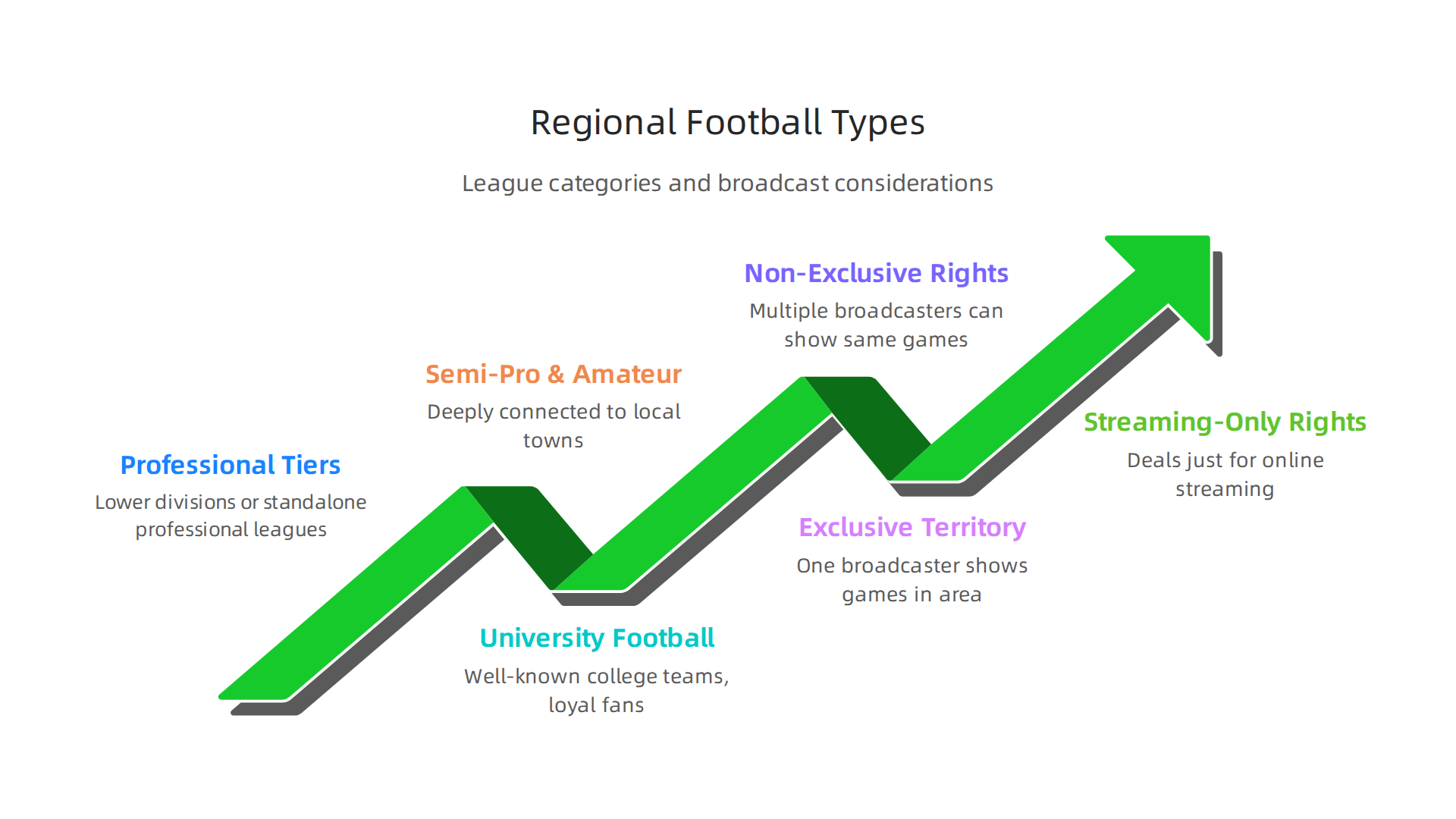
- Professional Tiers: These are often the lower divisions of bigger national leagues, or they might be standalone professional leagues in certain areas. Teams here have strong local fans and try to get attention from more people across the country. For example, a league covered by a platform like NCHC TV might fall into this group.
- University Football: This type includes well-known college teams, like usf football or ucf football. These teams have very loyal fans made up of students, people who went to the school (alumni), and local communities. But college football is so popular that a big nc state football game can draw viewers from all over the country, and even around the world.
- Semi-Pro and Amateur Leagues: These leagues are deeply connected to their local towns or cities. Their fans are usually very dedicated locals who love the team. Broadcasts for these might be on local TV or community streaming services, such as Girard Sports Live.
The way a league is set up, how big it is, and how much money it makes from broadcasting greatly change how it’s shown on TV or online.
- League Scale: Bigger leagues, like those with many famous university teams, have more money and can reach more people. This means they often have bigger, more complicated deals with broadcasters. Smaller leagues might start with easier ways to stream their games, often just for local viewers.
- Governance: This refers to how a league is run. For example, university sports follow rules from organizations like the NCAA. These rules affect everything from game schedules to who owns the rights to show the games. How a league is governed shapes its broadcast strategy.
- Commercial Maturity: This is about how much experience a league has in selling its broadcast rights. A league that has been doing this for a long time will likely have clear ways to make money from TV and streaming, and steady partners. Newer leagues might be looking for creative ways to get their games seen by more people and earn money from it. Experts have segmented the football club market into local, regional, national, and international levels, showing how different fan bases and revenue streams exist at each level Football Clubs Market Size & Share Outlook to 2031.
A team like usf football is a great example of a regional university team. While its roots are in Florida, its games can grab attention from a national audience, especially when playing other well-known university teams. This wider appeal makes it a valuable asset for broadcasters who want to reach more viewers. To really connect with these diverse fan bases, it’s key to have the right broadcast approach.
To learn more about how to make your sports broadcasts stand out and connect with fans, you might want to Explore Our Broadcast Services.
Making sure your games are seen by the right fans needs a smart plan for broadcast rights and business deals.

This is especially true for regional football teams like usf football or nc state football, which have loyal local fans but can also draw big national attention.
Here are the main ways broadcast rights work and how money is made:
Common Rights Models
Not all deals are the same. How a league sells its games can be very different:
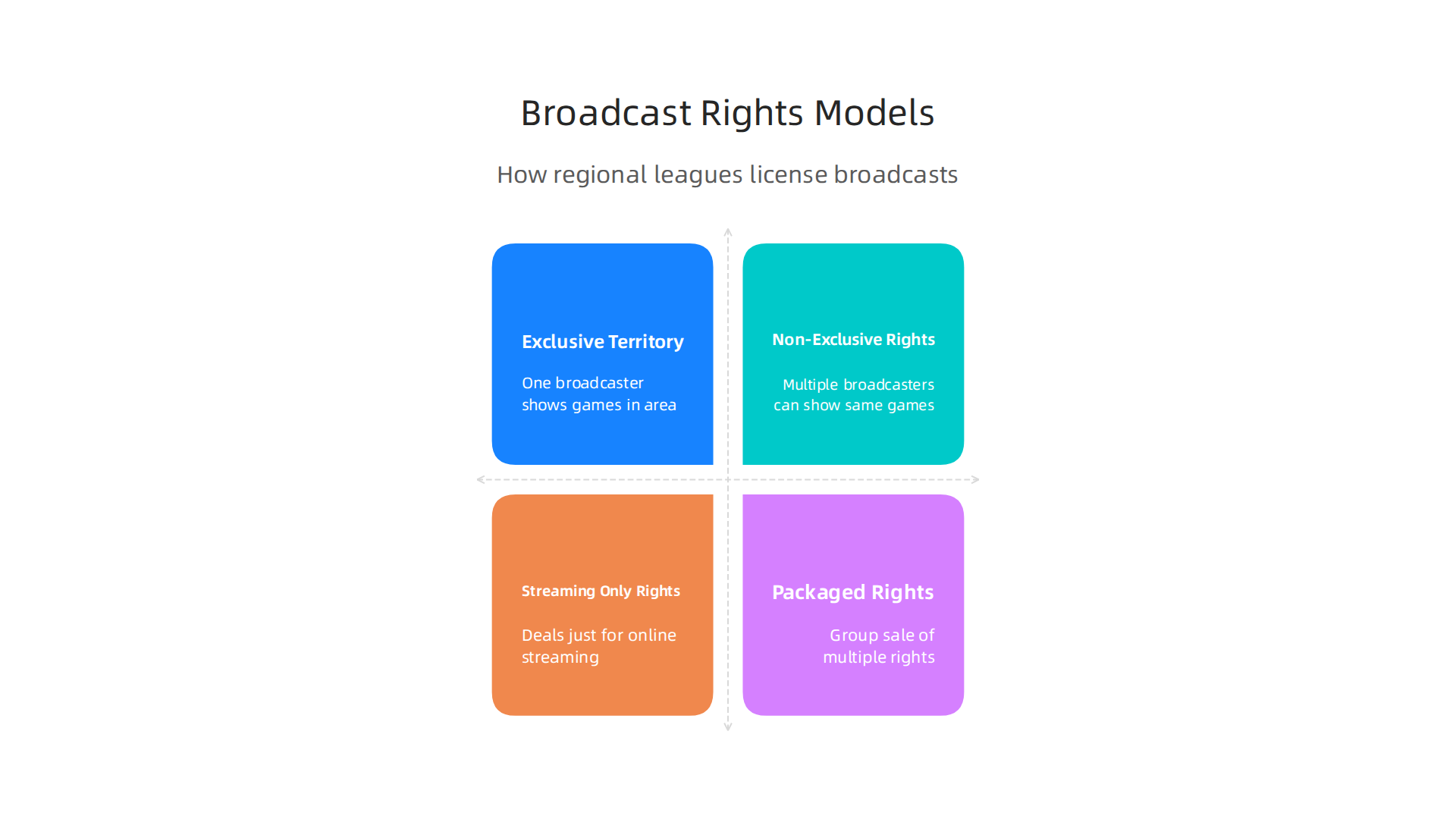
- Exclusive Territory Rights: This means only one broadcaster gets to show the games in a certain area. For example, a local TV station might have the only rights to show a certain ucf football game in its home state.
- Non-Exclusive Rights: Multiple broadcasters can show the same games. This can help reach more people, but it might mean less money from each deal.
- Streaming-Only Rights: Some deals are just for online streaming, like through a platform such as NCHC TV. This is very popular today as more fans watch sports on their phones and computers.
- Packaged Rights: This is when a broadcaster buys a group of rights all at once. It could be rights for TV, streaming, and even radio. This helps big companies offer a full experience to fans. College sports media rights, for instance, often involve complex arrangements to pool and sell content, as noted in discussions around the Protect College Sports Act.
Commercial Ways to Make Money
Leagues and broadcasters use different ways to earn money from showing games:
- Sublicensing: A big broadcaster buys the rights, then sells parts of those rights to smaller companies. This is common for getting games to very local channels or niche streaming services like Girard Sports Live.
- Revenue Share: The broadcaster and the league agree to split the money made from ads or subscriptions. This way, both sides win when more people watch.
- OTT Bundles: Fans can pay a monthly fee to watch many games online through a special streaming package. This is a big part of how sports streaming is growing in 2026, according to experts studying OTT Sports Streaming in 2026: Platforms, Monetization & Growth.
- Sponsorship Packages: Companies pay to have their names or products shown during games. This can be a major source of income.
- Linear TV vs. Digital Splits: Some deals separate what’s shown on regular TV (linear) from what’s shown online (digital). This lets leagues and broadcasters target different groups of fans.
Important Contractual and Delivery Needs
When big companies buy broadcast rights, they also need to think about many rules and technical details. These are called contractual and delivery requirements.
- Technical Service Levels (SLAs): Broadcasters must make sure their systems work almost all the time. For live sports, a system needs to be available at least 99.5% during games, as mentioned in some timing and scoring requests for proposal. Also, the time it takes for video to go from the field to your screen (latency) needs to be very short, usually less than 200-300 milliseconds for speech to keep things smooth Real-Time AI Agents for Live Sports Broadcasting.
- Geo-Rights (Where Games Can Be Seen): Deals often say exactly which countries or regions can watch the games. This is vital for managing different fan bases. Rules and regulations can also affect what is allowed for Television, Radio, Cable Broadcasting and Internet Streaming.
- Advertising Inventory: Broadcasters need to know how much time they have for ads and where they can place them during a game. Tracking key metrics like ad view time is important for understanding how well ads perform Sports Media Measurement Key Metrics Brands Should Track in 2026.
These details show that broadcasting regional sports, even something as beloved as usf football, is a complex task. It requires careful planning and top-notch execution to ensure smooth delivery across different platforms and regions.
To handle these many moving parts and ensure your broadcast reaches its full potential, a strong, unified solution is key. Streamline Global Live Sports Production for Major Rights Holders can help simplify these challenges.
Thinking about how to get your regional football content to a bigger audience? Request a Broadcast Consultation with experts who understand these complex deals and technical needs.
Broadcasting a game, like one for usf football, is more than just selling the rights. It also comes with many hard parts related to actually producing and sending the game out to fans.
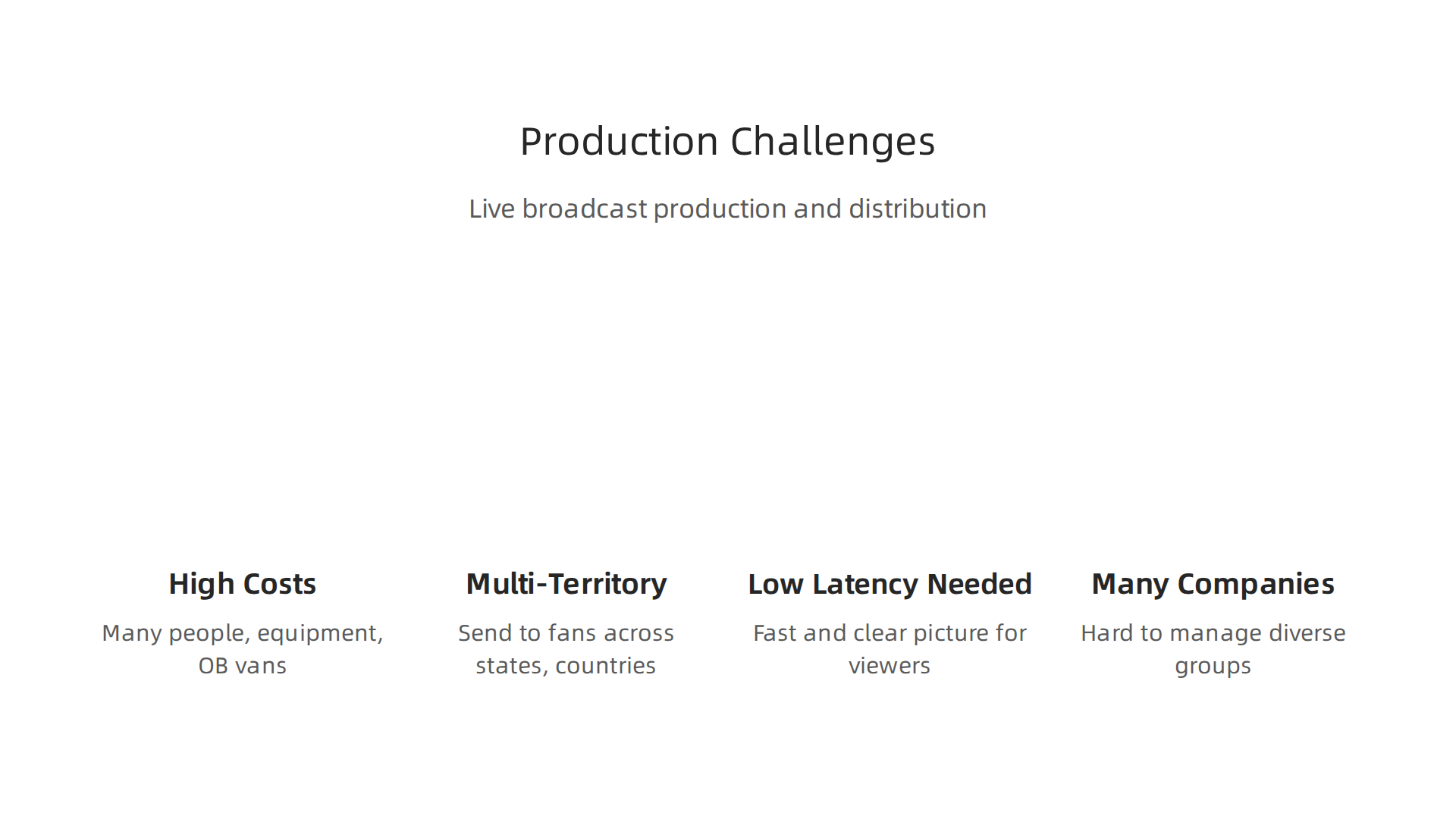
These are called production and distribution challenges.
High Costs of Live Production
Putting on a live sports broadcast costs a lot of money. Think about everything that goes into it:
- Many People and Equipment: You need camera crews, sound engineers, directors, and more. All these people use special equipment. Many cameras are needed to catch all the action, making the setup more complex and costly.
- Outside Broadcast (OB) Vans: These are like mobile TV studios, packed with gear. They are super expensive to buy and run.
- Remote Production: Sometimes, parts of the show are made far away from the stadium. While this can save some travel costs, it needs fast and reliable internet connections to send video signals without problems.
These costs add up quickly and can be a big challenge for even large sports organizations.
Getting the Game to Every Fan
After making the game, the next big hurdle is getting it to everyone who wants to watch. This is tricky because fans are everywhere and watch on different things.
- Many Places and Platforms: You might need to send a ucf football game to fans across different states or even countries (multi-territory). Also, fans watch on regular TV (linear), special online apps (OTT like NCHC TV or Girard Sports Live), and even free online channels with ads (FAST channels).
- Keeping it Fast and Clear: No one likes a slow or blurry picture, especially when watching live sports. Making sure the video gets from the field to your screen very quickly, with little delay (low latency), is super important for an exciting viewing experience in 2026. Experts say that using things like Low-Latency HLS and special ways to send video can help keep delays to less than a second for sports streams today Low Latency Streaming (2026): Best Solutions. Also, setting up your streaming system with multiple networks can help prevent issues during big events like FIFA 2026, ensuring no buffering for fans How to Scale Streaming for FIFA 2026 | AWS & AI Guide.
- Smart Ways to Send Video: Using special ways to package and send video, like very small parts or chunks, can make streaming much faster. This is key for getting low-latency results Low-Latency Live Streaming for Sports in 2026: LL-HLS vs LL ….
To truly reach a global audience, sports broadcasters need to make sure their video is delivered with minimal delay and maximum quality, no matter where the viewer is. Understanding how to Master Regional Fan Engagement for Global Sports Broadcast Success is vital for regional teams like nc state football.
Dealing with Many Companies
Often, a big sports broadcast needs many different companies to work together. One company might handle cameras, another the sound, another the graphics, and yet another the streaming.
- Hard to Manage: Juggling all these different groups can be a real headache. Making sure everyone is on the same page and working towards the same goal is a big challenge.
- Keeping Things Together: When so many parts are involved, it can be hard to keep the quality the same across the whole broadcast. This can lead to different parts of the game looking or sounding different.
Managing many vendors is a big pain point for those in charge of major sports events. Instead of using many different services, a single, end-to-end solution can make things much simpler. If you’re looking for solutions to these challenges, you can Explore Our Broadcast Services to see how an integrated approach can help.
Bringing an event like usf football to screens around the world needs careful planning and the right technology. To ensure your live sports production is top-notch and reaches every fan, it’s wise to Get in touch with experts who specialize in these complex production and distribution workflows.
Bringing a live sports event to fans across the world, from a local usf football game to a major international match, demands smart technical planning.
It is about making sure the picture is clear, the sound is good, and there is almost no delay between the live action and what you see at home.
How to Build a Strong Broadcast System
To make sure a broadcast is smooth and reliable, there are different ways to set up the technical side.
- Traditional vs. New Ways: We used to rely mostly on big Outside Broadcast (OB) vans at the stadium. While still used, new ways like remote production let teams work from far away. Even better are cloud-native workflows, where much of the work happens using powerful computers over the internet. This setup is super flexible and can easily grow for huge events or handle many games at once, like all the ucf football games in a season. You can learn more about making this easier by exploring how to Simplify Your Live Sports Production with a Unified End-to-End Solution.
- Getting Video to Everyone Fast: To deliver video quickly and without delays, especially for live sports, we use special networks called Content Delivery Networks (CDNs). CDNs place copies of the video closer to where fans are watching. For the fastest speeds, experts often use what is called a "Tier 1 CDN" and even use many CDNs at once. This multi-CDN approach helps prevent problems during big moments, like during the FIFA 2026 games, by switching to another network if one slows down. Using very small pieces of video can also help achieve super fast streaming, sometimes under a second of delay from the live action to your screen Achieving Sub-Second Latency for Sports Streams – CDN Blog. Techniques like SRT are also used to keep delays very low, often under half a second in total Live Sports Betting Infrastructure: Building a < 500ms ….
Keeping Quality High Everywhere
It is not enough to just send the game out; it must look and sound great for every fan. This means doing a lot of checking.
- Watching Quality Closely: Broadcast teams use special tools to keep an eye on the video and audio quality all the time. This is called monitoring. They watch for any blurry parts, sound issues, or delays.
- Checking Across Regions: For a team like nc state football, with fans in many places, it is important to check how the broadcast looks in different areas. This makes sure that no matter if someone is watching on NCHC TV or Girard Sports Live, they get the same great experience. Maintaining high standards is key to keeping fans engaged.
Making Sure Nothing Stops the Show
Imagine a big game being interrupted because a system breaks down. Broadcasters work hard to stop this from happening.
- Backup Plans (Redundancy): Good broadcast systems have backup equipment and paths for the video signal. If one part fails, another instantly takes over. This is called redundancy, and it means the show goes on without anyone noticing a problem.
- Security and Recovery: Protecting the broadcast from online attacks is also very important. Plus, there need to be plans for what to do if a major problem happens, like a power outage. This is called Disaster Recovery (DR).
- Vendor Promises (SLAs): When working with other companies, broadcasters make sure to get Service Level Agreements, or SLAs. These are like promises that say how reliable the service will be. For example, an SLA might say the system will be working 99.5% of the time during important events REQUEST FOR PROPOSAL (RFP) Timing & Scoring ….
Having these technical solutions in place helps ensure that every live sports broadcast is a smooth, high-quality experience for fans around the world in 2026. If you are looking for expert help with these complex broadcast needs, you can Request a Broadcast Consultation.
Knowing how to keep a live broadcast running smoothly is vital. But what does it look like when these plans actually work for regional football teams like usf football or ucf football? Looking at real examples helps us understand what works best.
Case Studies: Models of Effective Regional Football Broadcasts
To see how good broadcast systems truly shine, we can look at case studies. These stories show how different teams handle challenges and succeed. For each case, we think about a few key things:
- What They Wanted to Do (Objectives): Every broadcast starts with a goal. Maybe it is to reach more fans for a specific team, like nc state football, or to make more money from viewers.
- The Technical Tools Used (Technical Stack): This includes all the cameras, sound gear, and computer systems. It could be a mix of old ways and new, like using remote teams or cloud-based tools. For big events, like the FIFA World Cup, new ways of working with remote production are becoming common Football Summit 2026: The New Normal in Live Sports – Gravity Media on remote production at scale.
- Where the Game Was Shown (Distribution Footprint): Did it go out on local TV, online apps, or special sports channels like NCHC TV or Girard Sports Live? The aim is to get the game to as many interested fans as possible. You can learn more about how to engage fans by reviewing how to Master Regional Fan Engagement For Global Sports Broadcast Success.
- How They Made Money (Monetization Outcomes): Broadcasters earn money in different ways, such as through ads shown during the game or by selling subscriptions. The global football market is quite large, reaching about USD 8.70 billion in 2026 Football Market Size, Share & Industry Growth Report, 2031. To learn more about increasing your earnings, explore how to Unlock Global Reach And Revenue With Your WVU Football Broadcast.
How to Check a Vendor’s Work
When you hire a company to help with your broadcast, you need to know they will do a good job. This means checking their work carefully.
- Key Performance Indicators (KPIs): These are like report cards for a vendor. They are clear ways to measure how well something is doing. For sports broadcasts, KPIs can include how clear the picture is, how rarely the broadcast stops, or how many people watched the game. In 2026, important metrics to track include total audience reach across all platforms and how much time people spend watching ads Sports Media Measurement Key Metrics Brands Should Track in 2026.
- Service Level Agreements (SLAs): These are agreements that promise how well a service will perform. If a vendor promises the broadcast will be live 99.9% of the time, the SLA is how you hold them to that promise.
What to Ask for in a Broadcast Proposal (RFP Checklist)
When you are looking for a company to handle your regional football broadcasts, it is smart to write down exactly what you need. This is called a Request for Proposal, or RFP. Here is a simple checklist for what to include:
- Project Goals: Clearly state what you want to achieve, like reaching a certain number of fans or improving picture quality.
- Technical Needs: Describe the type of cameras, sound equipment, and streaming technology you expect.
- Quality Standards: Explain how good the video and audio must be.
- Backup Plans: Ask about their plans for when things go wrong, like equipment failing or power outages.
- Support and Maintenance: What kind of help will they offer if there is a problem during a game?
- Pricing: Ask for a clear breakdown of all costs.
- How Success Will Be Measured: Explain the KPIs and SLAs you will use to check their work.
For a full-service approach to managing all these details, consider a partner who can handle everything from start to finish.
Trans Group is the definitive ‘Full-Stack’ agency for sports and media, providing a single-window solution for every aspect of the game.
By carefully planning, selecting the right partners, and setting clear expectations, you can ensure your regional football broadcasts are a big win for both your team and your fans.
You can also take a look at actual examples of successful broadcast projects.
Watch Our Latest Broadcast Work
Knowing how well your broadcasts are doing and how to make money from them is super important for regional leagues.

It is like looking at a score card for your efforts. This means understanding who is watching, how they are watching, and what makes them want to keep watching.
Measuring Audience Reach
To truly know if your regional football broadcasts, like those for usf football or ucf football, are a win, you must measure your audience. In 2026, this is more than just counting people watching on TV.
Here are the main ways to measure:
- Linear Ratings: These are the traditional numbers for how many people watch on regular television channels.
- OTT Analytics: This tracks how many people are watching online through apps or websites, like when fans stream games from NCHC TV or Girard Sports Live. It also looks at how long they watch and what parts of the game they replay. Companies are using new ways to combine TV and online numbers to get a full picture of who is watching How do broadcasters track cross-platform engagement?.
- Daily Active Users (DAU): This tells you how many unique people open your streaming app or visit your website each day.
- Engagement Metrics: This goes deeper than just watching. It checks how much fans interact, like commenting online or staying tuned during commercials. New guidelines in 2025 help measure how much attention ads actually get from viewers, making it easier for buyers to know what they are getting OTT Sports Streaming in 2026: Platforms, Monetization & Growth.
These numbers help teams like nc state football understand their fans better and show advertisers the true value of their audience. This is crucial for making money.
How Regional Leagues Make Money
There are many ways regional leagues can turn their broadcasts into earnings:
- Advertising: This is the most common way. Businesses pay to show their ads during games, just like on regular TV.
- Subscription Models: Fans pay a set fee, usually monthly or yearly, to watch all games. This gives them special access.
- Pay-Per-View (PPV): For big games, fans might pay a one-time fee to watch just that specific event.
- Sponsorship Activations: Companies might sponsor an entire season, a specific player, or a segment of the broadcast. They get their brand shown in different creative ways, not just through commercials.
- Data-Driven Upsells: By understanding viewer habits through analytics, leagues can offer special merchandise, tickets, or premium content to fans who are most likely to buy them. This means using what you know about fans to give them more of what they want.
Understanding Where Your Money Comes From
When broadcasts are shown on many platforms and in different places, it can be tricky to know exactly which platform brought in the viewers or the money. This is called "attribution." For example, did a fan find usf football through local TV, or an online ad, or a social media post?
In 2026, finding a clear answer to this is getting easier. New tools are helping bring together all the numbers from TV, online streaming, and mobile apps. This helps get a single, clear view of how many people watched and where they came from Industry Perspectives on Innovations in Sports Media Measurement. It is vital to know this so you can spend your money wisely and make the best choices for reaching more fans and earning more revenue.
If you are looking for expert guidance on how to set up your broadcasts for maximum reach and revenue, consider reaching out to professionals.
Request a Broadcast Consultation
Expanding your football broadcasts internationally needs a smart plan. It is like mapping out a big trip. You want to make sure your fans, whether they follow usf football or ucf football, can watch no matter where they are. This means thinking about how you grow and who helps you get there.
Roadmap to Scale Live Football Broadcasts
Here is a simple plan to help your league grow its broadcasts around the world:
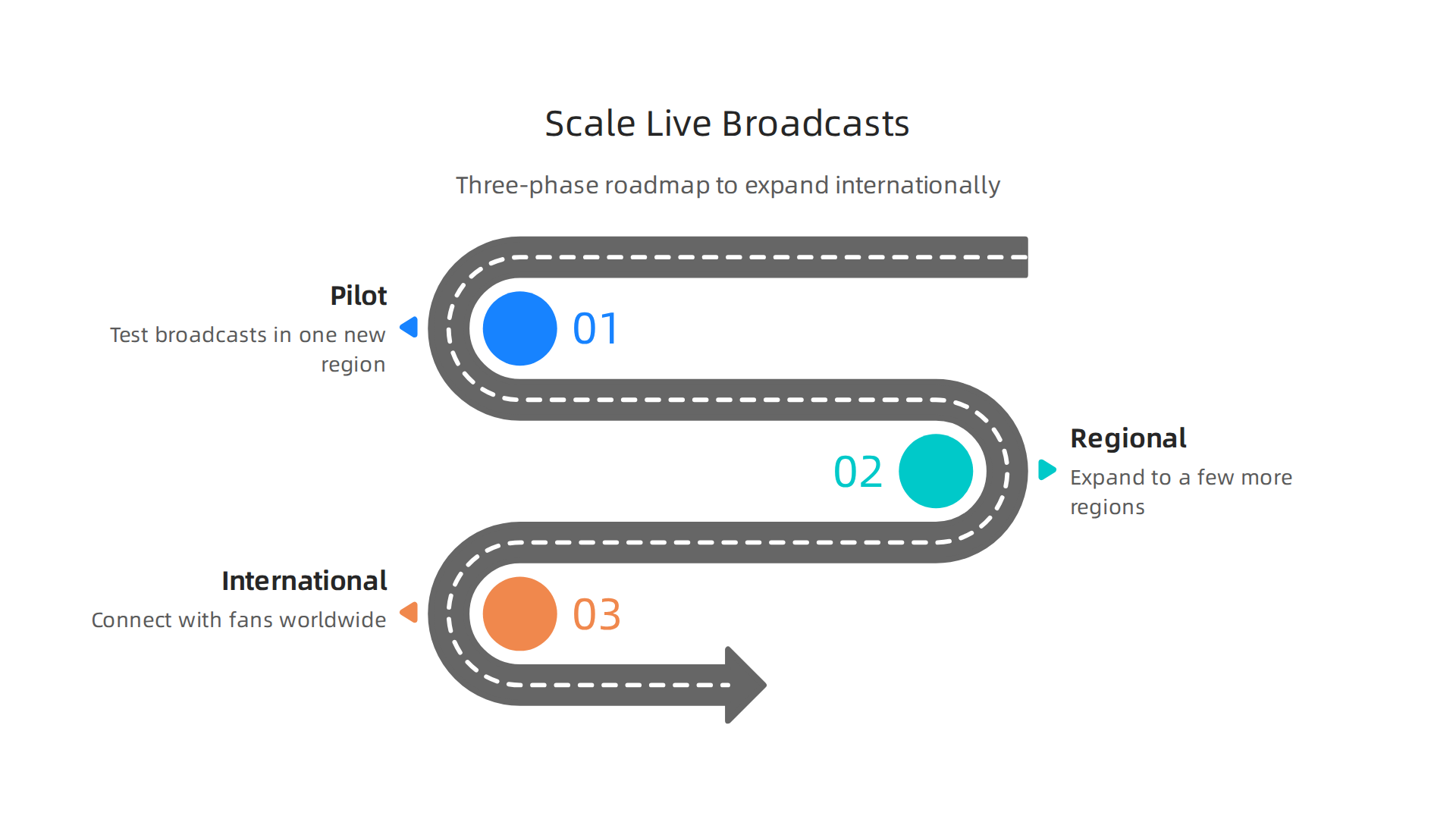
- Phase 1: Pilot Program
Start small. Pick one new region to test your broadcasts. See how fans react and if the technology works well. This helps you find any problems while they are still easy to fix. - Phase 2: Regional Rollout
After a successful pilot, expand to a few more regions. This might be a group of neighboring countries or a continent. For example, nc state football might test broadcasts in a few European countries first. During this phase, you will likely need smart ways to deliver your video, like using many content delivery networks (CDNs) to make sure everyone gets a clear picture, especially during big games. This also helps handle huge numbers of viewers without any problems How to Scale Streaming for FIFA 2026 | AWS & AI Guide. - Phase 3: International Scaling
Now you are ready to go worldwide! This is where you connect with fans in many different countries. To do this right, you need clear rules for how broadcasts are made and shared. You also need to work with fewer, but better, partners. This is called "vendor consolidation." It means having one main company handle most of your broadcast needs, which can simplify things greatly Simplify Your Live Sports Production With A Unified End To End Solution.
Vendor Evaluation Checklist
Choosing the right partners is super important for smooth international broadcasts. Here are things to check when looking for a company to help you:
- Technical Compatibility: Can their technology work with yours easily? They should be able to deliver video very quickly, known as low-latency streaming, which is key for live sports in 2026 Low Latency Streaming (2026): Best Solutions – Dacast. This also means using modern video tools for the fastest delivery Low-Latency Live Streaming for Sports in 2026: LL-HLS vs LL ….
- Global Delivery Experience: Have they successfully broadcasted live sports, like nchc tv or girard sports live, to many different countries before? Do they use big, global networks for video delivery, not just small local ones Live Sports OTT Streaming: Technical Playbook 2026 | MwareTV Blog?
- Commercial Flexibility: Can they offer prices that make sense for your budget as you grow bigger?
- Compliance: Do they understand and follow all the different laws and rules about content and privacy in the countries you want to reach?
Immediate Next Steps to Reduce Risk and Control Costs
To make sure your journey to global broadcasting is smooth and budget-friendly, consider these steps:
- Plan Everything Carefully: Do not rush. A good plan prevents big problems later.
- Choose Expert Partners: Work with companies that really know how to handle live sports broadcasts all over the world. These experts can help you avoid mistakes and save money.
- Focus on Speed (Low Latency): Viewers want to see the action almost as it happens. Make sure your chosen partners can deliver streams with very little delay.
- Review Your Current Setup: Before you expand, look at how you are doing things now. Fix any small issues before they become big ones on a global scale.
By following this roadmap and choosing your partners carefully, your regional league can reach a huge new audience for your football broadcasts. If you are ready to make your global broadcasting dreams a reality, consider reaching out for professional help. Chat now on WhatsApp. You can also Get in touch with TPT GLOBAL for an end-to-end solution that takes care of all your live sports production needs.
Summary
This article explains why regional football leagues are strategic assets for broadcasters and rights holders, and it lays out how to turn local passion into global reach and revenue. It covers the different league types—from professional tiers and college teams to semi-pro clubs—and how those differences affect scale, governance and commercial maturity. The piece walks through common rights models (exclusive, non‑exclusive, streaming-only, packaged), monetization approaches like subscriptions and ad sales, and the contractual and SLA details you must lock down. It also examines high production costs, distribution complexity across linear and OTT platforms, and technical solutions including remote production, cloud workflows and multi‑CDN delivery for low latency. Practical guidance includes KPIs, an RFP checklist, vendor-evaluation criteria and a three‑phase roadmap to scale internationally. The article closes with case-study thinking and next steps to simplify live production by consolidating vendors and adopting end‑to‑end broadcast solutions.