





In 2026, it’s clear that almost everyone uses social media. It’s how people stay connected, share news, and find out about new things. For big companies that show sports around the world, this is a huge deal. They see how much people talk about sports online and want to turn that talk into more viewers for their games.
The power of social media influence helps global sports broadcasters in a big way. When many people share and talk about a sports event or team online, it creates a lot of excitement. This excitement makes more people want to watch the actual games. More people watching means more money for the broadcasters, because ads during popular games are worth more. It also makes the special rights to show these games more valuable for the future. In fact, reports in 2026 show that social media is a key place where brands connect with people, drawing insights from over 900 million online social media conversations. The State of Social Media 2026
But broadcasters also face big hurdles in this changing world of media. It’s hard to send live sports events to people all over the world at the same time. They also need to make sure fans can watch on many different screens, like their TVs, phones, or tablets. This is called multi-platform engagement. Keeping the picture clear, making sure there are no delays, and getting the content to every corner of the globe can be very tricky. Mastering these challenges is key to getting more people to watch and enjoy the games. Mastering global sports broadcasting challenges
This is why thinking about social media influence is not just a nice-to-have, but a must-have for broadcasters today.

They need smart ways to use social media to reach more fans and encourage them to tune in. Often, this means working with a good social media marketing agency or using special online advertising platform tools to spread the word about games and exciting moments. Such efforts help unlock global reach and keep fans engaged.
To understand more about how experts help solve these complex challenges, consider exploring how TPT Global provides cutting-edge solutions for sports broadcasters.
Building a measurement framework for social media influence
Knowing that social media influence is so important, global sports broadcasters need a clear way to see if their efforts are working. It’s not enough to just post things online. They need to know if those posts actually lead more people to watch the games. This is where a good measurement plan comes in.
First, broadcasters must pick the right things to measure. These are called Key Performance Indicators, or KPIs, and they are essential for tracking progress
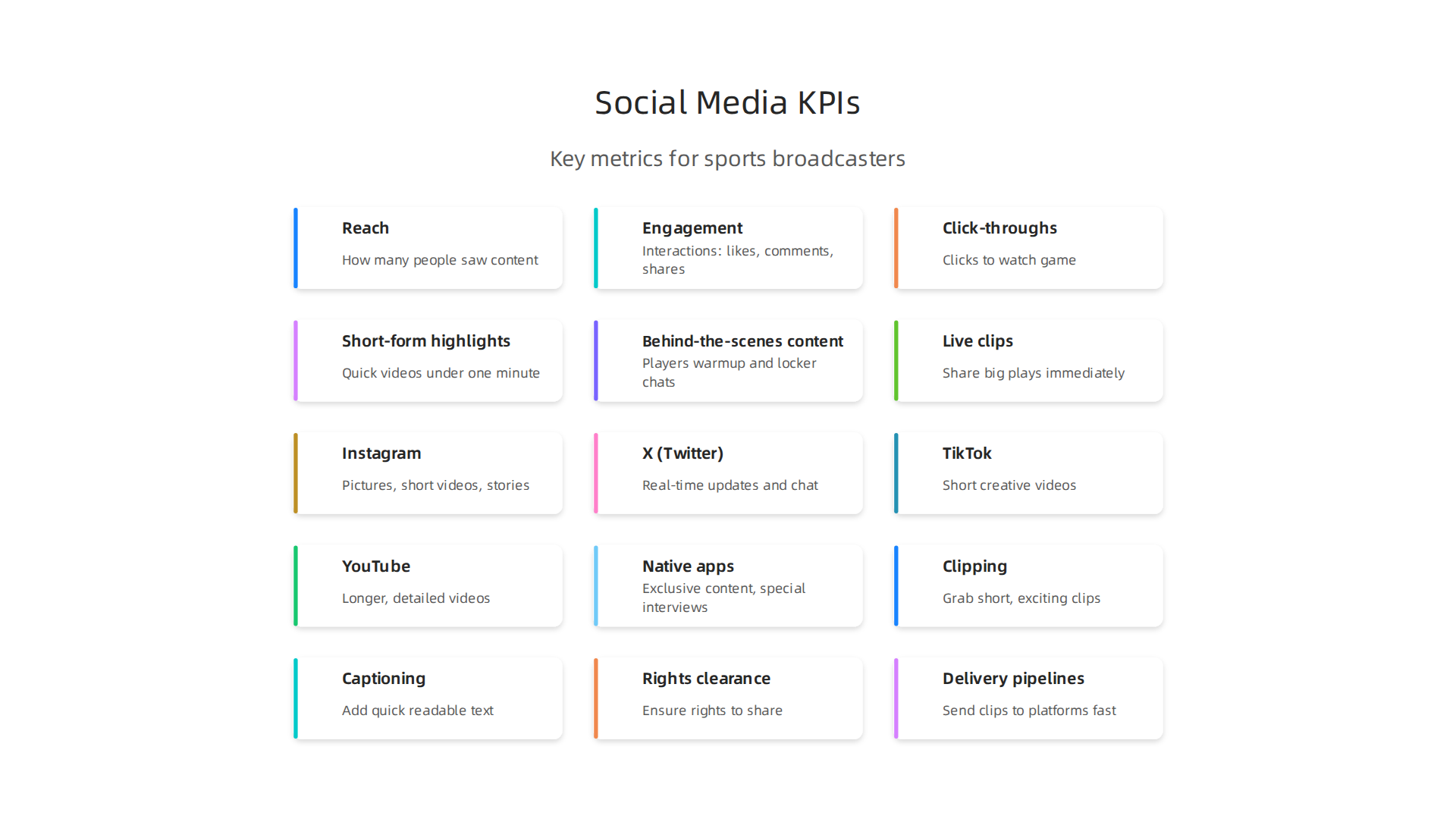
A Practical Guide to KPIs and Benchmarking. They act like scorecards to show if social media actions are helping meet bigger broadcast goals.
- Reach: This tells you how many different people saw your social media content. More reach means more eyes on your message, which could lead to more potential viewers.
- Engagement: This is how much people interact with your posts. Think about likes, comments, shares, and reactions. High engagement shows people care about what you’re sharing. For example, engagement is often calculated by dividing total interactions by the number of followers or reach, as highlighted in a 2026 Social Media Industry Benchmark Report.
- Click-throughs: This measures how many people clicked on a link in your social media post. For broadcasters, this means clicking a link to watch the live game or a replay. A good click-through rate means your social posts are directly driving viewership, with benchmarks available to compare your performance 2025-2026 Benchmarks.
After setting up these KPIs, the next step is to link social media actions to what happens on TV or streaming. This is called cross-platform attribution. It’s like tracing the steps a fan takes: Did they see a tweet, then open their TV app? Or share a video on TikTok, then tell a friend to tune in? Experts say that social media in 2026 is less about quick sales and more about influencing choices people make later Top Social Media Statistics and Trends of 2026 – Business.
To do this well, broadcasters need special tools or help from a trusted social media marketing agency. Agencies like a viral nation influencer marketing agency use advanced analytics to connect the dots between social media campaigns and new viewers. They can also manage your presence on various online advertising platform networks, ensuring your messages reach the right fans. Sometimes, they even use a digital marketing remote team to help track everything no matter where the games are shown.
Having a strong framework to measure social media influence helps broadcasters understand what truly brings in viewers.

It allows them to adjust their plans and make sure every post works towards showing more games to more people. This way, they can build a powerful Broadcast Strategy for Major Sports Properties that really delivers results. This framework is vital for making smart choices and getting the most out of every social media effort.
Ready to see how professional services can elevate your broadcast strategy?
Explore Our Broadcast Services
Designing social content for live sports: formats that drive influence
Once broadcasters know how to measure their social media influence, the next big step is to create content that really makes a difference. It’s about knowing what types of posts get fans excited and make them want to watch more games. Not all social media posts are the same, and different kinds work better for different goals.
What kinds of content work best?
To grab attention in 2026, sports broadcasters need to think about what fans like to see and share.
- Short-form highlights: These are quick video clips, usually less than a minute. Think about a fantastic goal, a big dunk, or a surprising play. They are perfect for fast-scrolling platforms like Instagram Reels and TikTok. These short videos get a lot of shares because they’re exciting and easy to watch. Experts suggest that making short, mobile-friendly videos is a top tip for sports brands today Top 8 Social Media Tips for Sports Brands (A 2026 Guide).
- Behind-the-scenes content: Fans love to see what happens when the cameras aren’t fully rolling. This could be players warming up, locker room chats, or funny moments. These videos help fans feel more connected to the team and its stars. Platforms like YouTube are great for longer videos like interviews and behind-the-scenes clips, while Instagram handles quick player moments 10 Social Media Strategies Used by IPL Teams.
- Live clips and real-time updates: When a big play happens, sharing it right away on social media is very important. This keeps fans who can’t watch the game live in the loop and builds excitement. It also encourages people to tune in. For fast-paced events like the World Cup, posting moments quickly after they happen can bring in many more views 2026 World Cup Social Media Strategy: Full Playbook for ….
These types of content help build a strong social media influence by keeping fans engaged and eager for more.
Turning live games into social media gold
A big challenge for broadcasters is taking the live game feed and quickly turning it into content for social media. This needs smart planning and speedy work.
- Fast workflows: Broadcasters need ways to cut out key moments from a live game and post them almost instantly. This is called a low-latency workflow. It means there’s very little delay between something happening in the game and it showing up on social media. Using advanced video editing techniques can help speed up this process for live sports production.
- Making content for each platform: Different social media platforms work in different ways. A short, punchy video for TikTok might be different from a longer highlight reel for YouTube or a real-time text update on X (formerly Twitter). Broadcasters need to customize their content for each spot. This way, they can reach more fans where they are and keep them engaged.
Designing content this way helps broadcasters not only attract new viewers but also keep their existing audience excited and loyal. It’s about delivering the right content, in the right format, at the right time. For sports organizations looking to improve their content, understanding what makes great sports images for live broadcasts in 2026 is a key advantage.
A specialized social media marketing agency can help broadcasters create these varied content types and make sure they reach the right fans.
Sometimes, an expert team, like a viral nation influencer marketing agency, will use a digital marketing remote setup to manage content creation and posting around the clock, no matter where the games are being played. This ensures that every thrilling moment is captured and shared quickly across every online advertising platform.
Want to see how we help major sports properties create exciting content and maximize their reach?
Watch Our Latest Broadcast Work
Platform-specific strategies: tailoring for Instagram, X, TikTok, YouTube and native apps
Once broadcasters know what kinds of content work best, the next important step is to make sure that content fits each social media platform. Think of it like dressing for different events; what you wear to a formal dinner is different from what you wear to a sports game. Each platform has its own rules and its own audience.
To really build social media influence in 2026, broadcasters need to study what fans do on each app and what each app is good for.
This means thinking about:
- What fans like to see there: Do they want super short videos or long talks?
- When to post: Is it best to post updates every minute or once a day?
- How to share: Are videos better, or quick text messages?
- How to use ads: Can ads help more people see the content?
Let’s look at how different platforms need different plans:
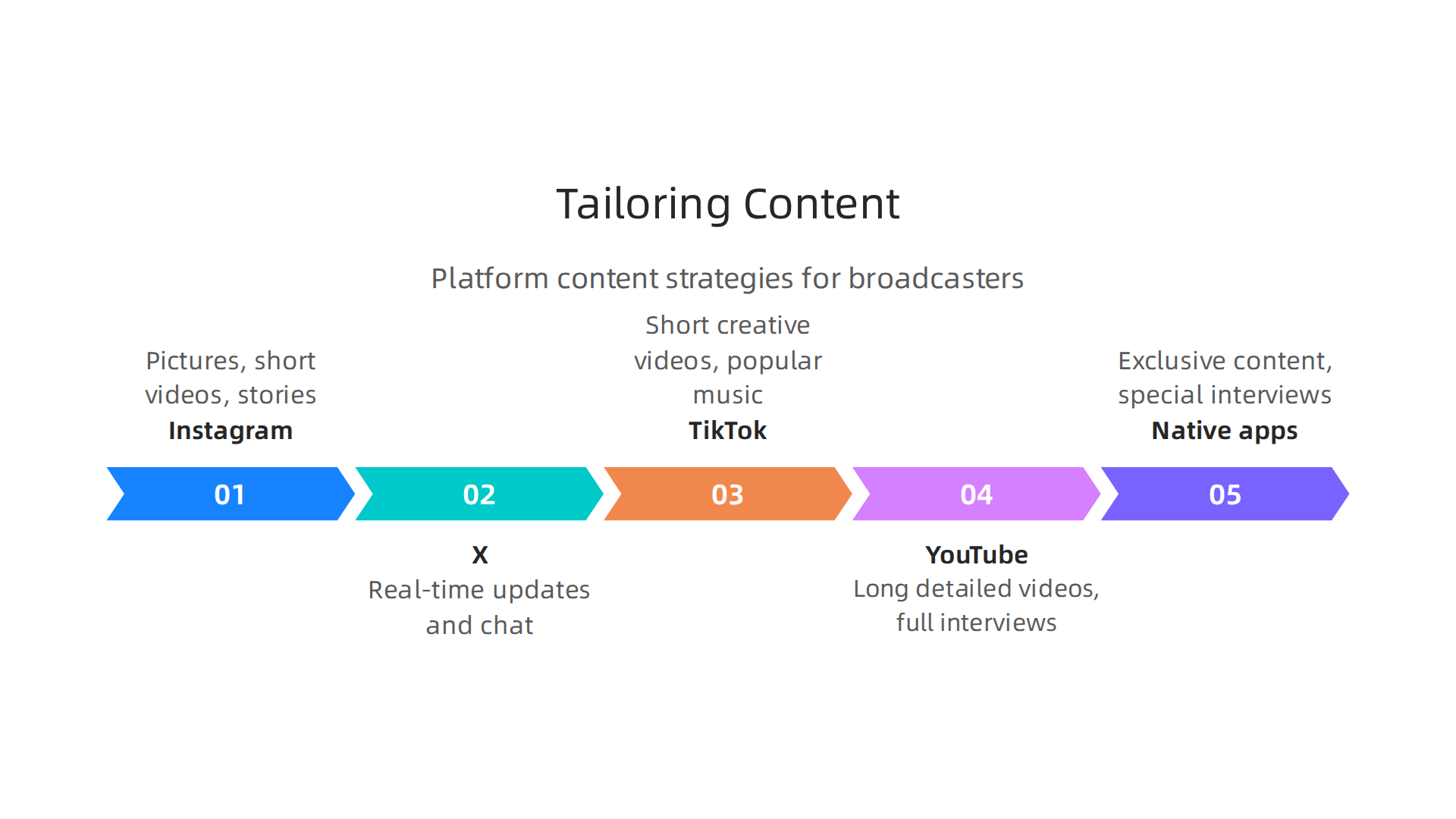
Instagram is all about eye-catching pictures and short videos. Fans love seeing behind-the-scenes moments, amazing highlight reels, and quick stories that disappear after a day. These are great for showing off player personalities and team fun. To do well here, broadcasters should focus on visually stunning content that is easy to watch on a phone screen.
X (formerly Twitter)
X is the place for real-time news and quick updates. When a big play happens, sharing it on X right away is key. Fans go there for live scores, breaking news, and to chat with other fans. Short video clips, quick photos, and text posts that ask questions or share opinions work best. It’s about being fast and part of the conversation.
TikTok
TikTok is for very short, creative videos that often use popular music or funny trends. Sports broadcasters can use TikTok to show unique angles of games, funny player moments, or fan reactions. The videos should be lively and grab attention quickly to stand out in a busy feed.
YouTube
YouTube is where longer, more detailed videos shine. This is perfect for extended highlights, full interviews, deep analysis after a game, or even showing how a team prepares. In fact, for big events like the 2026 World Cup, broadcasters are even encouraged to stream the first 10 minutes of games on YouTube channels to draw viewers in World Cup 2026 reshapes sports broadcast rights deals. This helps capture a larger audience.
Native apps
Many sports organizations also have their own apps. These are great for exclusive content that fans can’t find anywhere else, like special interviews or behind-the-scenes access. This makes fans feel extra special and connected to the team.
Making algorithms work for you
Each social media platform has its own "brain" called an algorithm. This algorithm decides what people see based on what they like and how they interact. To get more people to see sports content, broadcasters need to understand these brains. Algorithms often like posts that get a lot of engagement, like comments and shares, and videos that people watch all the way through.
Broadcasters can also use ads on these platforms. By paying a little bit, they can make sure their exciting game moments and other content reach even more fans. This is a powerful way to amplify live sports moments and make sure no one misses out, especially when considering the many channels and streaming platforms for global sports broadcasting. These strategies help to protect broadcasting rights in the digital age and ensure proper distribution.
Designing these detailed plans for each platform can be a big job. This is where a social media marketing agency or even a viral nation influencer marketing agency comes in handy. They often use a digital marketing remote setup to handle content for every online advertising platform. This ensures that the right content reaches the right fans at the right time, boosting social media influence and overall viewership.
For large sports organizations aiming to optimize their digital content strategy and reach audiences around the globe, it’s essential to have a clear plan for each platform. Learn more about how to create a strong strategy for reaching a global audience by checking out our insights on a modern media platform strategy for major sports organizations.
Ready to enhance your broadcast quality and reach?
Explore Our Broadcast Services
To turn those smart social media plans into real action, broadcasters need smooth ways of working. It’s like having a great recipe; you still need the right kitchen tools and a good cooking process to make a delicious meal. For sports broadcasters in 2026, this means setting up clear steps and using the right help to get content from a live game to all the different social media apps.
How content goes from game to social media
Imagine a big play happens. Here’s a checklist of what needs to happen quickly:
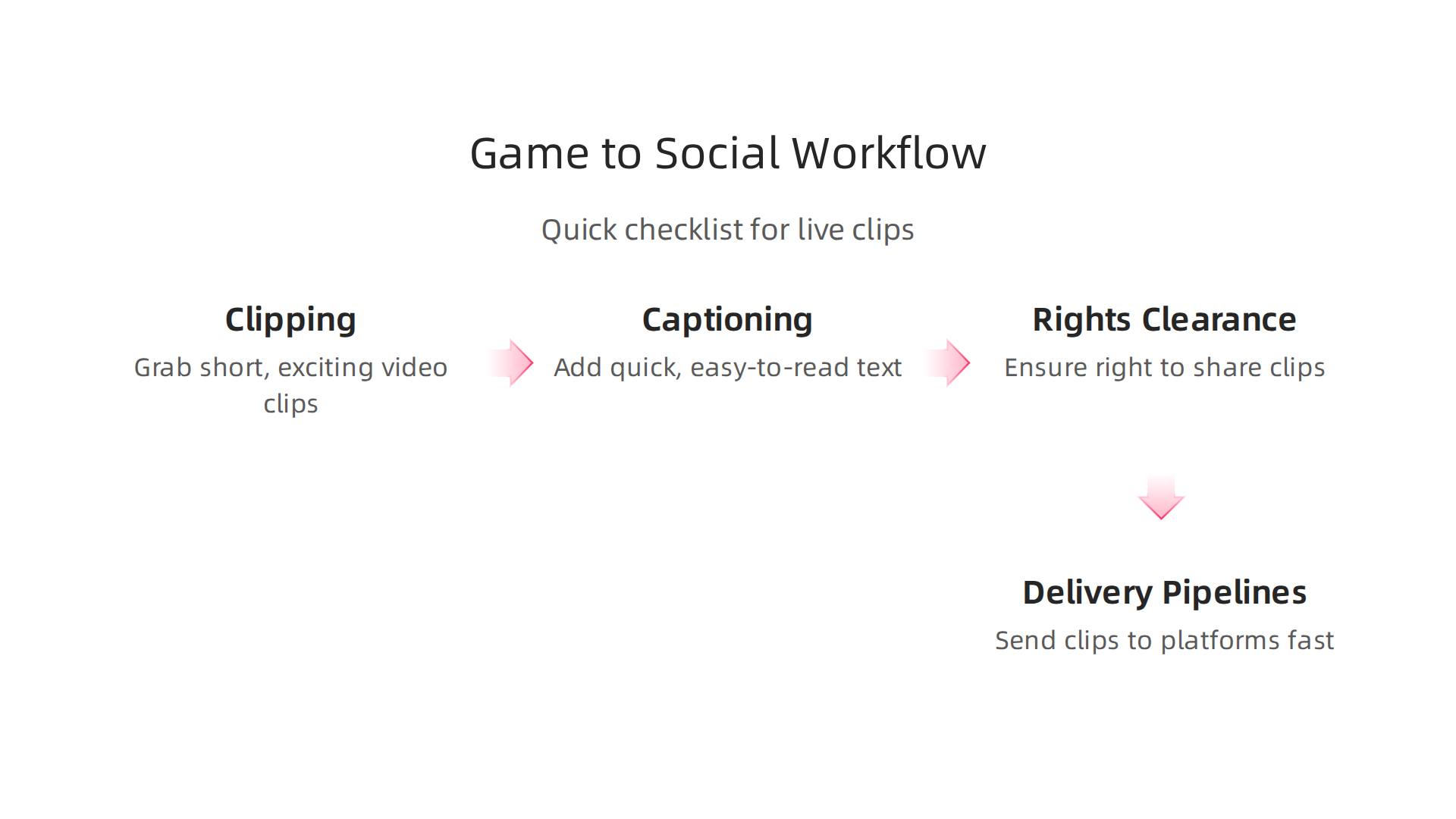
- Clipping: Fast teams grab short, exciting video clips from the live game. These are the moments fans want to see again and again.
- Captioning: Add quick, easy-to-read text or captions to explain what’s happening or to ask fans what they think.
- Rights clearance: This is super important. Broadcasters need to make sure they have the right to share these clips on social media. Laws around what counts as "broadcasting" now include online-only shows, as seen in decisions like What the BSA’s online decision means in 2026. This means even a quick clip needs to follow rules. A "broadcasting organization" is a legal group that decides what to show to the public definition of a broadcasting organization, and getting permission for content is a must, according to a Copyright Guide for Broadcasters. There are even new Broadcasting and Online Content Regulations, 2026 that govern this.
- Delivery pipelines: This is the fast highway that sends the clips and captions to all the social media platforms without delay. Speed is everything when sharing live sports moments.
Choosing your helpers and tools
Deciding who helps with these tasks is a big choice. Some broadcasters like to work with one main company that handles everything. This is called "vendor consolidation." Others prefer to pick the best company for each specific job, like one for video editing and another for social media posting. This is a "best-of-breed" approach.
Many sports groups work with a specialized social media marketing agency or even a viral nation influencer marketing agency. These agencies often use a digital marketing remote setup, meaning they can work from anywhere to manage content across every online advertising platform.
No matter which way they choose, it’s vital to have strong agreements, called Service Level Agreements (SLAs), that promise content will be delivered quickly. When managing live sports, even a few seconds can make a big difference in catching fan attention. TPT Global helps big sports groups with these complex tasks, providing solutions that cover live production, streaming, and creative content to ensure everything runs smoothly.
To truly build strong social media influence, a clear and quick process for sharing content is just as important as the content itself.
Want to see how we help sports broadcasters create engaging social content?
Watch Our Latest Broadcast Work
Do you have quick questions about setting up your own social distribution workflows?
Chat now on WhatsApp
For broadcasters, building strong social media influence is not just about being fast; it’s also about being right. Every piece of content shared must follow strict rules and agreements. Think of it like a game with very specific boundaries. You can play excitingly within those lines, but stepping outside them can cause big problems.
Rights, compliance and broadcasting standards for social amplification
Sharing live sports moments on social media is exciting, but it comes with a lot of rules. Broadcasters need to understand media rights, how to use third-party content, and what happens if a social media platform decides to take content down. These standards and contract details affect what can be clipped and published on social channels.
First, it is important to know that what counts as "broadcasting" now includes online content. This means even a quick clip posted online must follow the same serious rules as content shown on TV. For example, in 2026, the Broadcasting Standards Authority made a key decision that shows they now oversee online media outlets that livestream to audiences, much like traditional TV channels WK and The Platform Media NZ Ltd & NZ Media Holdings …. Laws like the Broadcasting and Online Content Regulations, 2026 clearly lay out these rules.
Every video clip, photo, or audio snippet needs proper permission. If broadcasters do not have the right to share content, it can lead to big legal issues. A Copyright Handbook provides guidance on these important matters. The way broadcasting rights are managed is changing, especially with global events. For example, the World Cup in 2026 had new deals that shaped how broadcasters can use creator content World Cup 2026 reshapes sports broadcast rights deals. This includes rules about sharing the first few minutes of matches on platforms like YouTube.
Broadcasters also need to consider platform rules. Social media sites like TikTok, Instagram, and YouTube have their own strict policies. If a clip breaks copyright rules or content standards, the platform can take it down. There are even discussions on how to better prevent online piracy of sports content, with calls for platforms to explain why content is removed Countering online piracy of sports and broadcast in the EU. This is why ensuring all content is cleared for use across every online advertising platform is essential.
Many broadcasters work with a specialized social media marketing agency or even a viral nation influencer marketing agency to help manage these complex tasks. These agencies often use a digital marketing remote setup, meaning they can help from anywhere in the world. They make sure that all the content shared is not only exciting but also fully compliant with all legal and contractual agreements. This helps protect the broadcaster and builds trust with fans, strengthening their social media influence.
To navigate the complex world of media rights and ensure seamless content delivery across all platforms, specialized partners can be invaluable.
Trans Group
Understanding and following all these rules is a critical part of a winning strategy for global sports broadcasting. You can learn more about delivering excellent content by reading about Mastering Global Live Sports Broadcasts for World-Class Delivery.
Moving from the rules to the actual work, getting content onto social media channels quickly means broadcasters need smart ways to move video fast. It’s like needing a super-speedy delivery system to feed hungry social media platforms with fresh sports moments right as they happen. This is key for building strong social media influence.
Scaling production and low-latency delivery to feed social channels
To send out sports highlights almost instantly, broadcasters use special setups. These setups focus on something called "low-latency delivery." Think of latency as the tiny delay between when something happens live and when you see it on your screen. For social media, we want this delay to be as short as possible, sometimes less than half a second Low Latency Streaming Solution.
One important part of this is using "edge processing." Imagine you’re at a live game. Instead of sending all the video data all the way back to a main office far away to be processed, edge processing handles some of the work very close to where the game is happening. This could be right at the stadium. This makes everything much faster, keeping things interactive Broadcast Ops 2026: Live Overlays, Edge PoPs and AI. This can also involve using smart AI to figure out which parts of the game are most exciting, like a big goal or a great play. AI can then automatically create clips of these moments The technology behind every live sports moment.
Another key tool is a Content Delivery Network, or CDN. A CDN is like a network of many servers spread out around the world. When you want to watch a video, the CDN sends it to you from the server that is closest to you. This makes the video load faster and play smoother. For live sports, CDNs use special tricks like "partial segments" to send tiny pieces of video as soon as they are ready, instead of waiting for a whole video clip to be complete Low-Latency HLS with CDN | 2–3s Live Streams Guide. They can also use "chunked transfer encoding" which means video data is sent in small parts as it arrives, instead of waiting for bigger chunks Ultra Low Latency Video Streaming: Developer Guide.
Making sure clips get to social media quickly also involves good planning and enough people and tools. This is called operational capacity. Broadcasters need:
- Enough Staff: People who can quickly review clips, add captions, and make sure they look good.
- Automated Clipping: Using computer programs and AI to find the best moments and cut them into short videos without much human help Clips & Highlights Generation. This way, broadcasters can quickly publish content to many social platforms at the same time Live Clipping, Editing, and Publishing.
- Quality Control: Checking that all clips meet high standards for video quality and sound.
- Multi-Region Redundancy: This means having backup systems in different places. If one system goes down, another can immediately take over, so there are no interruptions. It’s like having a spare tire for your car, but for video delivery.
Putting all these pieces together helps broadcasters deliver amazing live sports content to social media platforms at lightning speed, boosting their connection with fans around the world. To learn more about how to set up these advanced systems, you can check out details on How to Deliver Flawless Global Live Sports Broadcasting in 2026.
Achieving world-class delivery for global sports requires specialized expertise.
Explore Our Broadcast Services
After making sure clips reach social media fast and engaging fans with world-class delivery, the next big step is to understand if all that effort is really paying off. How do you measure the return on investment, or ROI, for building strong social media influence? It’s about seeing how your fast and exciting content helps your brand and brings in value.
Short-Term Success and Engagement
For quick results, broadcasters look at how many people watch, share, and talk about their clips. These are called engagement metrics. When a video of an exciting play gets shared many times right after it happens, that shows strong social media influence. In 2026, advertisers carefully track this kind of engagement, along with how many people click on ads or use special codes America’s Biggest Live Sports Event: What It Reveals About Advertising. This instant feedback helps you see the direct impact of your content.
Long-Term Value and Sponsorship Deals
Over time, building strong social media influence leads to more loyal fans. This makes your sports brand more valuable to everyone, including potential sponsors. A big, active audience means you can ask for better deals from sponsors. By using all the data you collect about your fans, you can clearly show sponsors the real value they will get, which helps you secure top-tier partnerships The Social-First Sports Revolution: How Data-Driven Ecosystems Are Redefining Commercial Value. This smart use of data is key to success.
Getting Ready for New Technologies
Looking ahead, new technologies will change how we connect with sports fans.
-
Augmented Reality (AR) and Virtual Reality (VR): These tools can make watching sports feel incredibly real. Imagine seeing game stats appear right in your living room with AR, or feeling like you’re on the field with VR. These immersive experiences will create even more excitement and boost your social media influence. To start, sports organizations might run small trials, called pilots. This could mean trying out AR filters for social media apps or creating short VR highlight clips.
-
5G and AI-Assisted Clips: Faster internet through 5G technology means even quicker delivery of high-quality video to phones and other devices. This makes real-time social media moments even smoother and more reliable. Also, artificial intelligence (AI) is getting smarter at finding the best parts of a game. It can even learn what different fans like and create personalized video clips just for them. These AI-powered clips, shared at 5G speeds, will greatly improve how fans engage with content and how broadcasters can make money from it, as shown in surveys from 2026 2026 Sports Fan Engagement, Monetisation & AI Trends Survey. This turns a sports organization into a powerful digital marketing remote content provider.
To stay ahead, broadcasters must keep trying new ideas and find ways to make their content more exciting and personal. This involves using AI for real-time highlights and making sure your marketing strategy is fast, emotional, and perfectly fits the context of the sport How Brands Can Finish Strong this Sports Marketing Strategy. It also means thinking about how to get the most out of your online advertising platform and using winning strategies for global sports broadcasting.
If you are looking to bring these advanced strategies and technologies to your sports broadcasting efforts, we are here to help. Why Choose TPT Global.
Have quick questions or need a quote for your next broadcast project? Chat now on WhatsApp with our team.
Summary
This article explains why social media influence has become essential for global sports broadcasters and shows how to turn online buzz into real viewership and revenue. It covers how to build a measurement framework with clear KPIs (reach, engagement, click‑throughs), trace social actions back to TV or streaming outcomes, and design content formats—short highlights, behind‑the‑scenes clips, and live updates—that perform across platforms. The piece also walks through fast clipping workflows, delivery pipelines, and the technical tools (edge processing, CDNs, low‑latency streaming) needed to publish moments instantly. It highlights legal and rights issues for online clips, offers approaches for staffing and vendor selection, and maps how to demonstrate short‑term engagement and long‑term sponsorship value. Readers will learn practical steps to plan, execute, measure, and scale social distribution so their broadcast assets reach more fans worldwide, and when to bring in specialist agencies or tech pilots to accelerate results.