





Why a centralized broadcast networks & local TV channel directory matters for global sports
Imagine you’re in charge of sharing a big sports game with fans all over the world. It sounds exciting, right? But it’s actually quite a puzzle. Large sports companies face many tough problems when they try to get their games onto TV screens and devices everywhere. They need to work with many different broadcast networks and local TV channels. This can be tricky.
Think about how many different local channels exist, like WBAL TV in Baltimore or WWL TV in New Orleans, just in one country. Now, picture hundreds of these channels and many different broadcast networks in countless countries. Each has its own rules, times, and ways of working. Getting a game shown in every country means talking to all these different groups. This is a huge job for anyone working in a broadcast services group. It costs a lot of money and time to manage all these connections. Sometimes, it’s hard to make sure every fan gets to see the game clearly, no matter where they are. In 2026, regulations for broadcasting can also change often, making things even more complex for international distribution Sports Broadcasting Services.
This is why having one easy-to-use directory for all broadcast networks and local TV channels is so important. It helps leaders like broadcast directors and top executives find the right channels and decide how to share their sports events quickly.

They can look up all the options in one place. This makes it much simpler to plan how a big game will reach fans in different cities and countries. It helps them make smart choices about where and how to show their content, making sure no fan misses out.
To learn more about how to make sports broadcasting work well around the globe, you can check out our page. Learn More About TPT Global
Why broadcast networks are central to global sports distribution
While having a good directory helps find channels, it’s really the broadcast networks themselves that make global sports possible. These networks are the very heart of how sports reach fans and how companies make money from showing games. They are the backbone for getting sports events to people everywhere.
Think about all the different ways you watch TV. There are regular TV channels that you pick up with an antenna (terrestrial). There are also cable TV services and satellite dishes that bring many more channels to your home. In 2026, we also have online streaming services, often called OTT partners, like watching a special msnbc live stream online. All these different types of broadcast networks work together to deliver sports to millions of homes and devices.
These networks are super important for two big reasons. First, they help sports reach a huge number of fans. A major game needs to be seen by as many people as possible, whether they’re in a big city or a small town. Broadcast networks make sure this happens. Second, they are how sports organizations earn money from their games. Companies pay to show games on these networks, which is called buying "media rights." This money helps fund the sports themselves.
Choosing how to show a game involves some decisions. Using traditional TV, like cable or satellite, can reach a very wide audience all at once. It’s great for big events everyone wants to see. But sometimes, sports companies also want to reach specific groups of fans using digital ways. Online streaming lets them send content directly to people who might be very interested in a certain sport or team. This can bring in new fans and offer special viewing experiences.
Both ways have their good points. Traditional TV offers broad, stable reach. Digital options offer a more targeted approach and can open new ways to make money. A good broadcast services group needs to understand all these options. They need to figure out the best mix of traditional TV and digital platforms for each sport or game. This helps them get the most fans and the best value for their broadcasting rights.
It’s also important to remember that the rules for broadcasting can change. Governments often update their guidelines for how TV and online content can be shown. For example, the Federal Register has outlined Broadcast Station Rule Updates in 2026, which can affect how broadcast networks operate. Keeping up with these rules is a big part of global distribution.
To make sure your sports content reaches a global audience smoothly, it’s vital to have a clear strategy.
Ready to connect with a wider audience and enhance your sports broadcasting? Explore Our Broadcast Services
When thinking about how to get a game out to the world, a sports organization has to balance many things. They need to find the right partners for both old-school TV and new online platforms. They also have to make sure the quality is great and that fans everywhere can watch easily. It takes smart planning to master global sports broadcasting. You can learn more about how to do this by reading about unlock global reach modern media platform strategy for major sports organizations.
To make sure your sports content reaches a global audience smoothly, it’s vital to have a clear strategy. But even with the best plans, some big technical challenges can get in the way. These challenges need smart solutions to deliver sports perfectly to fans everywhere.
Key technical challenges: consistency, latency, and global feed delivery
When a big game is broadcast, the goal is to make it feel like everyone is watching together, no matter where they are. This means dealing with three main technical hurdles: making sure the picture and sound are always clear (consistency), making sure there’s no annoying delay (latency), and getting the game to every corner of the world without issues (global feed delivery).
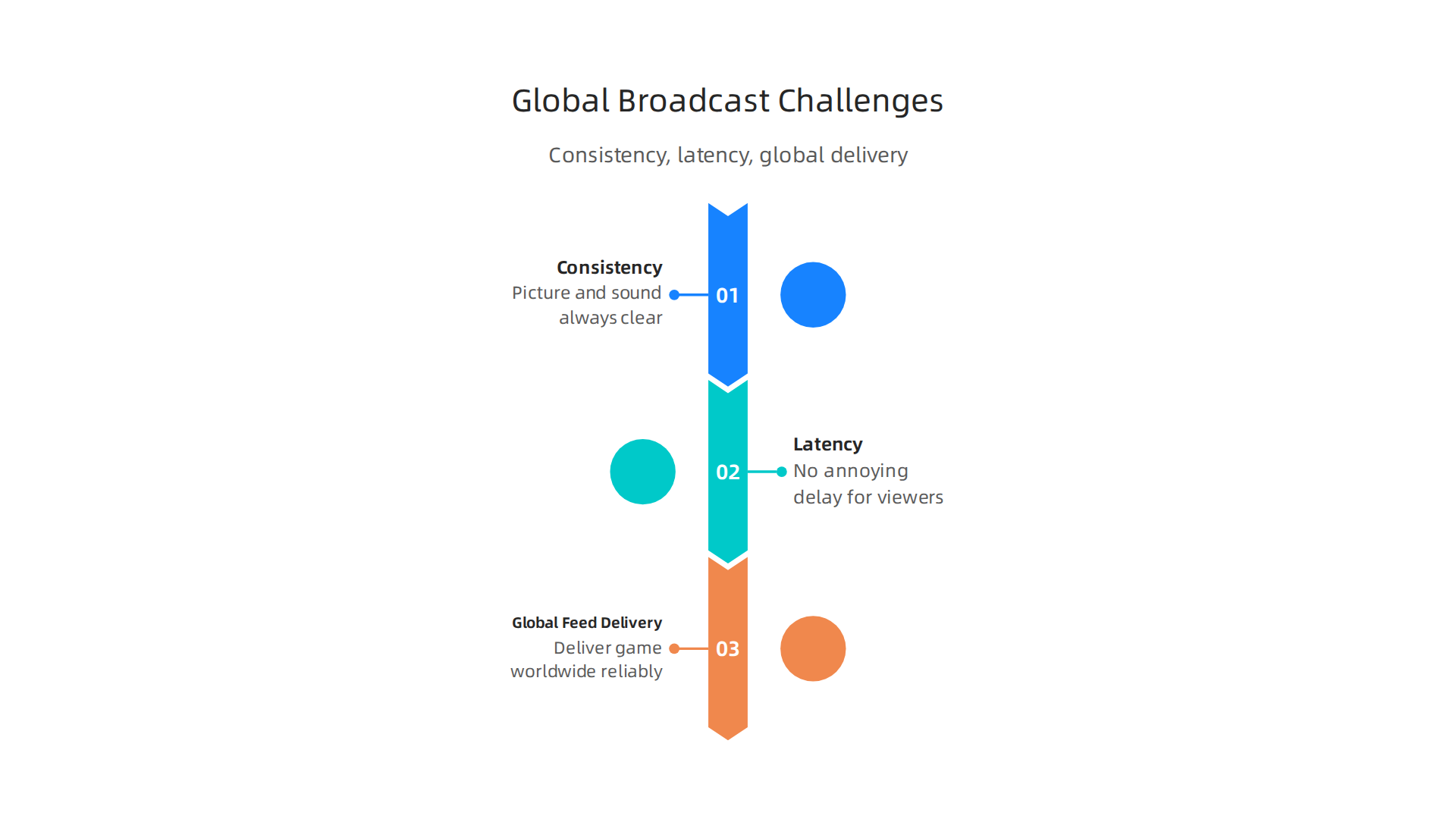
Keeping it Consistent: Signal Integrity
Imagine watching your favorite team, and suddenly the picture gets fuzzy or the sound cuts out. That’s a problem with signal integrity. Broadcast networks must send out a clean, strong signal from the stadium all the way to your TV or phone. This can be tough because of long distances, different types of equipment, and even bad weather. For example, a global broadcast services group needs to make sure the signal for a live football match in Europe looks just as good in Asia or America.
Beating the Delay: Low Latency Streaming
Latency is how long it takes for a live event to travel from where it’s happening to your screen. For sports, even a tiny delay can ruin the fun. You might see a goal on your phone seconds after your neighbor cheers, or you could see a spoiler online before you even watch the play. People want to experience the action as it happens, like watching a special Toward One-Second Latency: Evolution of Live Media Streaming. To keep fans happy in 2026, streaming needs to be as close to real-time as possible. This is a big challenge, especially when sending live video to millions of people at once, like during a popular msnbc live stream of a major event.
Getting it Everywhere: Global Feed Delivery
Delivering sports globally means sending the live video feed across many different countries and time zones. Each region might have its own broadcast rules and internet speeds. Making sure the game reaches every fan, whether they’re watching on traditional TV or an online app, is a complex dance. This involves many different systems working together perfectly. For example, some solutions use a Hybrid Satellite–Cloud Architecture for Large-Scale Live Sports Broadcasting to help distribute content broadly.
Smart Ways to Handle These Challenges
To overcome these technical problems, sports organizations and broadcast networks use clever setups:
- Content Delivery Networks (CDNs): Think of CDNs as many mini-warehouses for video all around the world. Instead of sending the video from one central place, a CDN sends it from a server that’s closer to you. This makes the video load faster and reduces delays. CDNs are super important for delivering the next generation of live sports content seamlessly.
- Redundant Feeds: This means having backup plans for everything. If one video signal goes down, another one is ready to take its place instantly. It’s like having a spare tire, but for your live broadcast. Companies also build resilience in TikTok’s Global Video Delivery by having many backup options.
- Monitoring: Teams constantly watch the broadcast feed and the network to catch any problems right away. Special tools help them see issues before they affect viewers, so they can fix things quickly.
Mastering these technical challenges is a big part of successful global sports broadcasting. It takes specialized knowledge and advanced systems. You can learn more about how to do this by reading about mastering global live sports broadcasting challenges.
If you’re looking to ensure your sports broadcasts are flawless, it helps to have expert guidance.
Request a Broadcast Consultation
After making sure the technical side of things is handled, there’s another important step: knowing exactly which TV channels are where. To deliver sports globally, you need a clear list of all the local broadcast networks that might show your content. This is where a reliable lookup table, also called a channel directory, comes in handy. It’s like a phone book for all the TV stations around the world.
Local TV Channel Directory: How to Build and Use a Reliable Lookup Table
A local TV channel directory is simply a well-organized list of television channels. It helps broadcast networks and sports organizations figure out where their games can be shown and who they need to talk to. Think of it as a master list that makes global broadcasting much simpler. Many places offer public lists of channels, like those found in an Open-EPG – The #1 Place for your EPG XML TV Guide Needs! or specialized databases that list channels by country and region, such as the IPTV Database: Open-Source TV Channel Directory.
Essential Fields for Your Channel Directory
For a channel directory to be truly helpful, it needs to have key pieces of information for each entry. Here are the most important parts:
- Country and Region: Knowing where a channel is located is the first step. This helps you understand local rules and viewer habits. Some directories are even organized by Channel Listings by Region to make this easier.
- Network Name: This is the name of the TV station or streaming service. Examples could be a local news channel like
wbal tvorwwl tv, or a larger network that might carry anmsnbc live streamfor special events. - Channel Type: Is it a free channel that anyone can watch? Is it a paid channel that needs a subscription? Or is it an online-only streaming service? This changes how you sell or share your content.
- Feed Availability: How does this channel get its signal? Do they take it from a satellite, through fiber optic cables, or over the internet? This helps a
broadcast services groupplan the best way to send the game to them. - Contact Information: Most importantly, you need to know who to call. This includes the general contact for the station and, very key, the contact for their "rights desk." This is the team that handles agreements for showing specific sports events.
How a Standardized Directory Helps Your Sports Broadcasts
Using a well-made channel directory brings many good things for global sports broadcasting:
- Speeds Up Negotiations: When all the information is neatly organized, it’s much faster to make deals for broadcasting rights. You won’t waste time searching for contact numbers or technical details. This helps you quickly secure agreements to show your sports content around the world.
- Reduces Vendor Churn: A clear and easy-to-use directory means fewer mistakes and misunderstandings. When you provide clear information and know what each partner needs, they are more likely to stay happy and continue working with you. This means less "churn," which is when partners leave.
- Simplifies Rights Clearance: Sports content often has specific rules about where and when it can be shown. This is called "localized rights." A good directory helps you quickly see who has the right to show what in each area. This avoids legal problems and makes sure your content reaches the right fans without issues. It helps you unlock global reach modern media platform strategy for major sports organizations.
By having this master list, any broadcast networks or broadcast services group can deliver sports content more smoothly and efficiently. It’s a vital tool for making sure your hard work reaches every fan, everywhere.
Are you interested in seeing how top-tier broadcasts are put together?
Watch Our Latest Broadcast Work
Now that you have a good list of channels and who to talk to, the next big step is to understand how your sports content will reach fans. This means looking at the different ways TV signals and streams travel. Each way has its own special features, like how fast the picture gets to the screen or how far it can go.
Let’s break down the main types of ways to send out broadcasts:
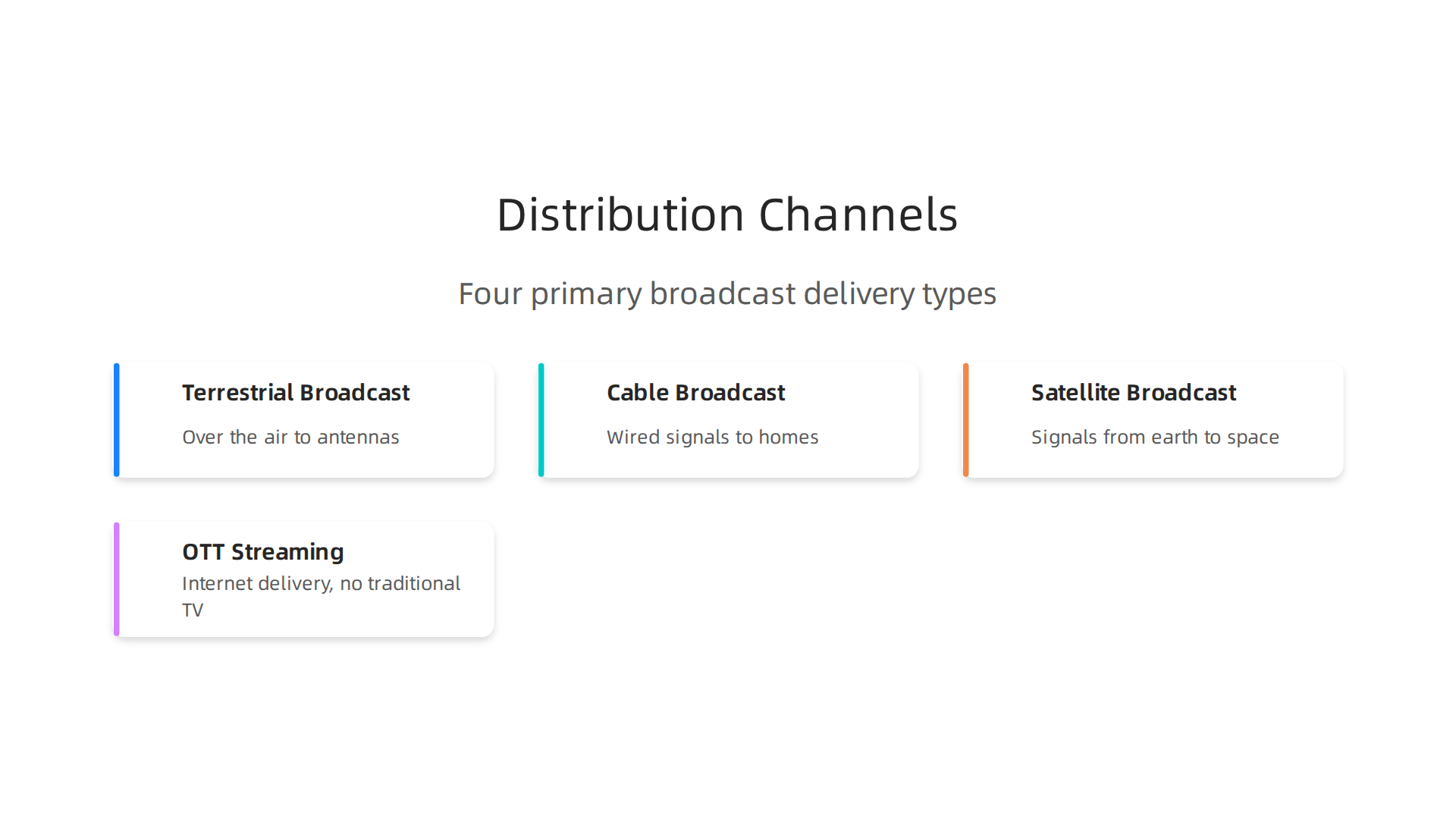
Terrestrial Broadcast
This is the oldest way to watch TV. Terrestrial broadcasting sends signals over the air, directly from towers to antennas on homes.
- How it works: Think of local channels like
wbal tvorwwl tv. They send their signals from a tall antenna, and you can pick it up with an antenna on your roof or TV. - Good points: It’s often free for viewers and reaches a lot of people in a certain area. The picture usually arrives very quickly with almost no delay.
- Things to think about: The reach is limited to a local area, and there aren’t as many channels as other options. Setting up agreements with these
broadcast networksusually happens one by one in each region.
Cable Broadcast
Cable TV brings signals through physical wires that run to homes.
- How it works: You pay a service provider, and they send many channels through a cable directly to your television.
- Good points: You get more channels than with terrestrial TV, and the signal is usually very steady. The delay is still very low, which is great for live sports.
- Things to think about: Viewers have to pay for a subscription, and you can only get it where cable lines are set up. Agreements are made with cable companies to carry your sports events.
Satellite Broadcast
Satellite broadcasting sends TV signals from earth up to satellites in space, which then beam them back down to dishes on homes or other broadcast stations.
- How it works: This is how many channels with very wide reach operate. Imagine watching cricket from across the world with the official ICC Cricket broadcast.
- Good points: It can cover huge areas, even whole continents, and reach very remote places where cable or terrestrial signals can’t go.
- Things to think about: The signal can sometimes be affected by bad weather, and there’s a small delay because the signal has to travel so far to space and back. Broadcast services groups need agreements with satellite providers to use their network.
OTT (Over-the-Top) Streaming
OTT stands for "over-the-top" and means watching content over the internet, without needing a traditional cable or satellite TV service.
- How it works: This includes services like Netflix, Hulu, or watching an
msnbc live streamon your computer or smart TV. You access content directly through apps or websites. - Good points: OTT offers a huge global reach, can be watched on many devices, and gives content owners many ways to make money. For instance, sports OTT services in 2026 use different payment models, like subscriptions (SVOD), pay-per-view (TVOD), or free options with ads (AVOD and FAST) according to an expert blog on OTT Sports Streaming in 2026. Streamers are expected to spend a lot on sports rights this year, with a forecast of US$14.2 billion in 2026 alone, as highlighted by Streamers to spend ‘US$14.2bn’ on sports rights in 2026.
- Things to think about: The quality depends on the viewer’s internet speed, and if not set up properly, it can have more delays than live TV.
Hybrid Strategies: Combining for Best Results
In 2026, many sports organizations are using a "hybrid" approach. This means they combine traditional TV (terrestrial, cable, satellite) with new streaming options.
- Why it works: This way, they can reach almost everyone. Older fans might still prefer watching on cable, while younger viewers often choose to watch live sports through streaming services, as a report from Ampere Analysis shows.
- Bigger Audience, More Value: By mixing and matching, sports brands can reach the largest possible audience and get the most value for their broadcasting rights. In fact, hybrid viewing models are becoming stronger as streaming blends with sports broadcasting, according to Hybrid Viewing Models Solidify as Streaming Integrates into Premium Sports Distribution. This smart mix helps unlock new money and keep fans engaged. You can learn more about picking the right platforms in our guide on choosing live TV channels and streaming platforms for global sports broadcasting.
Managing all these different ways to send out sports content can be tricky. It requires special skills and the right tools to make sure everything runs smoothly and reaches fans quickly, no matter where they are. This is part of mastering global live sports broadcasting challenges.
Ready to see how combining these channels can boost your sports broadcasts?
Explore Our Broadcast Services
Managing all these different ways to send out sports content can be tricky. It requires special skills and the right tools to make sure everything runs smoothly and reaches fans quickly, no matter where they are. This is part of mastering global live sports broadcasting challenges.
Ready to see how combining these channels can boost your sports broadcasts?
Explore Our Broadcast Services
Vendor management and full‑stack solutions for sports broadcasters
After learning about all the ways to deliver sports content, the next big question is: who will help you do it? Many sports organizations work with different companies for each part of the broadcast process. This can mean one company for satellite, another for streaming, and yet another for graphics. But this approach can quickly become complicated.
Why a single "full-stack" vendor makes sense
Imagine trying to build a house by hiring a different person for every single tiny job. One person for each window, another for each door knob. It would be a mess! That’s a bit like working with many different suppliers for your sports broadcasts. Instead, a "full-stack" vendor is like hiring one main builder who handles everything from start to finish.
Choosing one company that offers a complete solution, sometimes called a "single-window" approach, has many good points:
- Easier Agreements: You only have one main agreement to manage instead of many. This simplifies things like Service Level Agreements (SLAs), which are promises about how well the service will perform. A single vendor is responsible for meeting these promises, making accountability clearer, as seen in case studies on vendor consolidation.
- Less Risk: When you have many vendors, different systems might not talk to each other well. This is called "integration risk." A full-stack vendor makes sure all parts of the broadcast work together perfectly, lowering the chances of problems. It’s about grouping related parts together for better management, according to experts discussing vendor consolidation in events.
- Simpler Work: With one vendor, you have one main point of contact. This makes planning, managing, and troubleshooting much simpler. It can even lead to big savings and more efficient operations, with some companies reducing many suppliers down to one and saving a lot of money, as highlighted by a case study on centralized global event management.
This means that instead of managing multiple broadcast services group connections, you deal with just one. This makes reaching audiences on wbal tv, wwl tv, or via an msnbc live stream much more straightforward.
If you are looking for a complete solution for your sports broadcasting needs, consider working with Trans Group, a full-stack agency that provides a single-window solution for every aspect of the game.
How to pick the best full-stack vendor
When choosing a full-stack vendor for your sports broadcasting needs in 2026, look for a partner that can really deliver. Here’s a simple checklist:
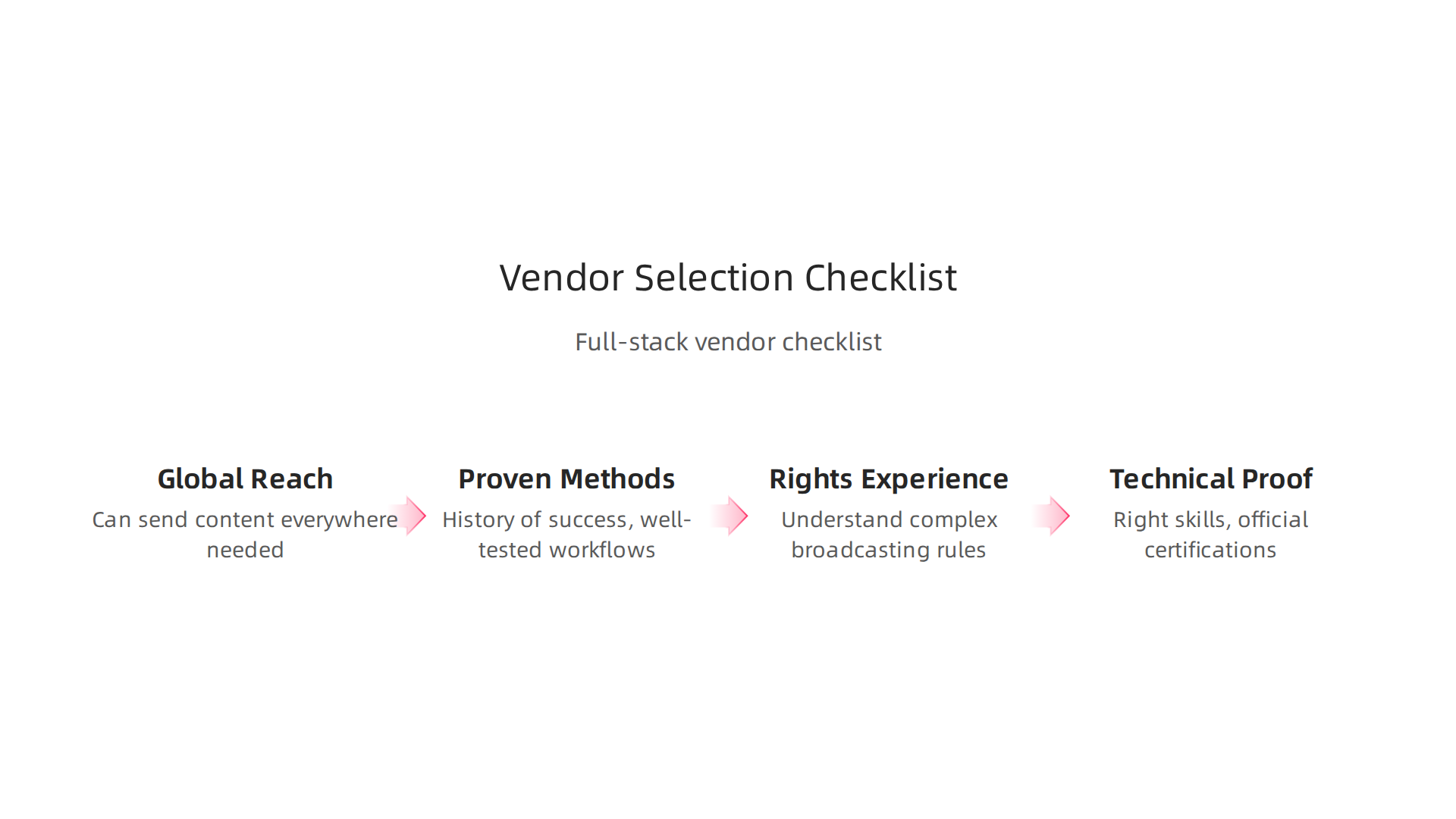
- Global Reach: Can they send your content everywhere you need it? Do they have a "global footprint"? This is key for connecting with fans worldwide.
- Proven Methods: Do they have a clear history of success and well-tested ways of doing things (proven workflows)? Look for vendors with experience in broadcasting many sporting events, as detailed in requirements for sports event vendors.
- Rights Experience: Do they understand the complex rules around broadcasting rights in different countries? This protects your content and helps you make money.
- Technical Proof: Do they have the right technical skills and official stamps of approval (technical certifications)? This shows they know what they’re doing.
Choosing the right vendor is like picking the right coach for your team. It can make all the difference in how well your sports content performs. To learn more about how to make smart choices, check out this vendor selection framework. By simplifying your operations, you can focus more on the game and less on the technical headaches.
Want to learn more about how we can help you with world-class, end-to-end live sports broadcast production services?
Why Choose TPT Global
After choosing a full-stack vendor, the real work begins as your live sports content goes out to the world. Making sure that content streams smoothly, without delays, and with top quality is super important. This means having great systems for low-latency streaming, checking everything as it happens, and being ready to fix any issues right away.
Keeping your streams fast and flawless
When fans watch a live game, they want to see the action unfold almost instantly. This is called "low-latency streaming." High quality content delivery relies on advanced tools, like Content Delivery Networks (CDNs), that help speed up video distribution to millions of viewers by storing content closer to them and making sure the broadcast networks run smoothly worldwide Content Delivery Networks (CDNs) and live streaming. In 2026, many aim for very low latency, sometimes even under one second, to keep viewers engaged Toward One-Second Latency: Evolution of Live Media Streaming.
To make sure your streams keep up, vendors should have:
- Real-time monitoring: This is like having a watchful eye on every part of your broadcast, all the time. Teams should be able to see how video is performing, how many people are watching, and if there are any problems, for example, when delivering to audiences watching on
wbal tvorwwl tv. - Clear Service Level Agreements (SLAs): These are promises a vendor makes about how well their service will work. For live sports, SLAs are super important. They should cover things like how fast a problem will be noticed and fixed (incident response) to keep your broadcasts on platforms like
msnbc live streamrunning without a hitch. - Quick incident response: If something goes wrong, the team needs to act fast. A good vendor has a plan in place to solve issues quickly so fans don’t miss any of the game.
The team behind the scenes
An operational team is key to keeping live sports streams at their best. These people work hard to make sure your content stays within its quality and speed targets.

They watch special screens and dashboards that show all the important data, sometimes called "telemetry." These dashboards give them a clear picture of how well the broadcast services group is performing.
Enterprises should ask their vendors for:
- Telemetry and real-time dashboards: These tools show things like video quality, stream health, and viewer numbers in real time. This means problems can be spotted and fixed before they become a big issue for fans. Keeping an eye on these details is part of delivering a world-class experience to fans everywhere, as discussed in 2026 live sports broadcasting strategies for global reach and quality.
- Proactive monitoring: The best teams don’t just react to problems; they try to prevent them. They look for small signs that something might go wrong and fix it before it affects the broadcast.
- Post-deployment operations: Even after the game is over, there’s work to do. This includes looking back at how the broadcast performed, learning from any issues, and planning for next time. This continuous learning helps improve future streams and ensures you deliver flawless global live sports broadcasts every time.
Choosing a vendor that excels in these areas means your sports content will not only reach a global audience but will do so with the speed and quality fans expect. This ensures that every thrilling moment is captured and delivered seamlessly.
Want to discuss how we can ensure your live sports broadcasts are always fast and reliable?
Request a Broadcast Consultation
Summary
This article explains why a single, centralized directory of broadcast networks and local TV channels is essential for global sports distribution and how it simplifies complex international workflows. It covers the roles broadcast networks play in reach and revenue, the core technical challenges (signal consistency, low latency and global feed delivery), and the practical tools used to solve them such as CDNs, redundant feeds and real‑time monitoring. The guide describes what fields a useful channel lookup table needs—country, channel type, feed availability and rights contacts—and how that data speeds negotiations, reduces churn and clears localized rights. It also breaks down transmission methods (terrestrial, cable, satellite and OTT), why hybrid strategies work best, and why many rights holders prefer a single full‑stack vendor to reduce integration risk. Finally, the article gives a simple vendor checklist and operational practices for maintaining low‑latency, high‑quality streams so sports organizations can reliably reach fans worldwide.