




Why collegiate sports festivals and team broadcasts are strategic priorities for enterprise broadcasters
Think about college sports. They are a really big deal, aren’t they? For large TV networks and streaming companies, showing these games is super important. That’s because high-profile teams, like Purdue football, bring in a huge number of fans. These fans are very loyal and watch games from all over the country, not just in their home state.

In fact, college football has an audience of over 48 million people in the United States in 2026, with many fans tuning in for every game College football: 48.6M Fans in United States (2026) – Rascasse.
These large audiences are a goldmine for broadcasters and the companies that pay to have their ads shown during games. When a major college game is on, like the College Football Playoff National Championship, it can draw in tens of millions of viewers. For instance, a recent championship game saw more than 30 million people watching CFP TV ratings: Indiana’s win over Miami draws in 30.1 million viewers. This kind of viewership means big money for everyone involved. Programs like Mississippi State football also have devoted regional followings, making them key for reaching specific parts of the country. This strong fan engagement is why broadcasters work hard to master regional fan engagement for global sports broadcast success.
It’s not just about single games anymore. Imagine a MHA sports festival or other holiday sports events that bring many different college sports together at one time. These "festivals" might include football, basketball, and even less common sports all in one big event. While these events can be trickier to produce because there’s so much going on, they offer huge chances for broadcasters. They can sell bigger ad packages that cover many sports, and they can send these broadcasts out to fans all around the world. It’s a way to simplify global live sports production for major rights holders and reach more viewers than ever.
All these exciting developments mean that showing college sports, whether single games or big festivals, is a top goal for broadcast companies. They want to connect with more fans, make broadcasting easier, and unlock new ways to grow their business.
If you are a big company looking to get your sports events to more people, it’s wise to learn more about TPT Global and how they can help.
The Commercial and Audience Case for Collegiate Festivals and Flagship Teams
Collegiate sports are a big deal for broadcasters, and it’s easy to see why. Teams like Purdue football attract huge, loyal fans. These fans not only watch every game but also spend money on tickets and merchandise. This creates lots of chances for sponsors to show their ads and for the teams to make money.
For example, Purdue football has seen its athletic spending go up, but they have also brought in more money. This is thanks to new media rights deals and how well they did in the College Football Playoff Purdue Athletics financial report revenue growth, spending, football. Also, ticket sales for Purdue sports jumped a lot in just two years, showing how eager fans are to watch Purdue athletics sees massive two-year jump in ticket sales revenue. Other teams, like Mississippi State football, also have strong fans in their local areas. This means big companies can reach many people, both near and far, by showing these games. It’s a great way to unlock global reach and revenue with your WVU football broadcast.
Now, think about big events that bring many sports together. Imagine a mha sports festival or special holiday sports events. These are like huge parties for college sports! They can include football, basketball, and other games all at once. For broadcasters, these festivals are golden. They can sell advertising spots that cover many different sports at the same time. This is called a "bundled event package." It means sponsors get a better return on their money, or ROI, because their ads are seen across more games and by more people.
But putting on these big festivals is not always easy. Broadcasters need a good plan for how they will produce all the different games and what rules they have for showing them. This helps make sure everything runs smoothly and brings in the most value. When they do it right, these bundled events help broadcasters connect with even more fans around the world and create new ways to earn money. It also helps manage all the different parts of putting on a live broadcast.
This is why companies like TPT Global are so important. They help big sports groups make their broadcasts the best they can be, reaching more fans and making more money. If you’re looking for a partner to help with complex sports events, consider a full-stack agency. TransGroup is an agency that has been helping with sports and media for a long time, offering everything from planning to live production and event management. Trans Group can help you deliver world-class sporting experiences. Want to know more about how expert services can help your events shine? Why Choose TPT Global
Thinking about how big college sports are for broadcasters, let’s look at Purdue football as a clear example. Examining a specific university program helps us understand its audience, when its games are played, what media rights mean, and what it takes to broadcast.
Understanding the Audience and Reach
Purdue football has a loyal fan base that fills its stadium. In fact, for the 2024 season, the team saw its best attendance since the Joe Tiller era, averaging almost 60,000 fans for home games [Purdue Football Has Best Single-Season Attendance]. This kind of strong local support is very important.
But the reach of college football goes way beyond just the stadium. The sport has a huge audience in the United States, with about 48.6 million fans in 2026 [College football: 48.6M Fans in United States (2026)]. This large audience size is why TV ratings for college football have grown so much. For instance, games in the College Football Playoff have seen millions of viewers, with one championship game drawing 30.1 million people [ESPN’s MegaCast of the College Football Playoff National …]. This big growth in viewership is partly because new ways of counting viewers now include people watching outside their homes, like in bars or restaurants [College football audiences about to get bigger with …]. For broadcasters, knowing who these fans are and where they watch is key to planning.

Scheduling and Broadcast Planning
The timing of games is a big deal. For Purdue football, the 2026 schedule was announced early in the year, letting fans and broadcasters plan ahead [Purdue Football’s 2026 Schedule Announced on BTN]. Some games, like Purdue hosting Washington on a Friday night, are special events [Friday Night at Ross-Ade: Purdue to Host Washington, Oct. 16]. These different time slots affect when and how broadcasts happen.
University sports teams, like Purdue football and Mississippi State football, work with their conference, like the Big Ten, to decide when games are played. This also affects who gets to show the games. Proper planning for these broadcasts is called production logistics. It means thinking about everything from the camera setup to sending the signal out to TVs and phones [Production Logistics for International Sports Broadcast]. This kind of detailed planning helps make sure everything goes smoothly for live sports.
Media Rights and Production Needs
The money from media rights deals helps programs like Purdue run their athletic departments. Along with these rights, new rules about how universities can share money with athletes have also come into play for Purdue athletics starting in 2026 [Purdue NIL in 2026: Revenue Sharing, Football Spending, and Athletic …]. These financial changes mean that broadcast deals become even more important for a program’s success.
Broadcasting a college football game involves a lot of moving parts. It means needing good cameras, sound, and a way to send the game live to many places at once. To handle all this, many broadcast companies look for solutions that make the process easier and more organized. A cloud-based platform, for example, can help simplify the steps needed for live sports production [Case Study: How to Set Up a Live Sports Workflow …].
If you are a major sports league or event organizer, making sure your broadcasts are top-notch is very important for your fans and partners. You need to deliver high-quality content smoothly, whether it’s for holiday sports events or a full mha sports festival. To see how expert production teams handle these challenges, you might want to Watch Our Latest Broadcast Work.
For anyone managing complex sports broadcasts and aiming for the best quality and reach, using an integrated solution for live production can solve many common problems. It helps cut down on costs, keeps quality high, and makes sure your content reaches fans everywhere. If you’re ready to explore services that can streamline your global live sports production, you can Explore Our Broadcast Services.
Broadcasting live sports, especially from different places at once, brings its own set of tough technical problems. Imagine Purdue football playing a big away game while Mississippi State football has another key match happening across the country. Or picture covering a large event like an mha sports festival with many games at the same time. These situations make it harder to deliver a smooth viewing experience for everyone.
Technical Challenges: Ensuring Consistent Quality Across Venues and Platforms
When games are happening in different stadiums or even across various fields within one big event, broadcasters face big challenges. One of the main issues is called "latency." This is the small delay between what happens live and when you see it on your screen. If the delay is too long, fans might see social media posts about a score before they see it on their TV or streaming app. For exciting live sports, even a few seconds of delay can really impact how much a fan enjoys the game.
For many years, broadcast companies have worked to lower this delay. In 2026, we see different ways to stream live video, each with its own speed. Some methods, like WebRTC, can get the delay down to less than a second, which is super fast. Other methods, like low-latency HLS (LL-HLS) and CMAF, aim for a delay of about 2 to 5 seconds, which is still great for most sports [How to Minimize Latency to Less Than 1 Second for Mass …]. Standard HLS, which is widely used, might have a delay of 15 to 30 seconds [Streaming Protocols for Live Broadcasting (2026)]. The goal is to make sure every fan, whether they are watching on a big TV or a phone, gets the best possible, nearly real-time view.
Another big hurdle is making sure all the video and sound from different places look and sound the same. This means dealing with "sync" problems, where the video and audio don’t line up, and "codec" issues, which are about how video is coded and decoded. If these are not handled well, the quality can drop for viewers using different platforms, like traditional TV or streaming apps (OTT).
To solve these problems and keep quality high, special steps are needed.
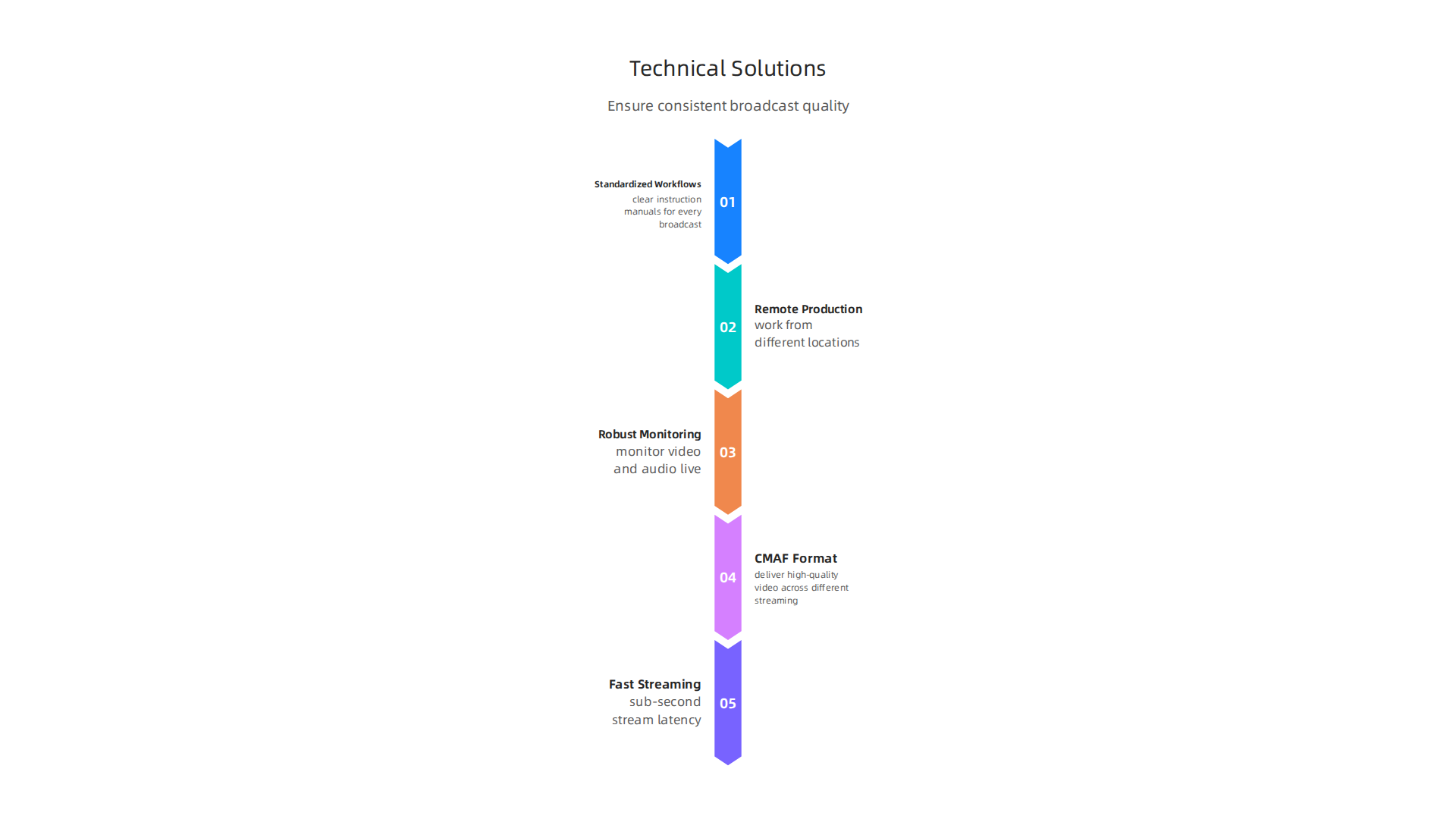
This includes using "standardized workflows," which are like clear instruction manuals for how every broadcast should be put together. This helps make sure everyone on the production team follows the same rules, no matter where they are. Using "remote production techniques" also helps, where teams can work on a broadcast from a different location, cutting down on travel and equipment costs. And "robust monitoring" means constantly checking the video and sound quality during a live broadcast to fix problems right away [Core technologies for streaming workflows: a 2026 architectural …].
Modern solutions often involve formats like CMAF (Common Media Application Format), which helps deliver high-quality video across different streaming types without needing to make many different versions of the video [CMAF Streaming Guide to Enhance Video Delivery (2026)]. This makes things much simpler and ensures consistent quality. For a big event with many games, like holiday sports tournaments, these technical details are crucial.
By bringing together these smart ways of working, from using fast streaming methods to standardizing how video is handled, broadcasters can make sure that Purdue football fans, or any sports fan, get a great viewing experience no matter where or how they watch. If you’re looking to streamline your sports broadcasting and overcome these technical hurdles, it’s worth learning how to Simplify Your Live Sports Production with a Unified End to End Solution.
For organizations facing these kinds of broadcast challenges, getting expert help can make a huge difference.
Ready to talk about your specific broadcast needs and discover tailored solutions? Request a Broadcast Consultation today.
For organizations facing these kinds of broadcast challenges, getting expert help can make a huge difference.
Cost drivers and vendor strategies for enterprise-scale collegiate broadcasts
All the smart ways of working we just talked about, from fast streaming to careful video handling, come with costs. Broadcasting big college games, like Purdue football or Mississippi State football, means dealing with many different expenses. Knowing these costs helps teams make better plans.

One of the biggest costs is using special "Outside Broadcast" (OB) trucks. These are like mobile control rooms filled with cameras, sound gear, and all the equipment needed for a live show. Then there’s the cost of cameras and other wireless tools that send signals around the stadium. Getting the video and sound from the stadium back to a main control center, called "uplink" or "backhaul," also adds up.
Think about covering an mha sports festival or big holiday sports events. You need many people to make the magic happen: camera operators, sound engineers, directors, and more. Their travel and housing costs can be very high, especially when going to different cities or countries. On top of all this, there are "rights fees," which are the payments made to colleges or leagues to be allowed to broadcast their games. These fees can be huge for popular sports.
To handle these big costs and make things simpler, many broadcasters are now using smart strategies.
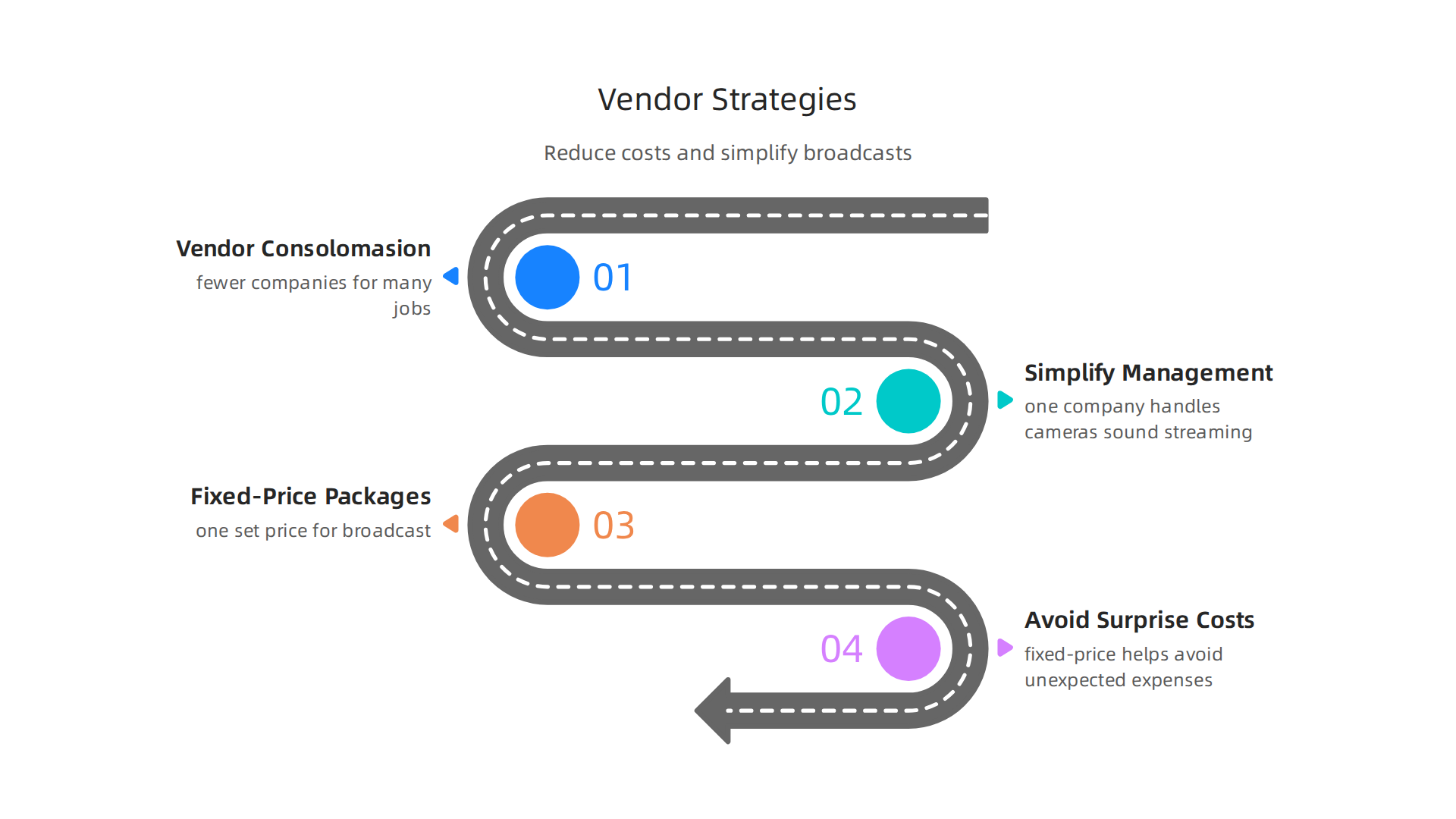
One helpful idea is "vendor consolidation." This means working with fewer companies that can do many different jobs, instead of hiring many separate companies for each task. Imagine if one company could handle your cameras, sound, streaming, and even the staff. This makes things much easier to manage.
By bringing services together, companies can often save a lot of money. Some experts say that consolidating vendors can lead to savings of 10% to 30% or even more on different projects [Driving_efficiencies_through-vendor-consolidation.pdf]. It also makes sure everything works well together, as one team is in charge of more parts of the broadcast. This can help avoid problems and make the whole process smoother. In 2026, many businesses are seeing the benefit of using fewer suppliers to improve their budget and work better [Vendor consolidation—the key to IT cost optimization in 2026].
Another strategy is to use "fixed-price production packages." This means paying one set price for a whole broadcast, which helps avoid surprise costs. These packages can also reduce the risk of different parts not working together. For broadcasters reaching fans all over the world, these packages from a single provider make buying services simpler and lower the chance of things going wrong.
If you are a large organization looking for ways to cut down on broadcast costs and make your operations more efficient, consider strategies that bring services under one roof. It can lead to much better control and big savings. You can also explore how to Streamline Global Live Sports Production for Major Rights Holders for more ideas on simplifying your workflow.
Want to learn more about how a single provider can help with your sports broadcasting needs? Chat now on WhatsApp.
Now, after talking about how to manage costs better, let’s think about getting your broadcast out to everyone. This is called "distribution." In 2026, reaching fans all over the world means using smart ways to send out your content. You need to combine old-school TV (linear broadcast) with newer internet streaming (OTT) to get the most eyes on the game.
Think about a big game, like Purdue football or Mississippi State football. Fans don’t just watch on cable TV anymore. They watch on phones, tablets, and smart TVs through apps. So, broadcasters use a mix: they show games on TV at certain times, but also stream them live online. This way, they reach a huge audience, no matter where they are or how they prefer to watch. It’s especially important for events like an mha sports festival or during holiday sports when many people are looking for entertainment. The audience for college football is quite large, with about 48.6 million fans in the United States alone in 2026, showing how many people want to watch these games [College football: 48.6M Fans in United States (2026)].
To really reach everyone, it helps to offer special "regional feeds." This means making different versions of the broadcast for different places. For example, some fans might want commentary in their local language, or they might see ads that are just for their area. This makes the broadcast feel more personal to them. If you want to understand more about how to make broadcasts special for different groups of fans, you can read about how to Master Regional Fan Engagement For Global Sports Broadcast Success.
Getting the video from the stadium to viewers quickly is also very important. Nobody likes a choppy or delayed stream. This is where special networks called Content Delivery Networks (CDNs) come in. They help send the video fast and smoothly across the globe. Modern streaming uses clever ways to keep delays super low, sometimes less than one second, which is perfect for live sports [How to Minimize Latency to Less Than 1 Second for Mass Streams]. Technologies like LL-HLS (Low-Latency HTTP Live Streaming) and CMAF (Common Media Application Format) are key in 2026 for making sure fans see the action almost as it happens [Low-Latency Live Streaming for Developers: LL-HLS …]. These technologies help deliver broadcasts with low latency, meaning very little delay, which is critical for the best viewing experience.
If your goal is to make sure as many people as possible see your games, whether it’s Purdue football or international events, having a plan for both traditional TV and online streaming is a must. This way, you can serve local fans and reach new ones across the world.
To see examples of how expert teams handle these complex broadcasts, you might want to Explore Our Broadcast Services and see the quality they deliver. For sports like international cricket, broadcast standards and tournament coverage are critical, and working with expert teams can ensure smooth global delivery for organizations like the ICC – International Cricket Council.
When getting a big game like Purdue football or a lively mha sports festival out to everyone, careful planning is just as important as the technology itself. Think of it like a sports team. Even with the best players, they need a game plan to win. For broadcasts, this means having a clear operational checklist for every step.
Operational checklist for large-scale collegiate events and festivals
Putting on a large sports broadcast, especially for collegiate events and festivals, means many moving parts must work together perfectly. This is true whether it’s a regular Purdue football game or special holiday sports events. A good checklist helps make sure nothing is missed.
Here are some important things to include in your broadcast checklist:
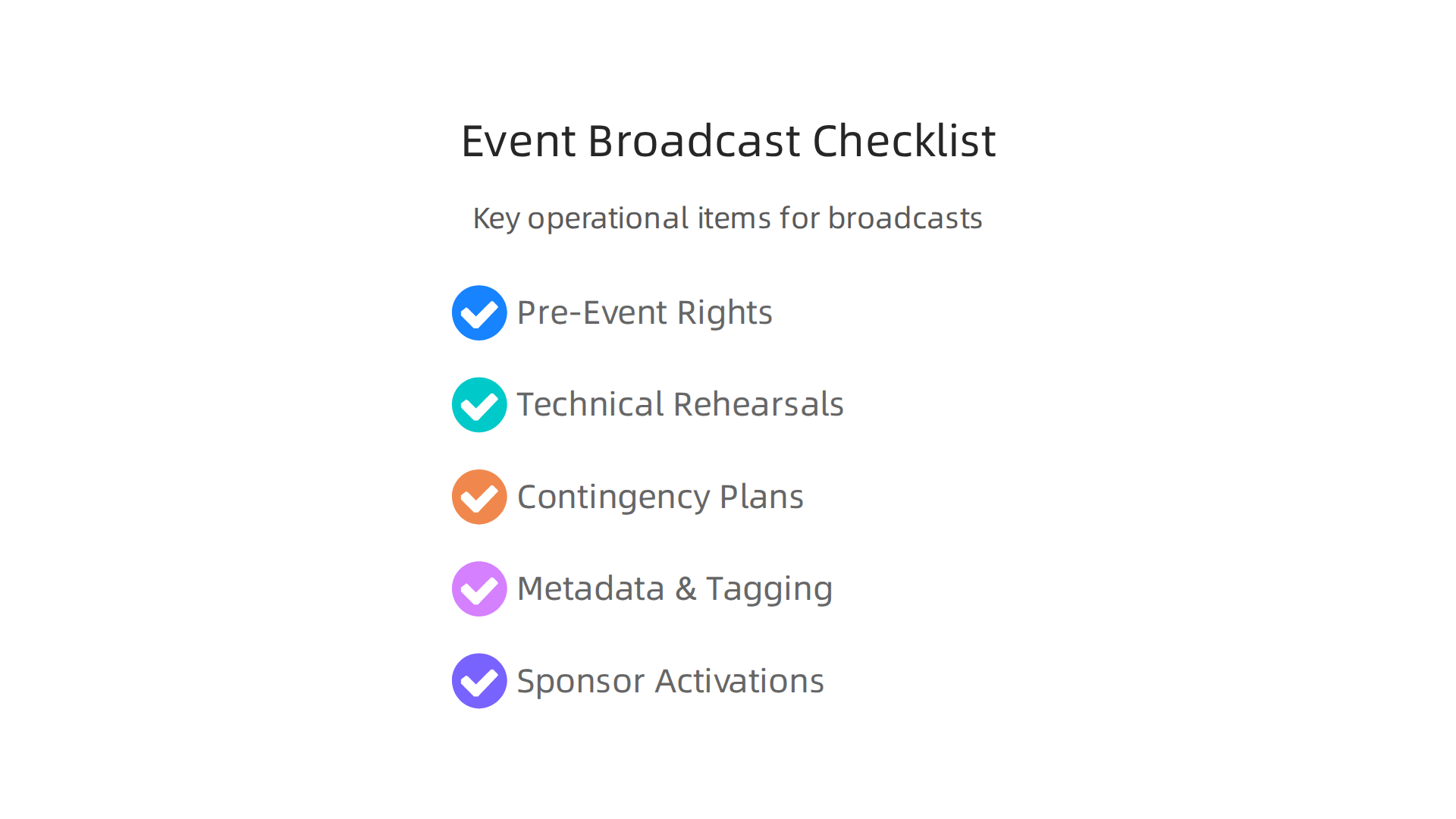
- Pre-event rights confirmation: Before anything else, you need to know who owns the rights to show the game and where. This makes sure you can legally broadcast the content to your fans.
- Technical rehearsals: You must test all your cameras, sound gear, internet connections, and streaming tools. This rehearsal helps find and fix problems before the live event starts. It’s about making sure the video gets from the stadium to viewers without any hiccups. Experts know that good Production Logistics for International Sports Broadcast are key to success.
- Contingency plans: What if the power goes out? What if an internet cable breaks? Having backup plans for different problems is very important. This means having extra equipment ready and knowing exactly what to do if something unexpected happens.
- Metadata and rights tagging: This means labeling your broadcast correctly. It tells computers what the content is about, who can watch it, and in which areas. This helps your content reach the right people and makes sure you follow all the rules for where and how it can be shown.
- Sponsor activations: If you have sponsors, you need to make sure their ads and messages are shown just as planned. This involves coordinating breaks, on-screen graphics, and special mentions during the broadcast.
When many different companies or teams work together, like for a Mississippi State football game, it’s super important to have clear roles for everyone. Each part of the process, from cameras to streaming, needs a person in charge. Also, it helps to have just one main person or company that is responsible for the whole broadcast. This makes things much clearer and avoids confusion.
It’s also a good idea to agree on what’s called "Service Level Agreements" (SLAs) with all partners. These are clear promises about how fast the video will be delivered (low latency) and what kind of backup plans are in place. This way, everyone knows what to expect and what to do if something goes wrong. Reducing the number of different companies you work with, known as vendor consolidation, can also save money and make things simpler. Many businesses see Vendor Consolidation: What It Is, Benefits & Strategy as a key way to improve their operations and save on costs in 2026.
Managing all these moving pieces can be complex. That’s why many organizations look for unified solutions to make their work easier. If you want to see examples of high-quality broadcast work in action, you can Watch Our Latest Broadcast Work.
For large events, having a plan that covers everything from rights to technical backups ensures a smooth broadcast. If you’re planning a major broadcast and need help making sure every detail is covered, consider reaching out to experts. Request a Broadcast Consultation to discuss how to make your next event a success.
Summary
This article explains why collegiate sports — single marquee games and multi-sport festivals — are strategic priorities for enterprise broadcasters, advertisers, and rights holders. It covers the commercial case (huge, loyal audiences and bundled sponsorship opportunities), the technical challenges of delivering consistent, low-latency global streams, and the production and rights-management steps needed to run large-scale events smoothly. You will learn how scheduling, standardized workflows, remote production, and modern formats like CMAF and LL-HLS reduce risk and improve quality, while vendor consolidation and fixed-price packages control costs. The piece also outlines an operational checklist (rights confirmation, rehearsals, contingency plans, metadata tagging, sponsor activations) and explains distribution strategies blending linear TV with OTT and regional feeds. Practical examples from programs such as Purdue and Mississippi State illustrate audience and revenue dynamics. By reading this, broadcast ops and rights holders will be better prepared to plan, budget, and execute collegiate broadcasts that reach more fans and deliver stronger commercial returns.