



Imagine a single place where the next big star hits a home run, a college team wins a championship, and a global broadcaster beams it all to millions of screens. That is the ESPN Wide World of Sports Complex in 2026. This massive 220 acre athletic complex at Walt Disney World in Florida is a powerhouse for amateur and professional sports. According to the ESPN Wide World of Sports Complex Wikipedia page, it features nine unique venues designed to host over 60 different sports.
From the 9,500 seat Champion Stadium to the flexible State Farm Field House, the scale is hard to beat. As highlighted in this ESPN Wide World of Sports: A Complete Guide, the complex is built for variety and volume. But in today’s world, having great fields is only half the battle. The real challenge is sharing those live moments with a global audience.

This is what makes the complex a true model for organizers everywhere. It combines physical infrastructure with the need for high quality media production. Any team or league hosting a tournament here needs a broadcast partner who can handle the pressure of live sports. They need a team that knows how to manage the technical details and deliver a smooth broadcast.
That is where TPT Global comes into the picture. They provide the exact broadcast services needed to make events shine. Using advanced video editing techniques for live sports production, they help capture every crucial moment. If you are planning a major sporting event, you need a partner with this kind of expertise. You can Learn More About TPT Global and see how their global team supports large scale events. When you are ready to plan your broadcast, feel free to Request a Broadcast Consultation to get started.
The Scale and Significance of ESPN Wide World of Sports Complex
To fully appreciate what this place offers, you need to wrap your head around its sheer size. The ESPN Wide World of Sports Complex covers 220 acres of land inside the Walt Disney World Resort. That is bigger than many college campuses. According to the Disney World official site, the complex now spans over 260 acres and can accommodate up to 70 different sports. That growth shows just how much demand exists for a one stop sports destination.
Think about what that much space allows. You have nine separate venues, each built for a specific purpose.
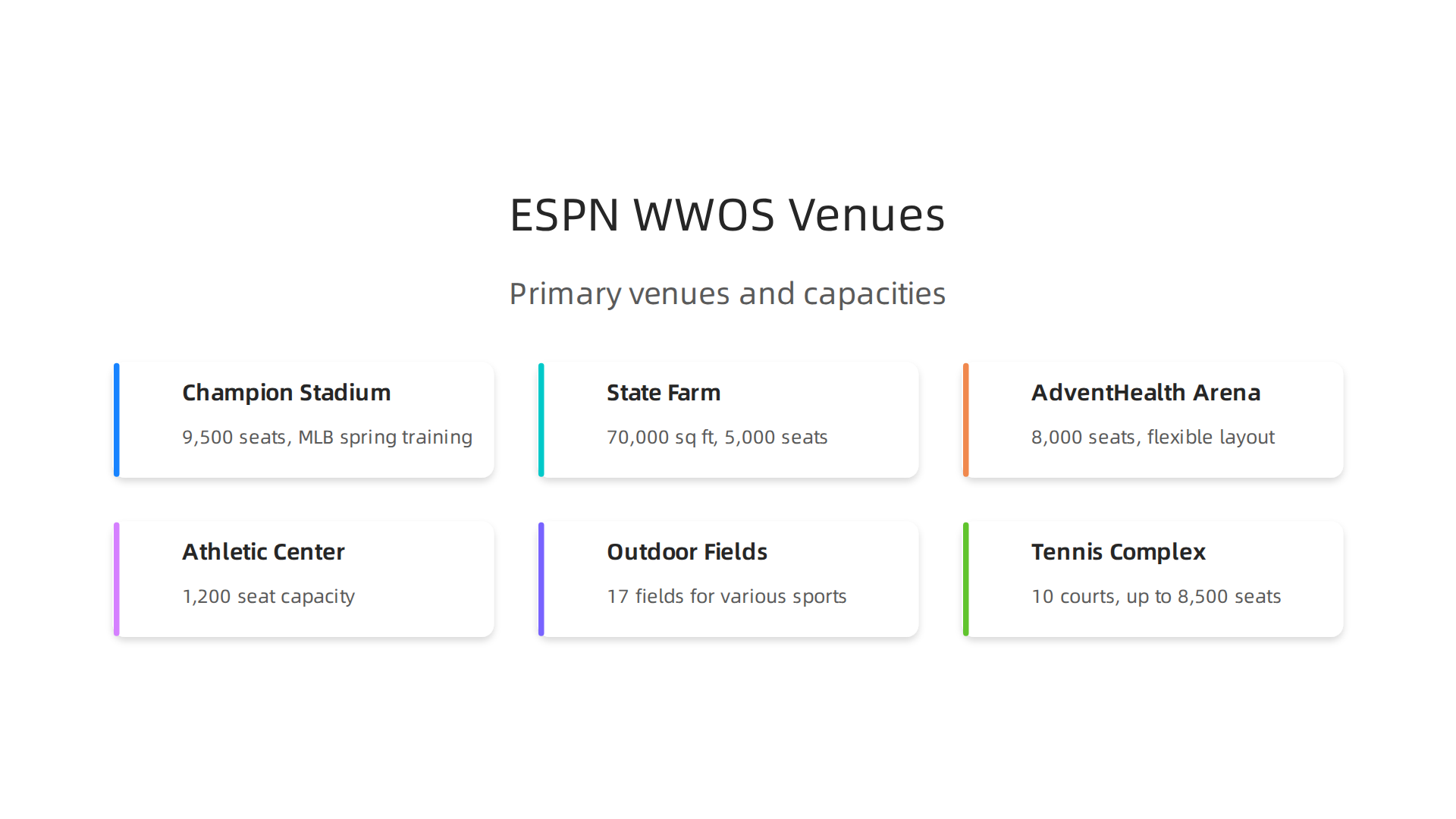
Champion Stadium seats 9,500 and has hosted MLB spring training for teams like the Atlanta Braves. The State Farm Field House gives you 70,000 square feet of indoor space with 5,000 seats for basketball, volleyball, and gymnastics. AdventHealth Arena adds another 8,000 seats with a flexible layout that can turn into six basketball courts. And that is just the big indoor spaces. The official venues page lists everything from a 1,200 seat Athletic Center to 17 outdoor fields for football, soccer, baseball, and softball. There is even a tennis complex with 10 clay courts and seating that expands from 1,000 to 8,500.
The real magic is how all these venues work together. A single weekend could see a youth baseball tournament in Champion Stadium, a cheerleading competition in AdventHealth Arena, and a track meet happening all at once. Families can watch their kids compete in the morning and visit theme parks in the afternoon. That combination of top tier facilities and vacation appeal is what makes this complex so special.
Now, all that infrastructure means nothing if no one can watch the action. That is why having a strong broadcast partner is critical. The complex is designed to support live production, but the actual delivery of a high quality stream or TV broadcast requires real expertise. If you are organizing an event here, you want a team that understands how to capture the energy and share it with the world. That is where Explore Our Broadcast Services comes in. TPT Global has the equipment and experience to handle events of any size, from a regional tournament to a nationally televised championship.
The strategic location in Orlando only adds to the appeal. Being inside one of the most visited vacation destinations in the world means families are already planning trips there. Athletes get to compete at a professional level venue while their parents enjoy a vacation. That is a win win that keeps event organizers coming back year after year. And when you add the warm Florida weather and easy airport access, you have a recipe for a sports destination that is hard to beat.
But running an event at this scale is not simple. You need more than just fields and seats. You need a broadcast team that can handle the pressure of live sports and deliver a polished product every time. Choosing the right production partner makes all the difference between a good event and an unforgettable one. Why Choose TPT Global explains how their full service approach helps organizers focus on the athletes while they handle the broadcast side.
Broadcast-Ready Infrastructure: A Closer Look
Now that you understand the scale of this place, let us talk about what happens behind the scenes. A venue with 70,000 square feet of indoor space and 17 outdoor fields means nothing if nobody can see the action. That is why the ESPN Wide World of Sports Complex was built from the ground up with broadcast production in mind.
In 2010, when the complex got its ESPN name, it received a major upgrade. The Wikipedia page on the complex notes that it got HD video scoreboards at several venues, a new complex-wide audio system, and a dedicated broadcast production facility. That investment turned the complex into a true television-ready sports destination.
The ESPN Production Center is the heart of that setup.
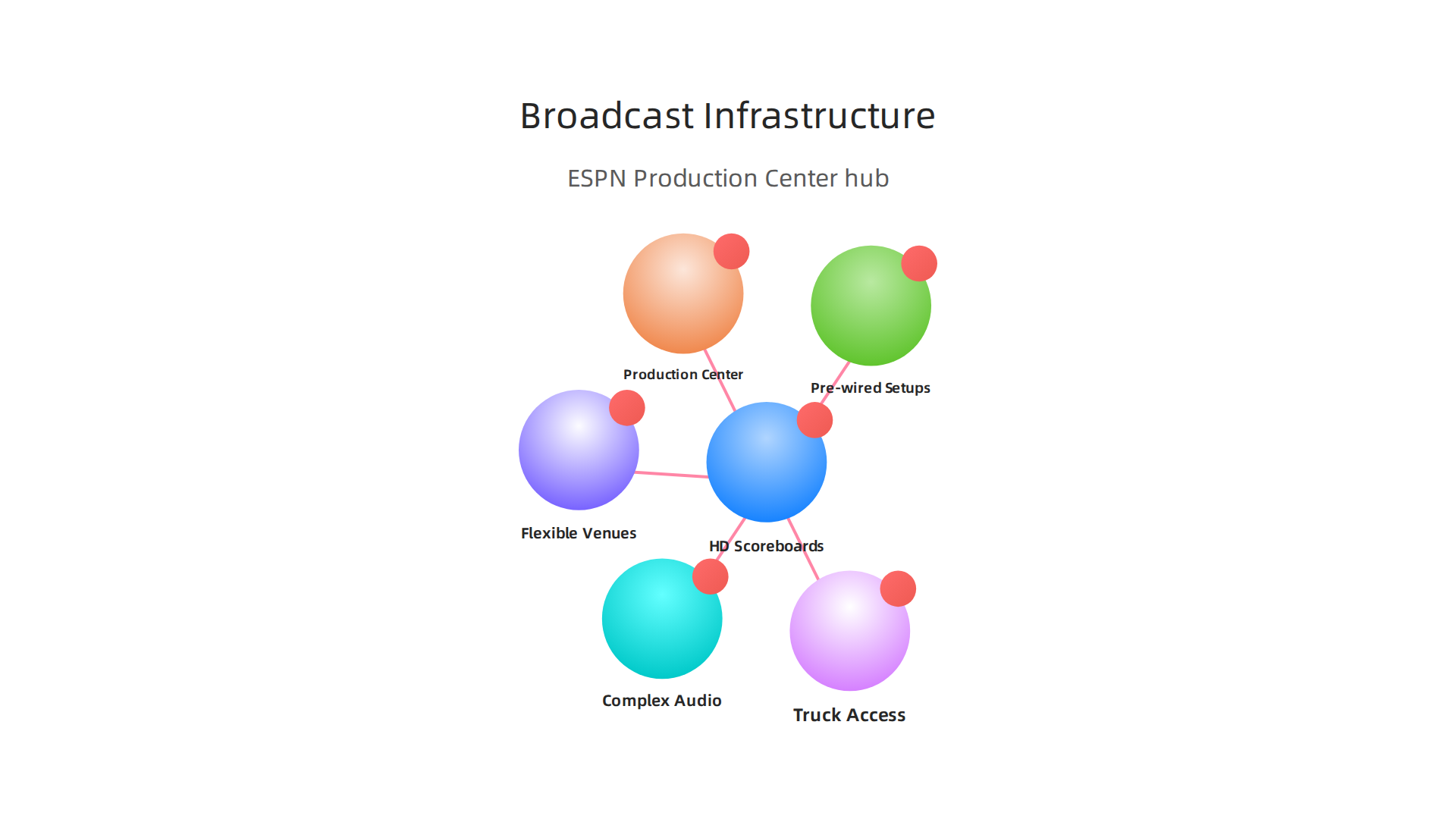
According to the WDW Magazine guide, this facility spans 2,500 square feet and is entirely devoted to producing sports coverage and content. That space houses the control rooms, editing bays, and equipment needed to turn raw game footage into a polished broadcast.
But the complex does not stop there. The venues are designed so mobile production trucks can pull right up to the action. Whether you are at Champion Stadium for a baseball tournament or the State Farm Field House for a cheerleading competition, there is direct access for satellite uplink trucks. That means a production team can plug in, connect to the world, and start broadcasting in a matter of hours. If you want to see how professional teams handle that fast setup process, check out our guide on advanced video editing techniques for live sports production.
The flexibility extends to how each venue can adapt to different sports. AdventHealth Arena can transform into six basketball courts or four separate competition spaces. The Marathon Sports Fields can host football one day and soccer the next. And every single one of those configurations is built with camera positions, lighting rigs, and audio connections already in place. No need to start from scratch every time.
This level of readiness matters because it cuts down on production time and cost. You do not have to spend days wiring cable or testing audio. Everything is already there, waiting for you to bring it to life. That is the kind of infrastructure that lets event organizers focus on what matters most: the athletes and the fans.
For more on how TPT Global brings this infrastructure to life with proven results, Explore Our Broadcast Services. And if you want to see examples of live sports coverage produced at venues like this, Watch Our Latest Broadcast Work.
Retail Integration and Fan Experience
But a great broadcast is only half the picture. What truly makes a visit to the ESPN Wide World of Sports Complex stick with you is everything that happens beyond the field of play. The complex has put serious thought into creating a fan experience that keeps people engaged from the moment they arrive.
On-site retail is a big part of that. The complex features merchandise shops where families can pick up gear for their favorite teams. Whether you are visiting to support Indiana football or you traveled down for a Michigan football tournament, you can find apparel and souvenirs that match the moment. Some retail spaces even partner with national brands like Hibbett Sports to offer a wider selection and a more premium shopping experience. In fact, integrating retail into sports venues creates thriving ecosystems that generate value well beyond game day.
But shopping is just one layer. The fan zones at the complex are designed to keep guests entertained between events.
Interactive games, photo opportunities, and sponsor activations turn downtime into fun time. Kids can test their skills in mini sports challenges while parents relax in shaded seating areas. These zones help make the whole trip feel like a mini vacation rather than just a series of games.
Brand partnerships take the fan experience even further. The complex works with major companies to create unique activations that you cannot find anywhere else. Ten Sports might set up a broadcast booth where fans can see themselves on camera, or a sports drink brand could sponsor a hydration station with free samples. These partnerships not only make the event more fun but also create lasting memories.
All of this adds up to a venue that understands modern fan expectations. People do not just want to watch sports anymore. They want to be part of something bigger. And the ESPN Wide World of Sports Complex delivers that by blending retail, interactive zones, and smart brand partnerships into one seamless visit.
If you are planning an event and want to create a similar fan-focused experience, Get in touch with our team. And if you prefer a quick conversation, Chat now on WhatsApp with our business director.
Meeting Global Broadcast Standards: Technical Excellence
Beyond the fan experience and retail, the real magic happens behind the scenes. The ESPN Wide World of Sports Complex meets global broadcast standards that make live events watchable worldwide. This is where technical excellence separates a good venue from a great one.
Back in 2010, the complex received a massive upgrade that included a new broadcast production facility. According to the ESPN Wide World of Sports Complex Wikipedia page, HD video scoreboards and a complex-wide audio system were installed at that time. These upgrades laid the groundwork for the high-tech broadcasting the complex delivers today.
Live sports broadcasting demands precision. Every camera angle, every replay, and every audio feed must sync perfectly. That is where international standards like SMPTE come in. The Society of Motion Picture and Television Engineers sets the rules that make equipment from different brands work together seamlessly. For the complex, this means following standards like SMPTE ST 2110, which handles video, audio, and data over IP networks. As explained in a comparison of SMPTE 2110 vs traditional broadcast, this standard allows separate streams for video, audio, and metadata. That separation gives production teams incredible flexibility. They can send video to one system, audio to another, and metadata to graphics tools, all over a single network.
Low latency is critical for live events. Audiences watching from home expect real-time action, not a delayed feed. The complex uses high-speed data connections and precision timing protocols to keep delays below one millisecond. This technology ensures that when a basketball player scores or a cheerleading team lands a stunt, viewers see it instantly, whether they are watching on TV, a streaming app, or a stadium screen.
The complex also integrates with global distribution networks. Broadcasters like Ten Sports and ESPN can plug into the venue’s infrastructure and send feeds to millions of homes around the world. This capability is especially important for events like the ICC Cricket tournaments, which draw international audiences. The complex’s technical setup supports everything from satellite uplinks to cloud-based streaming platforms.
For production teams working at the complex, having a reliable technical backbone is essential. Our advanced video editing techniques for live sports production page dives deeper into how modern workflows handle these demands.
If your organization needs a broadcast partner that understands global standards and delivers consistent quality, Request a Broadcast Consultation. And to see the level of production the complex supports, Watch Our Latest Broadcast Work on our showreel page.
Lessons for Venue Operators and Event Organizers
So what can smaller operators learn from this giant? Plenty.
The ESPN Wide World of Sports Complex did not become a world-class destination overnight. It took smart planning, the right partners, and a willingness to invest in the fan experience at every level. Here are the biggest takeaways for anyone building or upgrading a sports venue.
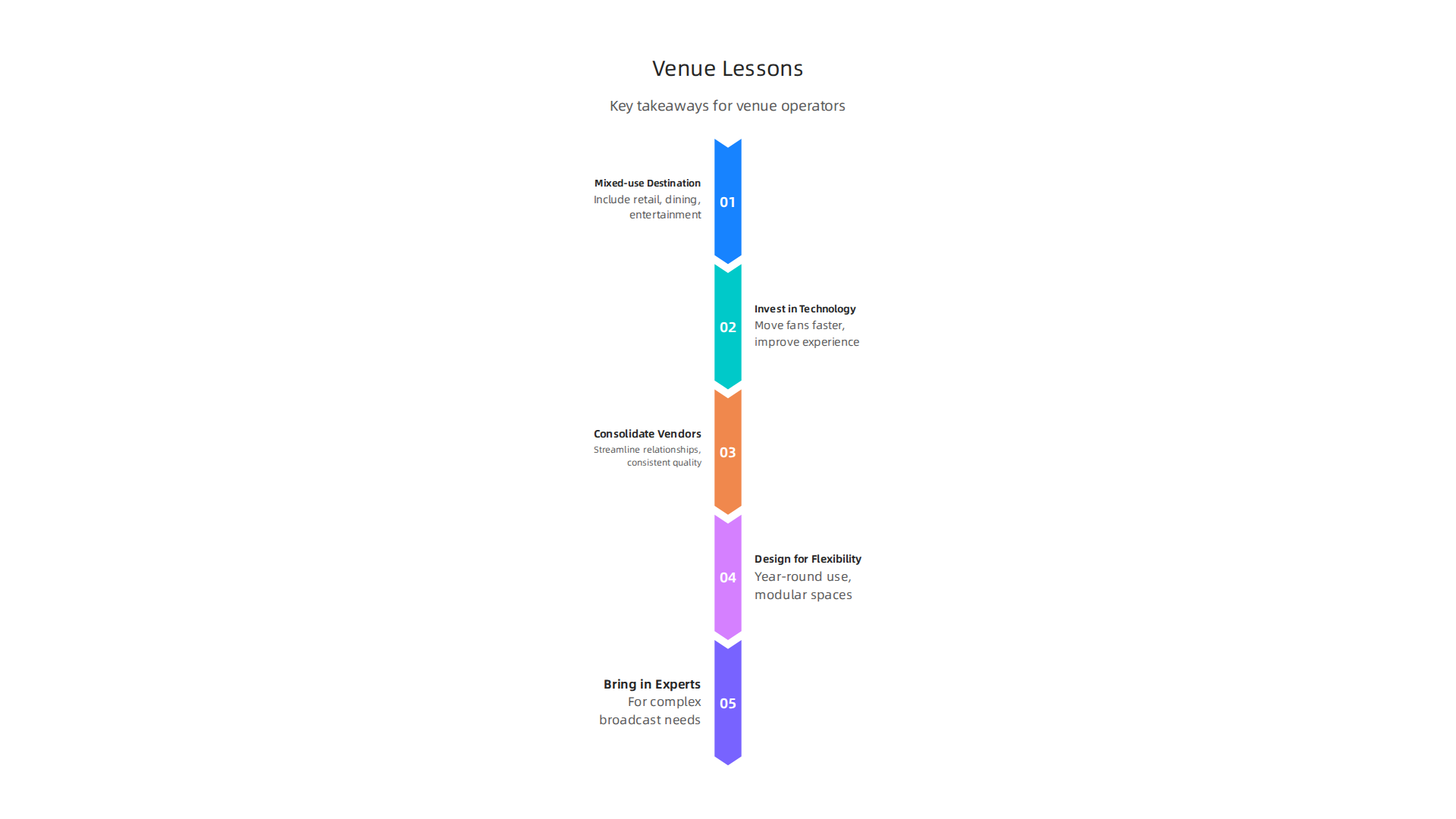
Think like a mixed-use destination from day one
The complex is not just a collection of fields and courts. It is a complete ecosystem with retail, dining, and entertainment woven into the fabric of the property. Venue operators can borrow this idea by designing spaces that work hard even when no game is happening. According to a guide on reimagining sports venues with entertainment, retail, and dining, the most successful venues today mix event space with shopping, restaurants, and community gathering areas. This approach turns an underused parking lot into a revenue generator and keeps people on site longer.
Invest in technology that moves fans faster
Smaller venues often think advanced tech is out of reach. But it does not take a massive budget to improve how fans move through your space. Stadium POS systems with RFID kiosks help fans get through lines up to 40 percent faster, as noted in the stadium and arena retail POS solutions overview. That speed increases per-person spending and reduces frustration. Even a single grab-and-go market with self-checkout can transform a slow concession area into a profit center.
Consolidate your vendor relationships
One of the smartest moves the complex made was working with a small number of trusted partners who understood the full picture. Instead of hiring separate teams for broadcast, retail, digital content, and fan engagement, operators can consolidate under a single provider. This approach saves time, reduces miscommunication, and ensures consistent quality across every part of the event. For example, large international tournaments like those covered by the ICC Cricket Official Site rely on partners who manage everything from camera feeds to global distribution without breaking the chain.
Design for flexibility and year-round use
The best sports venues are not one-trick ponies. They host tournaments one weekend and corporate events the next. This requires modular seating, flexible field configurations, and smart scheduling. Venues that serve as multi-purpose hubs earn steadier revenue and build stronger ties to their communities. Whether you are hosting hibbett sports tournaments, indiana football camps, or michigan football recruiting events, the same facility should adapt without major renovations.
Know when to bring in the experts
Maybe your venue does not need a full broadcast facility today. But as you grow, having a partner who understands global standards and end-to-end production becomes essential. The complex’s success proves that technical excellence and fan experience go hand in hand. The right partner handles the complexity so you can focus on the event itself.
If you are planning your next venue upgrade or looking for a broadcast partner who delivers consistent results, Why Choose TPT Global for your next project. And to see how our approach works across different sports and event types, Learn More About TPT Global on our company overview page.
The Future of Regional Sports Venues
The lessons from the ESPN Wide World of Sports Complex point toward a bigger picture about where regional sports venues are heading. The venues that succeed in 2026 and beyond will do more than just host games.

They will become smart, flexible, and fan-centered destinations that earn revenue year-round and adapt to changing expectations.
Emerging technologies are changing everything
Cloud production and 5G connectivity are making it possible for smaller venues to deliver broadcast-quality content without needing a giant control room. According to the 2026 stadium technology update from Foley, private networks and AI tools are now standard investments for modern arenas. Connectivity is the foundation. This means even a regional complex can offer instant replays, fast mobile ordering, and real-time stats for fans in the stands.
Cloud-based workflows let operators produce and stream games with far less gear on site. You send camera feeds to a remote production hub and get a polished broadcast back in seconds. That opens up new revenue from streaming deals and makes every game feel like a major event. For teams that want to sharpen their content, advanced video editing techniques for live sports production can help turn raw footage into shareable highlights.
Sustainability and modular design are no longer optional
Fans and sponsors expect venues to be energy smart. Modular seating, LED lighting, and solar panels are becoming baseline features. The best regional venues are designed to change shape depending on the event. One weekend it is a ten sports tournament, the next a concert. Flexible spaces mean steady income and less downtime.
Fan expectations keep rising
Fans today want more than a seat. They want fast entry, local food options, places to charge devices, and content they can share on social. Venues that ignore these basics will lose ground to competitors that get it right.
If you are planning how to upgrade your venue’s broadcast capabilities, explore our broadcast services to see how TPT Global can deliver a professional experience without the complexity. And when you are ready to talk specifics, request a broadcast consultation to discuss your project.
Summary
This article profiles the ESPN Wide World of Sports Complex and explains why its scale, infrastructure, and broadcast readiness make it a model for major events in 2026. It covers the complex’s facilities—from Champion Stadium and State Farm Field House to outdoor fields and tennis courts—and shows how built-in broadcast systems, mobile truck access, and a dedicated production center reduce setup time and cost. The piece argues that a strong broadcast partner is essential to capture and deliver live action to global audiences, highlighting TPT Global’s services and production expertise. It also describes retail, fan zones, and brand activations that boost on-site engagement and revenue. Technical topics include SMPTE standards, low-latency delivery, and global distribution options. The article closes with practical lessons for smaller venues—design for flexibility, consolidate vendors, invest in tech—and outlines future trends like cloud workflows, 5G, and sustainability. Readers will learn what infrastructure and partners they need to run broadcast-quality events and how to start planning a professional production.