





Introduction
You are in the control room. The game is live. Millions of people are watching across TV, mobile apps, and streaming platforms.
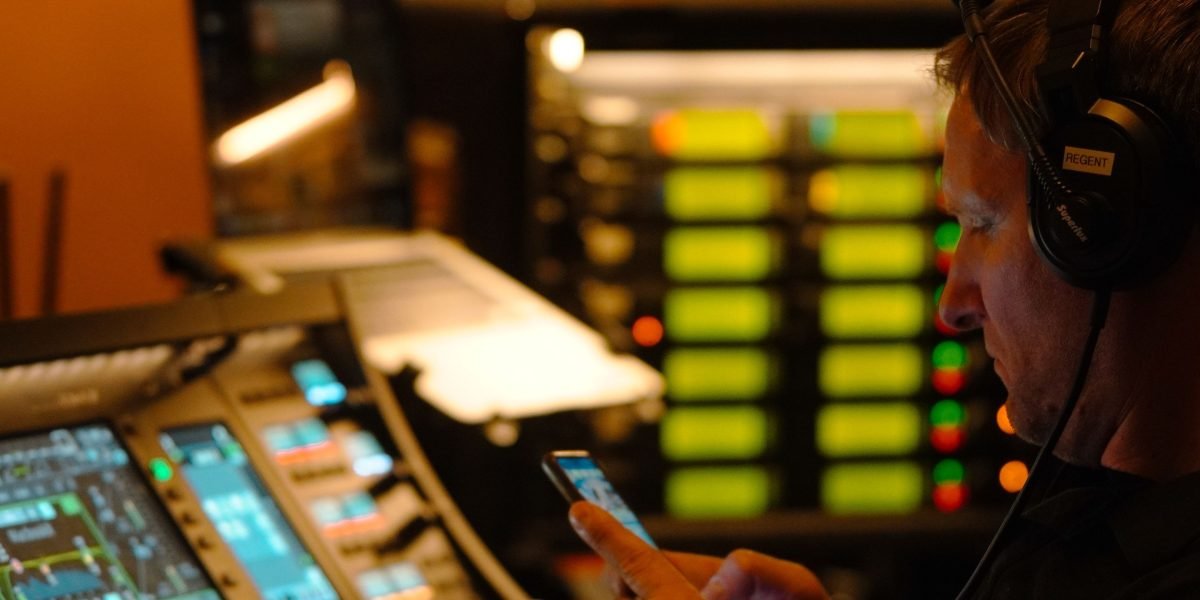
One wrong cut, one delayed replay, and the moment is gone forever.
This is the reality for production companies that handle live sports today. The pressure is enormous. And so is the opportunity.
In 2026, the global live streaming for sports market is valued at USD 49 billion and is projected to grow to over USD 614 billion by 2035. That is according to the latest live streaming for sports market report. Whether you work with a Sinclair Broadcast Group affiliate, a FAANG company like Amazon or Google, or an independent tv production companies network, the demand for high-quality broadcast content is exploding.
But here is the challenge. Production companies must deliver flawless content across multiple platforms at once. Traditional broadcast. Digital streaming. Social clips. All in real time. All with shrinking budgets and tighter deadlines.
So how do top broadcast teams stay ahead?
The answer lies in smarter video editing. Not just faster tools, but better workflows that reduce costs, improve quality, and simplify global distribution.
This article explores advanced video editing techniques that address your biggest pain points. Operational efficiency. Global reach. Technical innovation. By the end, you will have practical strategies to help your production company thrive in this fast-changing landscape.
If you are looking for a partner who already handles these challenges every day, you can Explore Our Broadcast Services to see how we deliver world-class results for global sports events.
Let us start with the foundation of any great live production.
The Evolving Landscape of Live Sports Production
The sports production world is changing faster than ever. In 2026, the global sports event market is valued at $520.9 billion and is projected to reach $884.7 billion by 2033, according to the latest Sports Event Market Size, Growth Report, 2026-2033. That growth is not slowing down. And it is driven by one main force: digital streaming.
More fans are watching live sports on phones, tablets, and smart TVs than ever before.
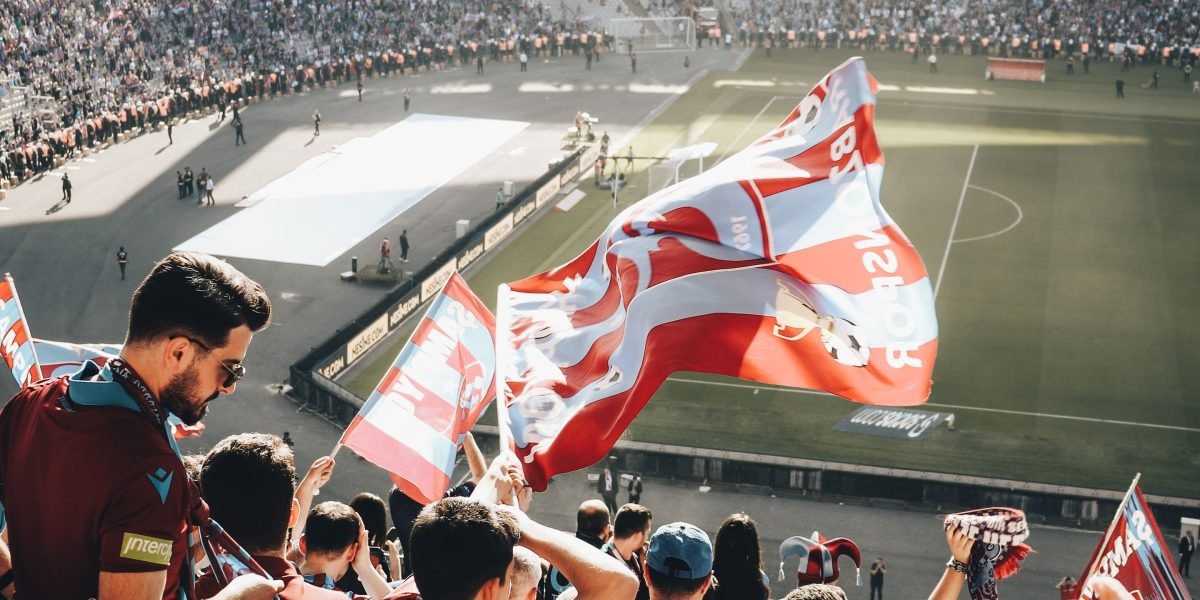
They expect instant replays from every angle. They want to switch between camera views with a tap. They want stats and graphics that update in real time. For production companies, delivering this experience is no longer optional. It is the baseline.
But meeting these expectations is not simple.
The Pressure Mounts on Production Teams
Think about everything that goes into a single live sports broadcast. You need cameras, audio equipment, transmission gear, graphics systems, replay servers, and streaming encoders. Each piece comes from a different vendor. Each vendor has its own setup, support team, and contract. Managing this fragmentation takes time and money.
Then there is the rise of broadcast across multiple platforms. A single game might air on traditional TV, a dedicated streaming app, social media clips, and an international feed. Each platform has different technical requirements. Each one must look perfect. And you have to deliver it all at the same time.
FAANG companies like Amazon and Google are investing heavily in live sports rights. They bring new expectations for interactivity and personalization. That pushes tv production companies to upgrade their workflows constantly.
The Big Three Challenges
Here are the challenges that keep production executives up at night.
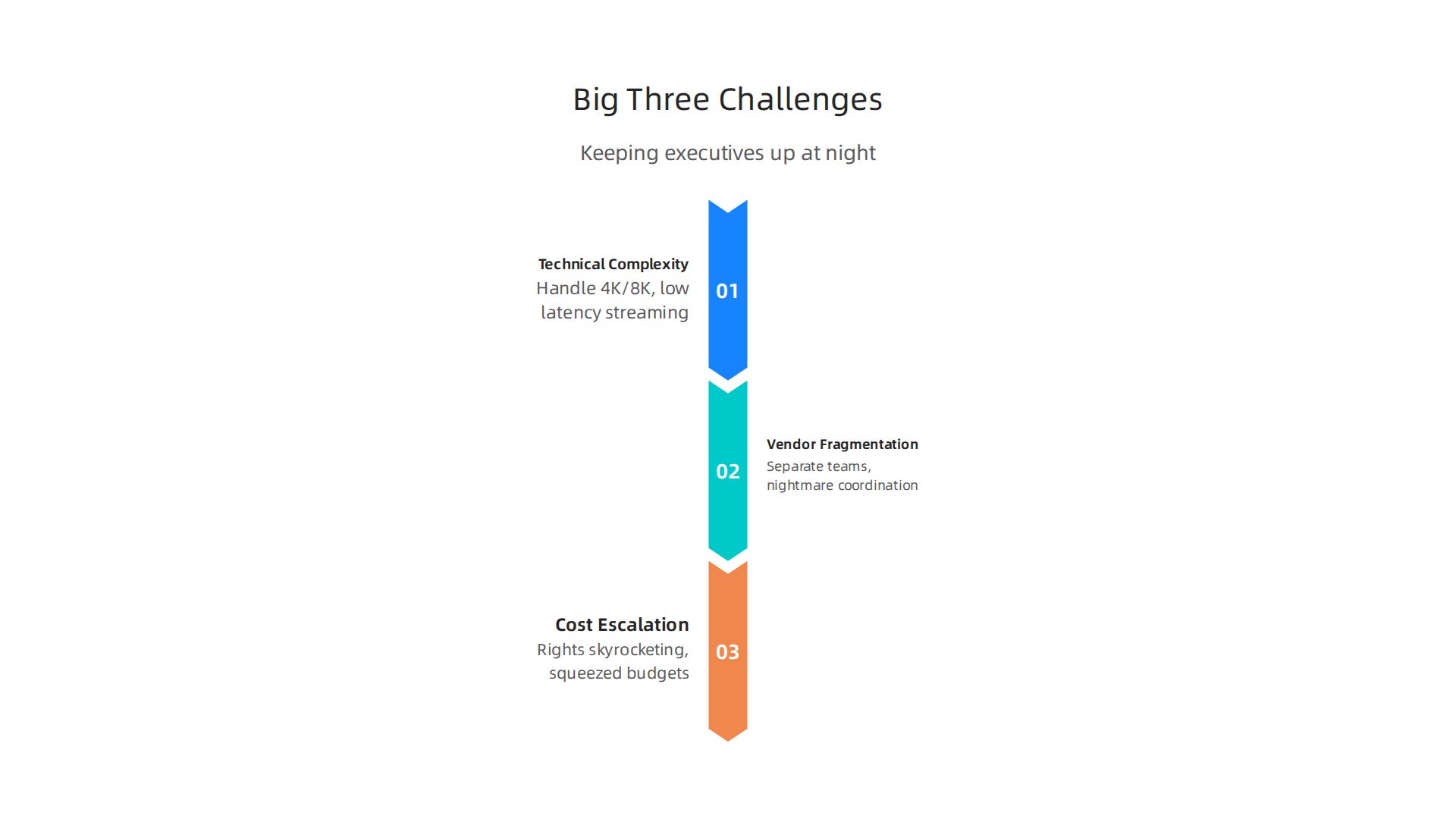
First is technical complexity. You need to handle 4K or even 8K video, low latency streaming, multiple audio feeds, and dynamic graphics all at once. One glitch can ruin the experience for millions of viewers.
Second is vendor fragmentation. When you hire separate teams for cameras, sound, graphics, and streaming, coordination becomes a nightmare. Miscommunication leads to delays and extra costs.
Third is cost escalation. Sports broadcasting rights are skyrocketing. Production budgets are squeezed. Yet the demand for quality only goes up. Something has to give.
That is why many top production companies are moving toward integrated solutions. Instead of managing ten different vendors, they work with one partner who handles everything from start to finish. This approach reduces complexity, cuts costs, and improves quality.
If you want to see how modern video tools can streamline your workflow, check out our guide on advanced video editing techniques for live sports production. It covers the specific methods that help teams deliver flawless results under pressure.
The landscape is evolving fast. But with the right strategies and partners, your production company can stay ahead of the curve.
If you are ready to explore a better way to handle global sports events, Learn More About TPT Global and see how our end-to-end solutions can transform your next broadcast.
Key Video Editing Techniques for Live Sports
When you produce a live game, there is no safety net. Every edit happens in real time. That is why the right video editing techniques separate a polished broadcast from a messy one.
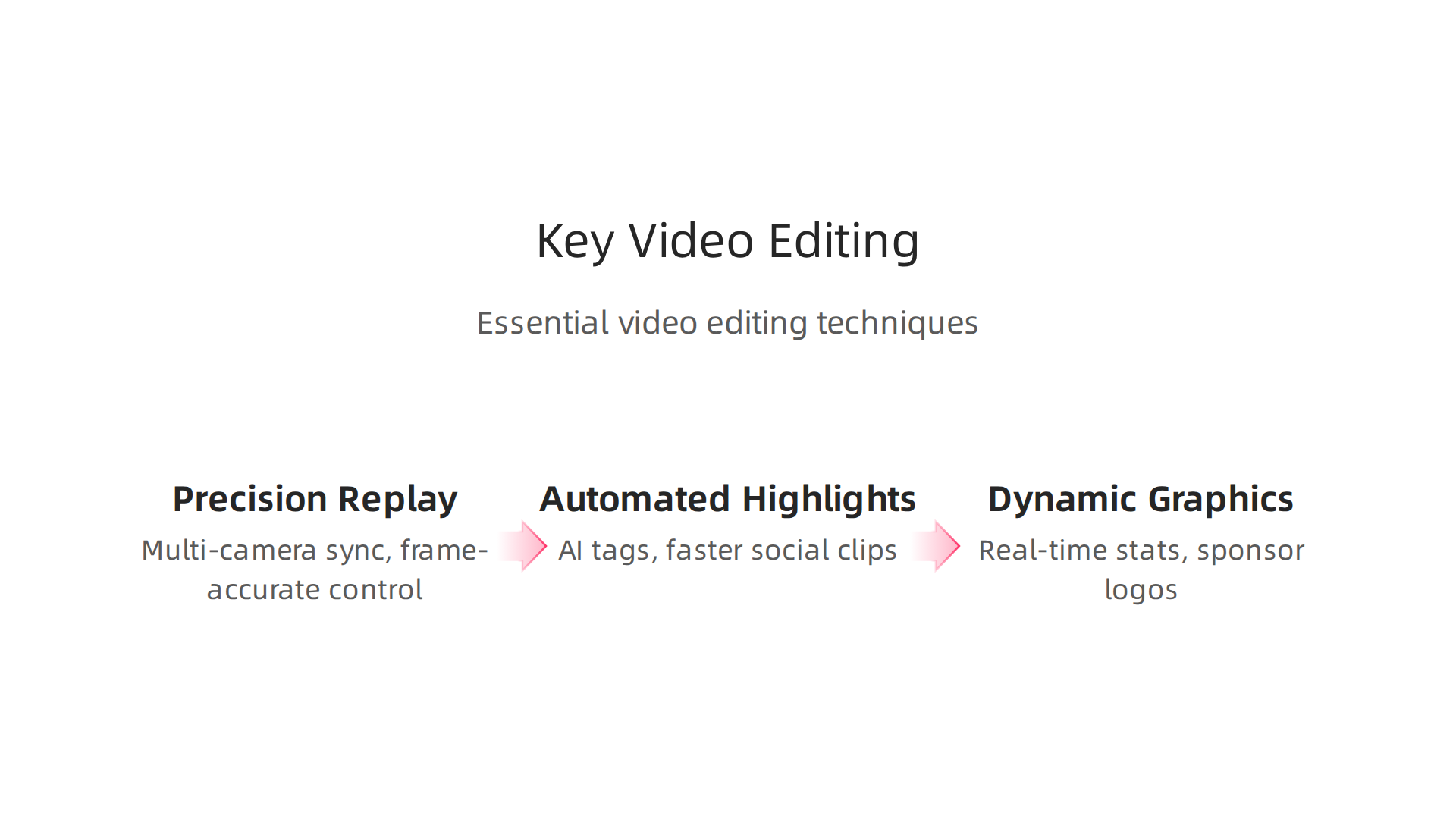
Precision Replay with Multi-Camera Sync
Modern replay systems ingest feeds from eight to twelve cameras at once. The operator marks moments as they happen, builds replay sequences on the fly, and triggers playback within seconds. This demands anticipation and frame-accurate control. As the team at CBA explains in their breakdown of Live Sports Replay Systems, the operator marks in-points before the play resolves, then chooses which angle and speed to serve up. Speed and precision have to work together.
Automated Highlight Extraction
You do not always have time to clip every big moment manually. Advanced systems tag key plays automatically based on goals, fouls, or timeouts. Editors can then pull highlight packages in seconds, not minutes. That means faster turnaround for social clips and post-game recaps.
Dynamic Graphics That Stay Out of the Way
Graphics overlays are no longer static boxes at the bottom of the screen. Modern tools let you drop real-time stats, player data, and sponsor logos into the feed seamlessly. When done right, these elements tell a richer story without pulling focus from the action.
Mastering these techniques cuts latency and keeps viewers locked in through every play. Want to see how top production teams put these methods to work? Watch Our Latest Broadcast Work and see the difference in quality.
Real-Time Replay and Highlight Extraction
One of the most important techniques we use is real-time replay and highlight extraction. Imagine a goal is scored. Before the announcer finishes the call, that clip is already packaged and ready to share. That is the power of modern real-time replay and highlight extraction.
Automated systems now use AI to spot key moments like goals, fouls, or big plays the instant they happen. This does not just speed up the broadcast. It changes how quickly highlights reach fans on social media. As seen in the latest World Cup trends, fans can now choose from multiple camera angles and data-rich feeds as the action unfolds. This shift to interactive, multi-feed experiences is setting a new standard for every broadcast. Many TV production companies are adopting this approach to stay competitive.
For production companies, this means a lighter post-production load. Operators can curate and package highlights during the event itself. Cloud integration then allows instant distribution across digital channels.
To build these efficient workflows, your team needs a solid foundation. Check out our guide on advanced video editing techniques for live sports production.
Multi-Camera Synchronization and Switcher Integration
Getting a dozen or more cameras to work together like a single unit is no small feat. When a director calls for a switch, every frame must line up perfectly. Any lag or offset ruins the experience. That is why modern tv production companies invest heavily in precise multi-camera synchronization.
Today’s production companies rely on systems that align timecodes and metadata across every feed. These systems connect directly to production switchers, so the director can cut between angles without a glitch. As explained in a guide to live replay systems, modern replay servers handle multi-camera ingest, mark-and-clip workflows, and playback to the switcher all in real time. This kind of integration is essential for smooth broadcasts.
Advanced techniques like virtual replay and augmented reality overlays depend on this accuracy. Without perfect sync, those graphics would not stick to the action. Whether you work with a Sinclair Broadcast Group affiliate or a large independent broadcast team, getting sync right is the foundation of a professional product.
If your team is ready to take your live production to the next level, Request a Broadcast Consultation to discuss your specific needs.
Graphics and Overlay Insertion
Every live broadcast needs graphics. Score bugs, player stats, sponsor logos, and lower thirds all have to appear on screen at the right moment without breaking the flow. For tv production companies, this is one of the trickiest parts of a live show.
The good news is that modern graphics engines handle this automatically. Instead of a person manually keying each graphic, the system pulls data from a live feed and inserts the overlay in real time. Cloud-based engines even let teams update graphics remotely. A producer in another city can send a new sponsor logo straight to the broadcast. The 2026 World Cup showed how far this can go, with real-time rendered 3D overlays and alternate feeds using game engine visuals, as highlighted in a breakdown of live sports streaming trends.
Integrating graphics with editing workflows cuts down on mistakes. When the replay operator builds a clip, the system already knows which overlay belongs to that moment. No manual keying needed. No errors.
This level of automation is what separates top production companies from the rest. If you want to see how a fully integrated graphics pipeline works in practice, our guide on advanced video editing techniques for live sports production walks through the setup step by step.
When your audience sees a clean, professional broadcast with graphics that feel natural, that is the result of a smart graphics workflow. And that is the kind of quality that keeps viewers watching.
Explore Our Broadcast Services to see how we handle graphics and overlays for major live events.
Overcoming Operational Complexity with Advanced Workflows
Here’s the reality for many production companies today. Your editing team works in one system. Graphics live in another. Distribution runs through a third. And someone is still shuffling hard drives between departments. That fragmented setup costs time, money, and creative energy.
The problem is that each isolated tool adds friction. Every time a clip moves from editing to graphics to playout, someone has to babysit the handoff. One format mismatch. One wrong file name. One delay in delivery. And suddenly your live broadcast has dead air or a missed replay. For tv production companies covering multiple games in a single day, these small breakdowns add up fast.
Why Unified Workflows Matter
The smartest production companies have already made the shift to unified workflows. Instead of separate islands, they connect editing, asset management, cloud processing, and delivery into one continuous pipeline.
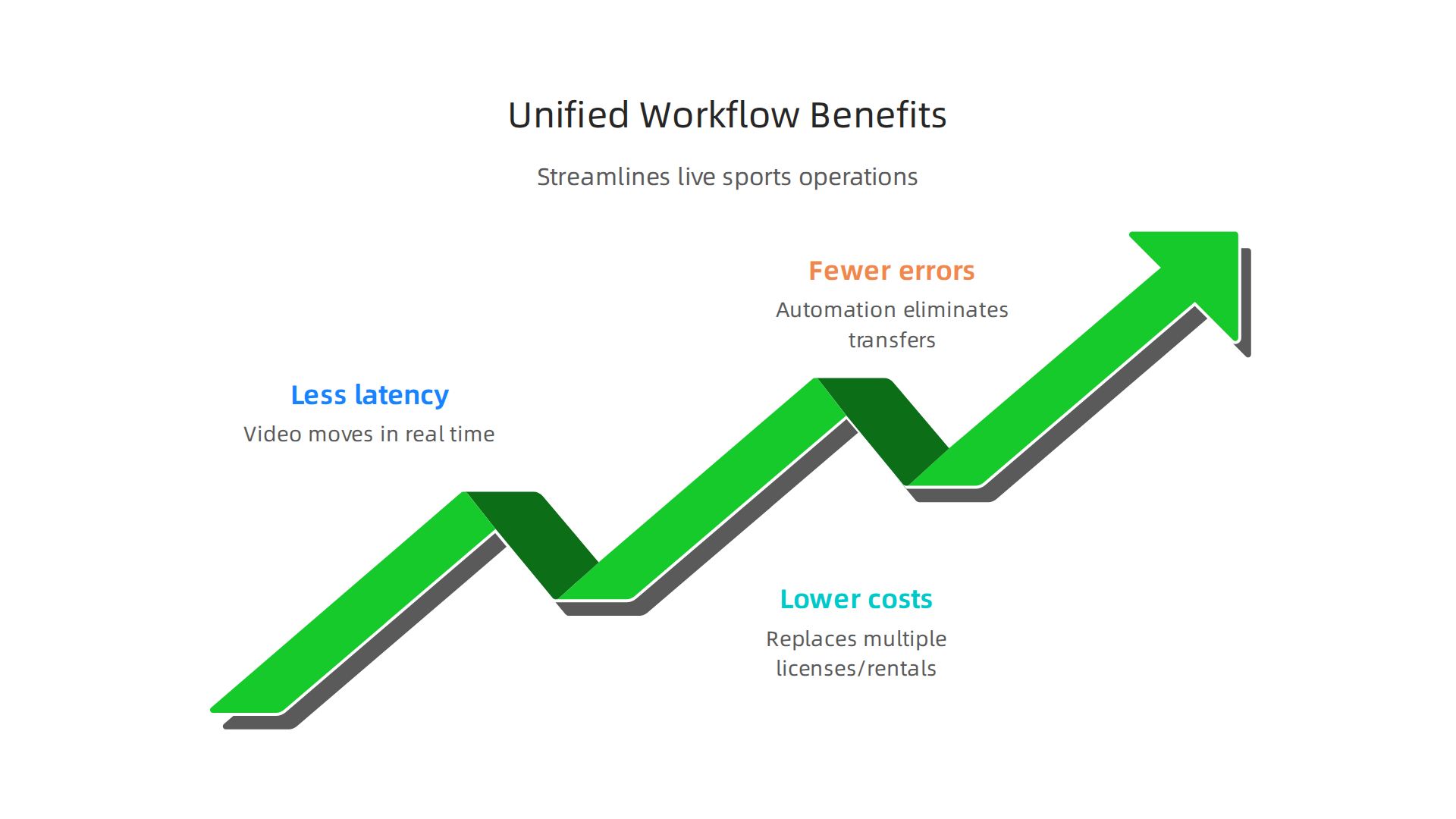
This approach does three things at once:
| Benefit | What It Means for Your Team |
|---|---|
| Less latency | Video moves from camera to screen in real time instead of bouncing between systems |
| Lower costs | One integrated workflow replaces multiple software licenses and hardware rentals |
| Fewer errors | Automation eliminates manual file transfers and format conversions |
Cloud workflows are driving this change across the industry. As explained in a 2026 analysis of cloud workflows in live sports production, broadcasters who connect each event to cloud infrastructure instead of moving equipment to each venue save significantly on travel and rigging time. The same infrastructure scales up for playoffs and down for regular season games without wasting resources.
Automation Frees Your Best People
Here is the part that really matters for your creative team. When you hand the boring repetitive tasks to automation and AI tools, your editors get to focus on the work that actually needs human judgment.
Think about what eats up your editors’ time today. Syncing clips. Applying color presets. Checking audio levels. Generating lower thirds. All of that can run automatically in a smart workflow. The editor steps in for the tough cuts, the creative transitions, and the moments that tell the story.
That is how you get a better show with a smaller crew. And that kind of efficiency matters when you are competing with sinclair broadcast group and other faang companies for viewer attention.
If you want to see how this looks in practice, check out our guide on advanced video editing techniques for live sports production. It walks through the exact tools and steps for building a unified pipeline.
Standards Keep Everything Connected
One reason unified workflows work so well is that the industry has finally settled on common technical standards. Broadcast formats, codecs, and transport protocols are consistent enough that cloud systems can talk to each other without constant troubleshooting.
The ICC Official Site provides a great reference for how international cricket broadcasting handles these standards across tournaments. When every camera, every replay server, and every graphics engine speaks the same language, the whole production runs smoother.
Your Next Step
Moving from isolated systems to a unified workflow does not have to happen overnight. Start with one bottleneck. Maybe it is the handoff between editing and graphics. Fix that connection first. Then add another piece.
The goal is a production pipeline where your team spends time on creativity, not logistics. And that is exactly the kind of broadcast that keeps audiences coming back.
Request a Broadcast Consultation to talk about how we can help unify your production workflow from start to finish.
Ensuring Global Broadcast Quality and Reach
A unified workflow gets your content out the door fast. But that means nothing if the picture breaks up halfway across the world or arrives late for a live betting window. The real test of any production company is whether it can deliver the same crisp, reliable broadcast to a viewer in Tokyo, London, and São Paulo at the same moment.
That is a tall order. But the tools to meet it exist today.
Quality Starts with Smart Encoding
The first step is choosing the right encoding approach. Your master edit might be in 4K at a high bitrate. But not every viewer has the bandwidth for that. Some watch on a phone on a crowded train. Others have a 75-inch OLED at home.
That is where adaptive bitrate streaming (ABR) comes in. The system creates multiple versions of your feed at different quality levels. Each viewer’s device automatically picks the best version for its current network speed. If the connection dips, the stream drops to a lower quality without freezing.
A 2026 guide on live sports streaming quality of service explains that the design of the ABR ladder is vital. If the ladder has too few rungs, the player is forced into bad choices. High quality that stalls, or low quality that frustrates. The best approach is to pre-plan enough profiles so the player has meaningful options across a range of conditions. Screen size also matters. Sending 4K to a small phone just burns bandwidth with no visible benefit.
One Master, Many Destinations
Here is another challenge for tv production companies. Your content needs to reach linear TV, an OTT streaming app, social media clips, and maybe even a betting feed. Each platform has its own format requirements. Doing separate edits for each one is a nightmare.
The solution is to produce a single edited master and then use automated packaging to create all the downstream versions. Cloud workflows make this straightforward. You encode once. The system generates the HLS feed for streaming, the MPEG-TS for broadcast, and the short-form clips for social. No manual conversions. No format mismatches.
This is especially important for global events where the same game airs on different networks in different regions. Each broadcaster might want its own graphics package or commentary track. A unified master with clean feeds allows you to hand off custom versions without re-editing.
Latency Is the Make-or-Break Factor
For many live sports events today, latency is not just a viewer experience issue. It is a business requirement. Betting integrations and real-time fan engagement features depend on the feed arriving with near-zero delay. If your stream is even a few seconds behind the action, bets are already settled before the viewer sees the play.
Managing latency at a global scale is hard. But modern cloud production platforms have solved this problem. The same infrastructure that handles encoding and ABR can also prioritize low-latency delivery paths. Some production teams now achieve sub-second latency from camera to screen across continents.
That level of performance requires careful planning. You need a delivery network that can route around congestion. You need encoding hardware that processes frames in real time without buffering. And you need a team that understands the tradeoffs between latency and image quality for different audience segments.
Your Global Broadcast Partner
Delivering consistent quality across borders, platforms, and latency requirements is not a DIY project for most production companies. It takes infrastructure, expertise, and 24/7 monitoring.
That is why leading sports organizations turn to a partner who has already solved these problems. Why Choose TPT Global to handle your next international event? From encoding to multi-platform distribution to real-time latency management, their team and technology are built for the scale and complexity of global sports broadcasting.
Adapting to Rapid Technological Advancements
The broadcast world does not pause for anyone. What was cutting-edge two years ago can feel obsolete today. For production companies trying to keep up with UHD and 8K resolution, IP-based production, remote production hubs, and AI editing assistants, the pace of change can be dizzying.
Here is the reality check. As noted in a 2026 industry briefing on broadcast trends, the shift to digital-first operations and IP-native environments is no longer optional. It is essential for delivering fast, high-quality live content at scale. TV production companies that delay upgrading their infrastructure risk falling behind competitors who can produce more content with fewer resources.
Why Standing Still Is Dangerous
The old model worked like this: buy a truck full of expensive hardware, use it for a decade, then replace it. That approach no longer works. The technology cycle has compressed dramatically.
IP-based production, for example, replaces rigid broadcast hardware with software running on standard IT networks. That allows you to scale up during a World Cup and scale down after. But it requires a completely different mindset. You are no longer just buying gear. You are buying flexibility.
The same goes for AI. A 2026 overview of video production trends highlights how AI-powered automation now handles tasks that used to require entire teams. Auto tracking, smart clipping, real-time transcription, and automated camera switching are already in use. The tools are not science fiction. They are shipping today. The question is whether your team knows how to use them.
The Future-Proof Investment
So what does a smart investment look like for production companies in 2026?
First, choose platforms that support multiple standards and codecs. If your system only works with one format, you will hit a wall the next time the industry shifts.
Second, prioritize cloud-ready workflows. Even if you run a traditional on-site setup today, the ability to spin up remote production capacity on demand is a safety net you want in place before you need it.
Third, train your people. The best technology in the world is useless if your crew does not trust it or know how to troubleshoot it.
Partnerships Keep You Ahead
No single company can master every new technology alone. That is why partnerships matter so much right now. Working with technology vendors, joining industry consortia, and attending events like the annual Sports Summit at NAB Show gives you early exposure to what is coming next.
These partnerships help you avoid expensive wrong turns. When a vendor shares its product roadmap, you can plan your upgrades with confidence. When you see what other broadcasters are testing, you can skip the experiments that failed and focus on the ones that work.
The winning strategy for production companies in 2026 is not to chase every new shiny thing. It is to build a flexible foundation that can adapt to whatever comes next.
If you want to see how a full-service partner approaches this challenge, take a look at how TransGroup operates as the definitive full-stack agency for sports and media, providing a single-window solution for every aspect of the game. Or explore our in-depth look at advanced video editing techniques for live sports production to see how modern workflows are built from the ground up.
For a complete overview of how we help production companies stay ahead of the technology curve, Learn More About TPT Global.
Choosing the Right Production Partner or Toolset
Trying to master every new broadcast technology on your own is a fast track to burnout. The production companies that are thriving in 2026 are the ones that have learned when to build, when to buy, and who to trust.
The Multi-Vendor Headache
Here is a common problem for TV production companies. You hire one company for cameras. You hire another for streaming. A third handles graphics. A fourth manages the satellite uplink.
Suddenly, your production manager spends more time herding vendors than actually making great content.
And when something fails during a live event? Nobody wants to own it. The camera team blames the network. The network team blames the streaming platform. You are left holding the responsibility with no single throat to choke.
This fragmented mess is exactly why the industry is moving toward full-service partnerships. A recent discussion among CTOs at the Sports Production Innovation Summit 2026 made one thing crystal clear: unified, software-based environments are replacing the old chaotic, multi-vendor workflows.
Four Criteria for Choosing Wisely
So how do you pick the right partner for your broadcast needs? Use this simple checklist.
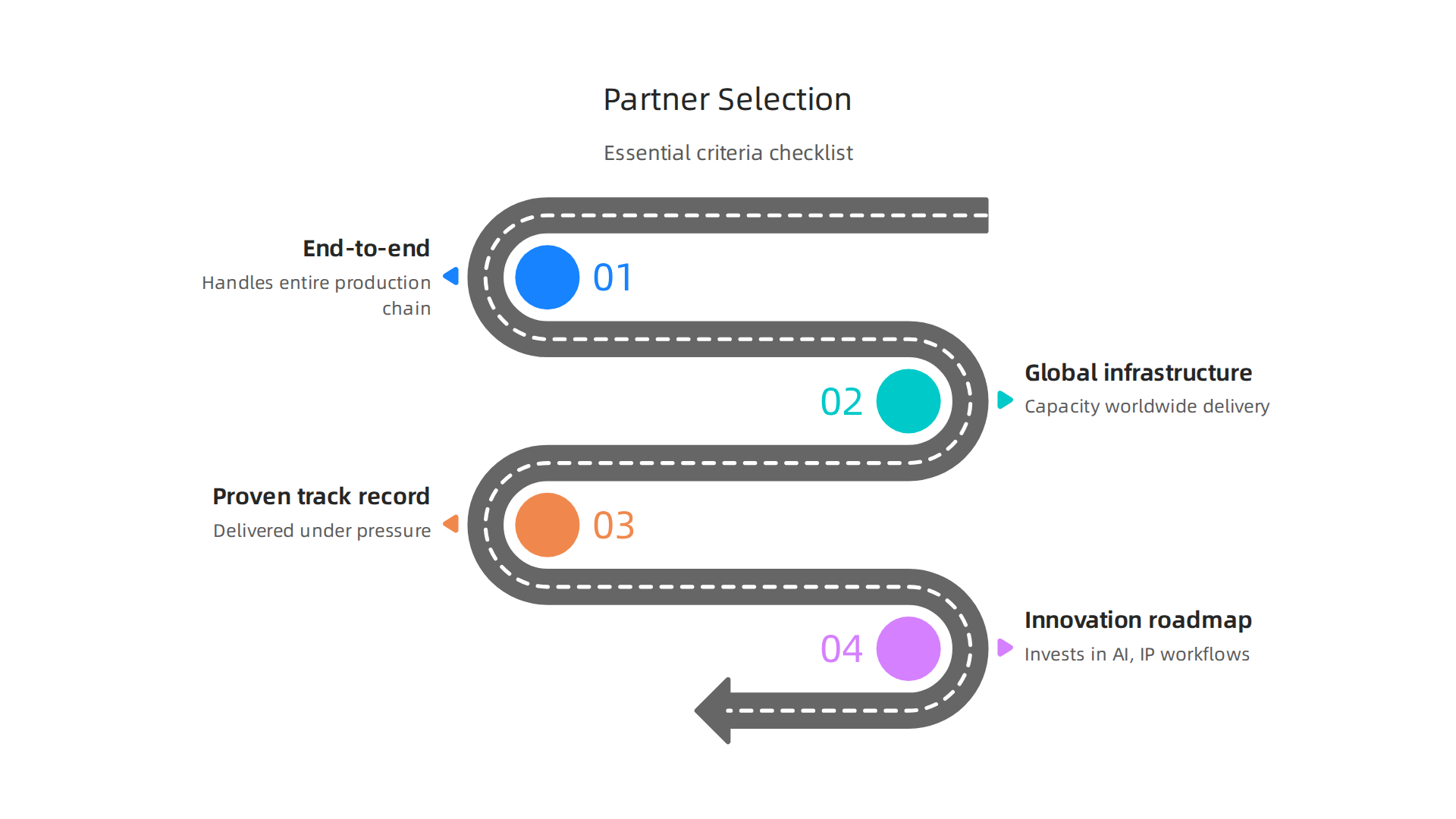
End-to-end capabilities. Can they handle pre-production, live switching, graphics, replay, streaming, and global distribution under one roof? When a single team owns the entire chain, quality stays consistent and blame games disappear.
Global infrastructure. Do they have the fiber, satellite, and cloud capacity to deliver your content reliably anywhere? If you are broadcasting from a stadium in a remote location, your partner needs boots on the ground there before you arrive.
Proven track record. Have they delivered under pressure for events as big as yours? Ask for case studies. Past performance is the best predictor of future reliability.
Innovation roadmap. Are they actively investing in AI, IP-based workflows, and remote production? Or are they hoping last decade’s gear will carry them through? Events like the NAB Show Sports Summit showcase exactly what forward-looking partners prioritize.
One Partner Changes Everything
When you consolidate with one strategic partner, vendor management overhead nearly disappears.

You get one contract. One invoice. One support team that knows your workflow inside and out.
That simplicity frees your internal team to focus on creative storytelling and audience engagement instead of putting out fires.
If you want to see what a true end-to-end broadcast partnership looks like, Explore Our Broadcast Services to learn how integrated workflows can transform your next live event.
Or, if you prefer a direct conversation about your specific production challenges, Request a Broadcast Consultation to speak with our team of experts.
Summary
This article explains how production companies can deliver flawless live sports broadcasts by adopting advanced video editing techniques and unified workflows. It outlines the shifting landscape—growing streaming demand, platform fragmentation, and rising costs—and identifies the main pain points: technical complexity, vendor fragmentation, and budget pressure. The piece walks through practical methods such as precision multi‑camera replay, automated highlight extraction, dynamic graphics insertion, and real‑time encoding strategies like adaptive bitrate streaming. It shows how cloud-native, automated pipelines reduce errors, cut latency, and speed distribution to global destinations while freeing creatives from repetitive tasks. The article also covers future trends—IP production, AI tools, and remote workflows—and gives a short checklist for selecting a reliable end‑to‑end broadcast partner. Readers will finish with actionable ideas for improving their live production quality, lowering costs, and choosing the right partners to scale events internationally.